





AI Integration & Application Enablement That Builds Production Confidence
We help embed AI into live systems safely, so it delivers real impact without destabilizing products or operations. Designed for organizations that have models or PoCs and now need reliability, ownership, and operational trust.
Execution Challenges in AI Integration
Most AI efforts do not fail during experimentation. They stall when integration into real workflows begins.
AI lives outside the core product
Models operate as side services or demos and never become part of everyday workflows.
Fragile pipelines under real data
What worked on curated datasets breaks when exposed to noisy or changing production data.
Latency and cost make features impractical
Inference time or API cost limits usage and forces throttling or shutdowns.
No clear ownership
Data, product, and platform groups share responsibility, but no one owns AI behavior end-to-end.
AI features quietly disabled
Users revert to manual work, or operations turn features off when trust drops.
The Biggest Risk Is System Instability, Not Model Accuracy
This stage is not an AI problem. It is an architecture and systems risk.
AI introduces unpredictable behavior into environments built for deterministic logic.
Failures can cascade into customer experiences.
Inconsistent outputs damage trust faster than no AI at all.
Without application enablement, AI remains impressive but unusable.
How This Translates Into Execution
Execution focuses on embedding AI into real workflows without destabilizing production systems.
Phase 01
Workflow Discovery & Risk Mapping
Risk addressed: AI disconnected from core applications.
Engagements begin by mapping where AI decisions intersect with real user and operational flows.
Intent and user experience boundaries are clarified before model decisions are made.
Integration points are defined based on workflow impact, not technical novelty.
Outputs guide safe integration decisions.Phase 02
AI-Aware Architecture & Cross-Team Alignment
Risk addressed: Hidden instability and unclear ownership.
Application architecture treats AI outputs as probabilistic inputs.
Product defines intent and boundaries. The platform ensures reliability and scale. Operations validate day-to-day safety.
Responsibilities are defined clearly before implementation begins.
The objective is structural clarity and shared accountability.Phase 03
Phased Integration in Controlled Conditions
Risk addressed: Big launches that expose unstable AI behavior.
AI is introduced incrementally through shadow mode, assisted mode, and controlled automation.
Feature flags manage exposure to real users.
Guardrails handle latency, degraded responses, and upstream failures.
Each stage is validated before expansion.Phase 04
Production Readiness Validation
Risk addressed: Scaling AI without real-world testing.
AI features are tested against real data variability and production load.
Failure scenarios are simulated and monitored.
Operational observability tracks usage, drift, latency, cost, and reliability.
AI must demonstrate stable behavior before wider rollout.Phase 05
Safe Rollout and Evolution
Risk addressed: Stalled adoption or unstable expansion.
Progressive exposure expands AI capabilities gradually.
Feedback loops inform iteration and refinement.
Governance and monitoring continue as AI usage grows.
The aim is controlled evolution supported by visibility and ownership.
Proven in Live Production Environments
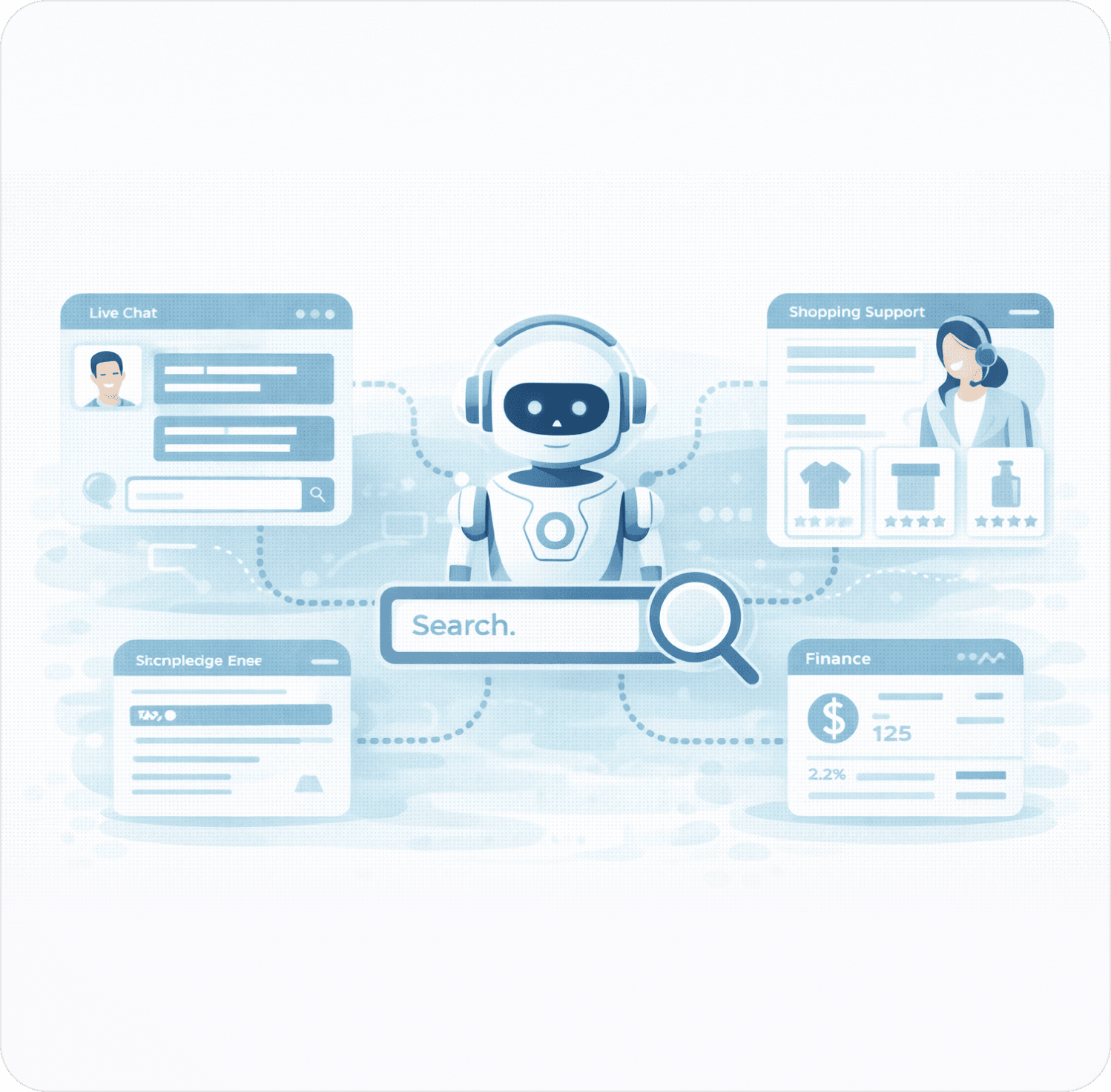
Embedding AI-Powered Semantic Search into a Live Services Platform
A live services platform relied on keyword search that often misaligned with user intent. AI needed to integrate directly into production systems without introducing latency or instability.
- Search results misaligned with user intent
- Integration with live pricing systems
- High traffic production environment constraints
- Integrated a semantic search layer using vector embeddings and generative summaries
- Connected structured pricing data and educational resources into one advisory interface
- Implemented asynchronous APIs and fallback to keyword search when confidence was low
- Added real-time synchronization and logging for drift monitoring
- Improved successful first-query matches by 35%
- Reduced bounce rate by approximately 18%
- Increased plan click-through rate by 22%
- Enabled automated semantic indexing without manual rule updates
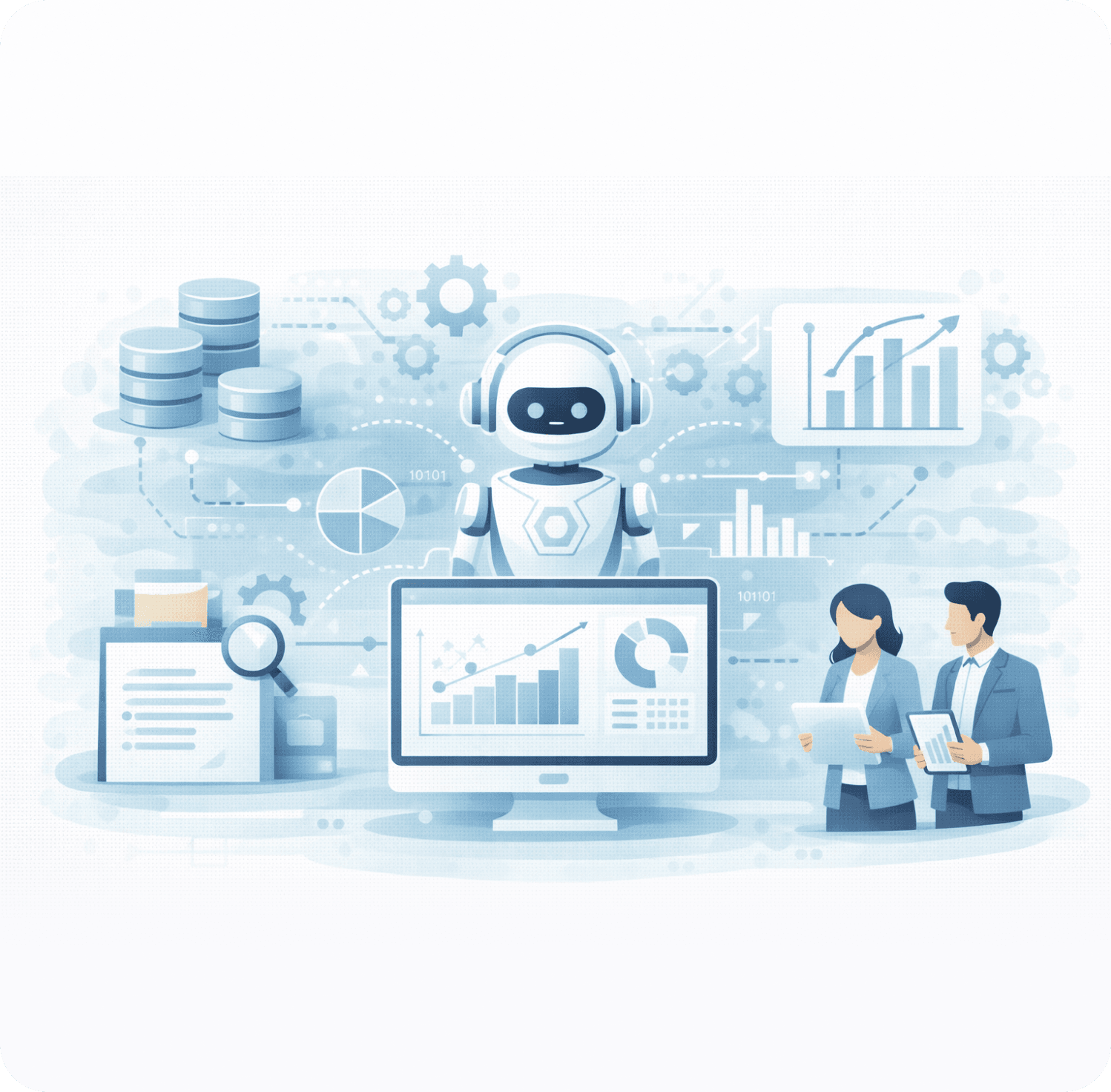
Integrating AI-Powered Business Intelligence into Structured Organizational Datasets
An organization managed expertise data in Google Sheets. Extracting insights required manual filtering and expert intervention. AI needed to integrate directly into live spreadsheets without duplicating data.
- Manual retrieval delays
- Schema complexity for non-technical users
- Need for secure identity and dataset isolation
- Embedded a conversational BI interface into authenticated Google Sheets workflows
- Implemented multi-tenant dataset isolation and role-based access
- Added secondary response validation to improve grounding accuracy
- Established audit logging and administrative governance controls
- Reduced expertise discovery time from minutes to seconds
- Improved first-query success by approximately 35%
- Reduced dependency on spreadsheet experts by up to 90%
- Enabled secure expansion to additional datasets without architectural change
Start With Readiness, Not Assumptions
Before expanding AI usage, a structured assessment reduces risk.
Free AI Production Readiness Assessment
A focused review designed to identify integration, reliability, and ownership gaps before production rollout.
What we assess
- Where AI connects to core applications
- Reliability, latency, and cost risks
- Trust gaps in AI outputs
- Architecture readiness for live workflows
What you receive
- Clear view of production risks
- Prioritized enablement recommendations
- Guidance on safe next steps
Who This Is For
Organizations that:
- Have AI models or PoCs
- Plan to embed AI into customer or operational workflows
- Need confidence before full rollout
Free AI Production Readiness Assessment
A focused review designed to identify integration, reliability, and ownership gaps before production rollout.
What we assess
- Where AI connects to core applications
- Reliability, latency, and cost risks
- Trust gaps in AI outputs
- Architecture readiness for live workflows
What you receive
- Clear view of production risks
- Prioritized enablement recommendations
- Guidance on safe next steps
Who This Is For
Organizations that:
- Have AI models or PoCs
- Plan to embed AI into customer or operational workflows
- Need confidence before full rollout
Collaborate with Bobcares
Get actionable solutions for your business