





Backup, Disaster Recovery & Business Continuity That Ensures Predictable Recovery
We help organizations move from backup assumptions to verified recovery and operational resilience. Designed for environments where downtime, data loss, and operational disruption cannot be left to chance.
Execution Challenges in Backup and Recovery Planning
Most recovery strategies do not fail because backups are missing. Problems surface because recovery was never tested under real conditions.
Backup Without Restore Testing
Backups exist but are never validated.
Incomplete Coverage
Critical systems are missing from the backup scope.
No Recovery Prioritization
All systems are treated equally during restoration.
No Business Continuity Plan
IT systems may recover while operations remain stalled.
The Biggest Risk Comes From Untested Recovery
Incidents and outages will occur. Exposure increases when recovery remains unverified.
Organizations often face challenges such as:
Downtime extends beyond tolerance
Recovery costs increase dramatically
Reputation damage grows
Teams operate under panic instead of process
How This Translates Into Execution
Execution focuses on validating restore readiness, strengthening recovery architecture, and integrating business continuity into daily operations.
Phase 01
Backup & Recovery Assessment
Risk addressed: Unknown gaps in coverage and restore readiness.
Backup coverage is reviewed across systems
Restore procedures are evaluated
Recovery reliability is assessed
Outputs are structured to establish a clear recovery baseline.Phase 02
Backup Improvement & Gap Closure
Risk addressed: Incomplete or unreliable protection.
Backup scope is refined
Configuration gaps are corrected
Encryption and automation are validated
The objective is dependable protection across critical systems.Phase 03
DR Architecture & Testing
Risk addressed: Delayed or unpredictable recovery.
Recovery environments are designed
Failover plans are validated
Recovery time objectives are tested
The objective is proven recovery capability under simulated disruption.Phase 04
Business Continuity Integration
Risk addressed: Operational disruption during IT recovery.
Continuity procedures are documented
Department-level plans are aligned
Escalation and communication flows are defined
Every phase increases recovery predictability and operational resilience.
Proven in High-Impact Environments
Our backup and disaster recovery engagements are typically used when fragmented protection processes and rising data risks begin to threaten uptime and compliance.
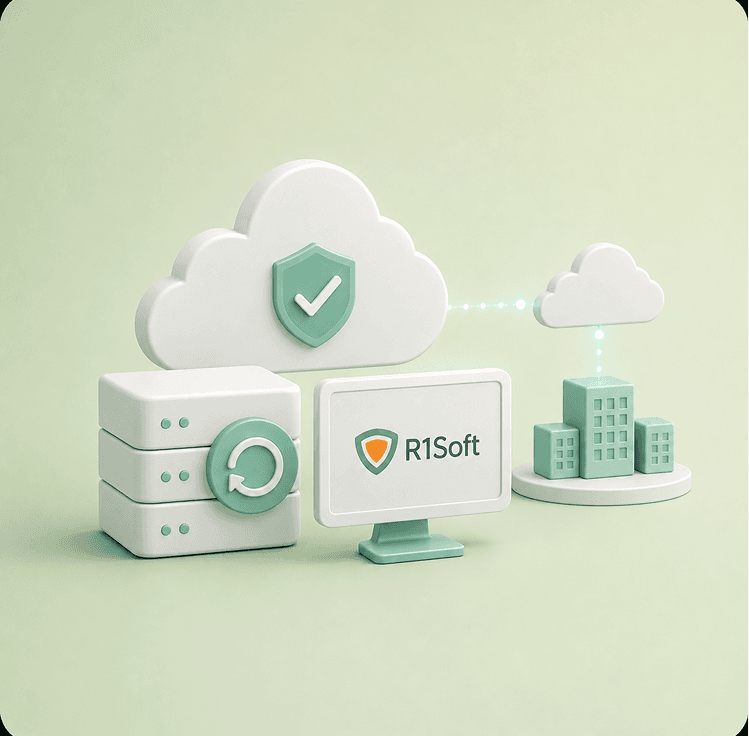
Enterprise-Grade Backup & Disaster Recovery Implementation Using R1Soft
A global managed hosting provider supporting over 10,000 websites relied on manual, inconsistent backup processes, which increased downtime and ransomware exposure.
- Manual backup failures and inconsistent retention
- Slow data restoration is affecting SLA commitments
- Limited ransomware resilience and audit visibility
- Deployed a centralized R1Soft backup framework across Linux and Windows servers
- Enabled encrypted backups in transit and at rest with automated retention
- Implemented monitoring, verification, and rapid restore capabilities
- Backup success rate improved to 99.99%
- Data restoration time has been reduced significantly
- Zero data loss incidents reported
- Automated governance and audit-ready reporting established
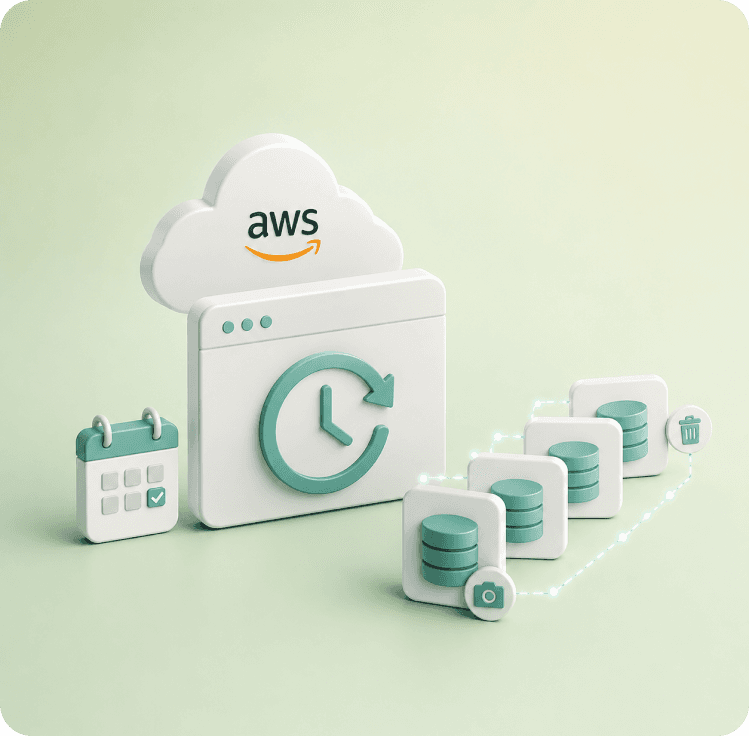
Automating AWS Snapshot Lifecycle Management
An organization operating multiple AWS environments faced inconsistent snapshot practices, rising storage costs, and untested disaster recovery procedures.
- Manual snapshot creation and unmanaged legacy backups
- Missing tagging and a lack of monitoring visibility
- Unvalidated restore procedures increase recovery uncertainty
- Conducted a structured audit across production and non-production environments
- Defined automated snapshot lifecycle policies with standardized tagging
- Introduced monitoring, cleanup controls, and documented recovery workflows
- Near 100% automated backup coverage
- 30–50% reduction in snapshot storage growth
- Real-time monitoring and alerting enabled
- Disaster recovery readiness is tested and documented
Across the case studies, the outcomes show stronger data protection governance, faster recovery capability, and controlled storage growth aligned with compliance expectations.
Backup & Disaster Recovery Options
Backup Implementation Project
Project-based
What It Means
- Design and deployment of secure backup systems
Best For
- Organizations without reliable backups
Backup Implementation Project
Project-based
What It Means
- Design and deployment of secure backup systems
Best For
- Organizations without reliable backups
Collaborate with Bobcares
Get actionable solutions for your business