





Infrastructure & Cloud Security Hardening That Reduces Exposure at the Foundation
We secure cloud and server environments that were deployed quickly but not hardened consistently. Many breaches begin with misconfigurations, excessive access, or accumulated patch gaps. Designed for organizations that want defined security baselines, controlled access, and reduced attack surface across infrastructure.
Execution Challenges in Infrastructure Security
Most breaches do not begin with advanced exploits. Risk builds through small configuration gaps.
Default Configurations Left in Place
Systems remain configured with vendor defaults.
IAM Privilege Sprawl
Users and services accumulate access over time.
Patch Inconsistency
Some systems were updated, others were overlooked.
Configuration Drift
Secure settings changed without review.
The Biggest Risk Is the Absence of Secure Baselines
Complexity alone does not cause breaches. Lack of enforced baselines allows risk to grow quietly.
When hardening is not continuous:
Cloud storage or services exposed publicly
Servers are missing critical security configurations
Excessive IAM permissions left in place
Firewall rules added but never reviewed
Patches applied inconsistently across environments
Hardening restores environments to a known, secure state and keeps them there.
How This Translates Into Execution
Execution begins with visibility into misconfigurations, followed by structured remediation and continuous validation.
Phase 01
Security Baseline Assessment
This phase addresses unknown misconfigurations that create hidden exposure.
Compare current cloud configurations against defined security standards
Compare server configurations against secure baselines
Identify gaps in IAM roles and policies
Assess patch posture across environments
Review network security controls
The objective is to begin with measurable visibility into risk.Phase 02
Risk-Based Hardening Plan
This phase addresses remediation efforts that expand without reducing meaningful risk.
Rank findings based on exposure and business impact
Prioritize misconfigurations that increase breach likelihood
Identify excessive privileges that expand the blast radius
Sequence remediation based on risk severity
Momentum builds through disciplined prioritization.Phase 03
Remediation and Validation
This phase addresses configuration changes that introduce instability or remain unverified.
Apply configuration updates in structured increments
Remove excessive IAM permissions
Correct insecure cloud and server settings
Validate secure configurations after changes
Confirm alignment with defined baselines
Progress continues without creating unintended disruption.Phase 04
Continuous Hardening and Drift Monitoring
This phase addresses the gradual degradation of the security posture over time.
Monitor configuration drift across environments
Review changes for security impact
Revalidate alignment with secure baselines
Update hardening standards as infrastructure evolves
Measurable validation ensures the environment remains aligned with secure standards.
Proven Impact Across Infrastructure Environments
Our cloud security hardening engagements are typically used when governance gaps, lifecycle risks, and compromised systems threaten compliance and operational stability.
Loosely Governed WorkSpaces to Hardened Cloud Desktop Security
An AWS WorkSpaces environment in Ireland supported business users through Windows-based virtual desktops. The setup was functional but showed gaps in encryption, inconsistent storage policies, inactive desktops, and limited governance enforcement.
- Unencrypted volumes create compliance exposure
- Outdated Windows Server version nearing the end of support
- Inactive AlwaysOn desktops are increasing the attack surface
- Rebuilt non-encrypted WorkSpaces with enforced KMS encryption
- Defined standardized storage profiles and mandatory tagging policies
- Established access reviews, patch governance roadmap, and lifecycle controls
- Encryption compliance gaps closed
- Attack surface reduced through access and lifecycle controls
- Improved audit readiness aligned with ISO 27001 and SOC 2
- Stronger governance and cost visibility across the environment

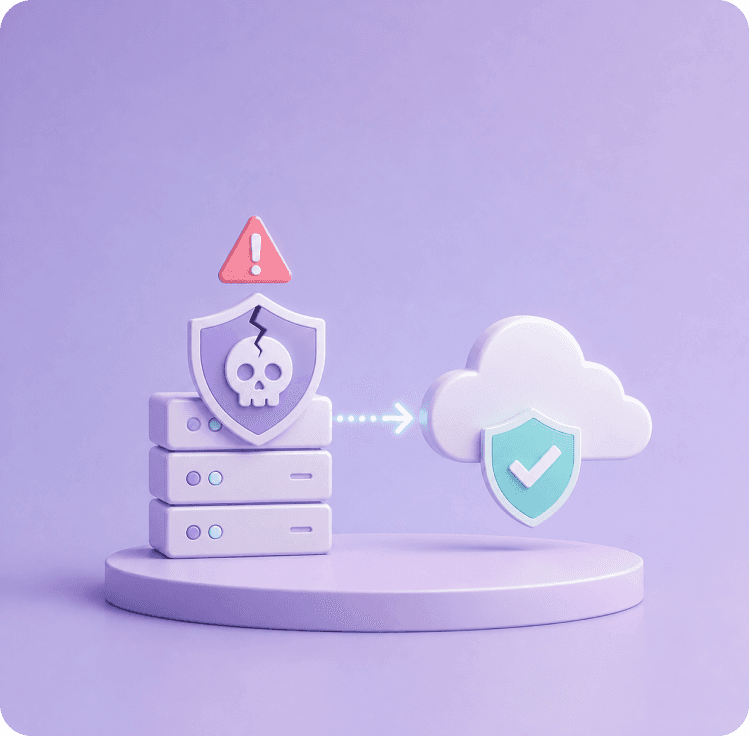
Root-Level VPS Compromise to Secure Emergency Migration
A VPS running an outdated control panel was found to be root-level compromised with persistent malware, malicious cron jobs, tampered binaries, and infected backups.
- Persistent backdoors executing remote scripts
- Compromised system binaries triggering outbound traffic
- No clean backups available for restoration
- Restored secure root and panel access through controlled console login
- Conducted forensic analysis to confirm long-term compromise
- Recommended full migration to a clean VPS with hardened configuration
- Website and services restored without downtime
- Compromise documented and clearly explained
- Safe migration plan implemented to prevent reinfection
- Long-term security and stability are established on a clean infrastructure
Security Hardening Pricing Plans
One-Time Hardening Project
Project-based (From $149 per environment)
What It Means
- Project-based structured baseline security improvements across cloud or server environments.
Best For
- Organizations seeking immediate risk reduction across specific environments.
One-Time Hardening Project
Project-based (From $149 per environment)
What It Means
- Project-based structured baseline security improvements across cloud or server environments.
Best For
- Organizations seeking immediate risk reduction across specific environments.
Collaborate with Bobcares
Get actionable solutions for your business