





Reliability Engineering & Observability
We help organizations reduce incidents, detect issues earlier, and build systems that become more stable over time. Designed for platforms that need structured reliability with measurable performance and continuous improvement.
Reliability Challenges That Grow Over Time
Outages rarely begin as sudden failures. They often start as small signals that go unnoticed.
Alert fatigue
Too many alerts reduce signal clarity, causing important issues to be overlooked.
Reactive-Only Monitoring
Actions are triggered only when alerts become critical, after issues have already impacted users.
No Service-Level Objectives
The absence of defined performance standards makes reliability difficult to measure and manage.
No Learning Loop
Incidents are resolved without analyzing patterns, leading to repeated failures.
The Real Risk Is Not Downtime — It’s Reliability Drift
Downtime is immediately noticeable, whereas configuration drift typically remains hidden until it causes issues.
Organizations often face:
Small issues grow into major incidents
Recovery takes longer
User trust erodes
Engineers stay in firefighting mode
Monitoring alone does not create stability. Reliability must be defined, measured, and improved continuously.
How This Translates Into Execution
Reliability is built through structured phases.
Phase 01
Observability Baseline
Risk addressed: Limited visibility into system behavior.
Establish monitoring coverage
Baseline performance patterns
Identify monitoring gaps
The outcome is a clear foundation for reliability.Phase 02
SLO & Alert Engineering
Risk addressed: Undefined reliability expectations.
Define SLOs and error budgets
Design alert strategies
Align alerts to business impact
The outcome is an early and meaningful detection.Phase 03
Continuous Monitoring & Prevention
Risk addressed: Repeated incidents and reactive response.
Ongoing system review
Proactive tuning
Root cause-driven improvements
This results in fewer recurring incidents.Phase 04
Reliability Optimization
Risk addressed: Systems becoming unstable as they scale.
Capacity planning
Performance analysis
Ongoing refinement
As a result, systems grow more stable over time.
Proven in Production Environments
Our cloud governance and deployment improvement engagements are typically used when rising costs, release risk, and infrastructure strain begin to affect performance and control.
AWS Cost Reduction Through EC2 Rightsizing and Resource Cleanup
An asset and inventory management platform running on AWS saw rising monthly bills due to oversized EC2 instances and accumulated unused resources across environments.
- Oversized EC2 instances with low utilization
- Unused storage, snapshots, and log groups
- Limited visibility into usage and cost drivers
- Conducted a detailed infrastructure audit across EC2, EBS, S3, and CloudWatch
- Rightsized instances based on multi-week usage data
- Removed unused buckets, snapshots, AMIs, and orphaned resources after approval
- Significant reduction in EC2 and storage costs
- Instance utilization balanced between 40% and 60%
- Redundant resources fully removed
- Zero downtime during execution

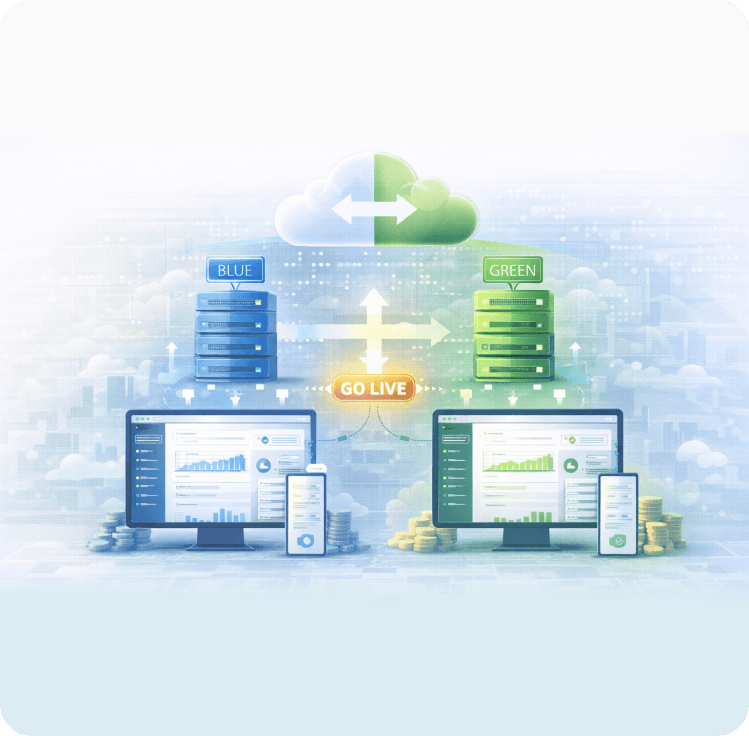
Zero-Downtime Releases with Blue/Green Deployment
Application deployments caused visible outages and complex rollbacks due to in-place updates on AWS infrastructure.
- Service interruptions during releases
- Manual rollback processes
- Version drift between environments
- Implemented Blue and Green environments behind an AWS load balancer
- Automated CI/CD using CodePipeline and CodeDeploy
- Enabled monitoring with CloudWatch and automated rollback triggers
- Zero deployment downtime
- Rollback time reduced to under two minutes
- Deployment frequency increased to multiple releases per week
- SLA uptime improved to 99.99%
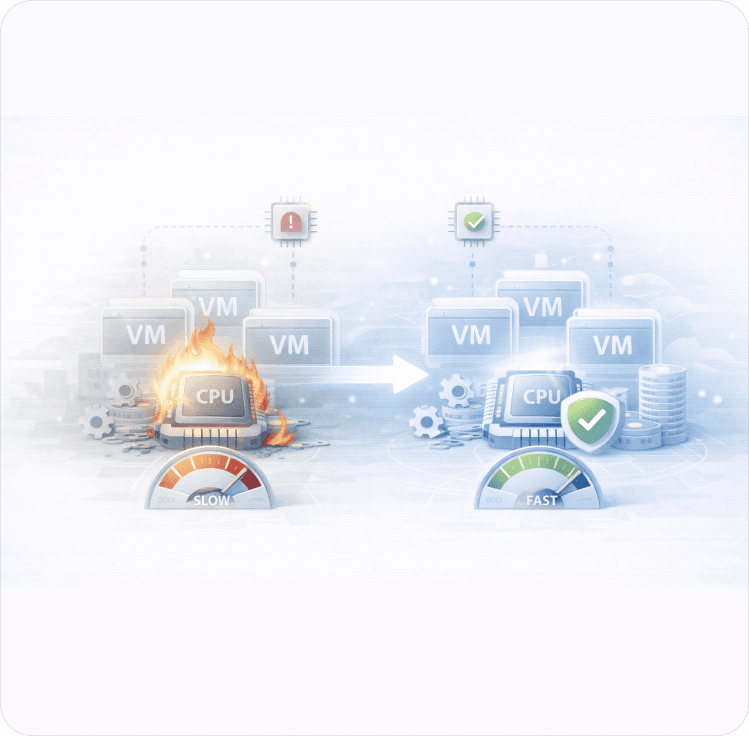
Resolving VM Slowdowns Caused by CPU Contention
Production virtual machines in a VMware cluster experienced latency and timeouts during peak business hours due to high CPU Ready time.
- High CPU overcommitment across hosts
- Oversized vCPU allocation
- Lack of CPU reservations for critical workloads
- Analyzed hypervisor metrics and identified elevated CPU Ready values
- Rightsized VMs and redistributed workloads
- Enabled automated DRS and introduced CPU reservations
- CPU Ready values reduced below 5%
- API latency improved by up to 50%
- Zero SLA violations after remediation
- Improved cluster stability during peak hours
Build systems that stay reliable under pressure
Improve monitoring, reduce incidents, and strengthen system stability as you grow.
Reliability Risk Assessment
Reduce uncertainty with clear reliability insights at no cost.
Who it’s for
- Teams with frequent outages
- Systems lacking proper monitoring
- Teams without defined SLOs
- Growing production systems
- Businesses unsure about reliability maturity
What it does
- Identifies alerting gaps
- Reviews SLO/SLI definitions
- Detects hidden instability risks
- Evaluates monitoring coverage
- Assesses incident response readiness
What you get
- Clear reliability risk visibility
- Identified monitoring gaps
- Prioritized improvements
- Better incident preparedness
- Stronger reliability foundation
Reliability Risk Assessment
Reduce uncertainty with clear reliability insights at no cost.
Who it’s for
- Teams with frequent outages
- Systems lacking proper monitoring
- Teams without defined SLOs
- Growing production systems
- Businesses unsure about reliability maturity
What it does
- Identifies alerting gaps
- Reviews SLO/SLI definitions
- Detects hidden instability risks
- Evaluates monitoring coverage
- Assesses incident response readiness
What you get
- Clear reliability risk visibility
- Identified monitoring gaps
- Prioritized improvements
- Better incident preparedness
- Stronger reliability foundation
Collaborate with Bobcares
Get actionable solutions for your business