





Process Digitization & Automation That Supports Execution and Scale
We help digitize and automate core processes so operations can support higher volumes, consistent execution, and controlled growth. Designed for teams ready to replace fragmented workflows with structured, accountable operations that support consistent execution.
Execution Challenges in the Shift to Digitized Operations
Most organizations do not struggle due to a lack of tools. Problems emerge when inefficient processes are digitized without operational clarity.
Automating inefficient workflows
Existing waste becomes embedded in software when processes are not redesigned first.
Isolated automation efforts
Teams automate locally, yet workflows fail to function end-to-end.
Approval-heavy digital flows
Manual approval chains are recreated instead of simplified.
Low adoption across teams
Tools are introduced, but familiar workarounds continue.
Unclear ownership
Automated workflows exist without accountability for outcomes.
The Biggest Risk Is When Operational Friction Becomes Business Risk
Risk compounds gradually when digitization is delayed or executed poorly. What begins as a manageable effort can directly affect execution and financial performance.
Teams often face challenges such as:
Rising error rates and rework from manual steps
Growth requiring proportional increases in staffing
Critical processes tied to undocumented knowledge
Cost per transaction is increasing instead of declining
Automation investments failing to produce measurable outcomes
Technical improvements matter. Greater risk lies in allowing inefficient processes to shape how the organization operates.
Effective digitization focuses on building predictable, accountable workflows as demand grows.
How This Translates Into Execution
Execution prioritizes assessment first, then controlled implementation, followed by continuous refinement.
Phase 01
Assessment-led Start
Risk addressed: Automation efforts begin without clarity on operational impact.
Identify high-impact, high-friction processes
Evaluate execution gaps and dependencies
Determine readiness for digitization
Focus attention on areas where improvement will be measurable
The objective is to direct effort toward processes that influence performance.Phase 02
Prioritized Backlog
Risk addressed: Resources spread across low-value initiatives.
Sequence automation based on ROI and risk reduction
Establish a structured pipeline of initiatives
Balance operational urgency with long-term value
Maintain focus on outcomes rather than activity
Effort remains concentrated on changes that matter most.Phase 03
Sprint-based Delivery
Risk addressed: Large-scale change disrupting daily operations.
Digitize and automate workflows in short cycles
Review progress at each stage
Adjust based on operational feedback
Deliver improvements without interrupting execution
Incremental delivery supports stability while progress continues.Phase 04
User Validation
Risk addressed: Workflows launched without practical usability.
Validate processes with real users before full rollout
Confirm clarity in execution paths
Identify friction early
Refine workflows prior to expansion
Validation strengthens reliability and usability.Phase 05
Change Enablement
Risk addressed: Automation introduced but inconsistently used.
Provide training aligned to workflows
Support teams during transition
Encourage consistent adoption
Reinforce accountability for execution
Usage becomes steady across functions.Phase 06
Continuous Optimization
Risk addressed: Automated processes losing effectiveness as needs evolve.
Refine workflows using performance data
Improve cycle times and reduce errors
Adjust processes as volumes increase
Support predictable execution over time
The result is digitized operations that are faster, more predictable, and easier to scale.
Proven in Operational Environments and Prepared for Scale
We help organizations replace manual coordination with system-driven workflows that support growth.
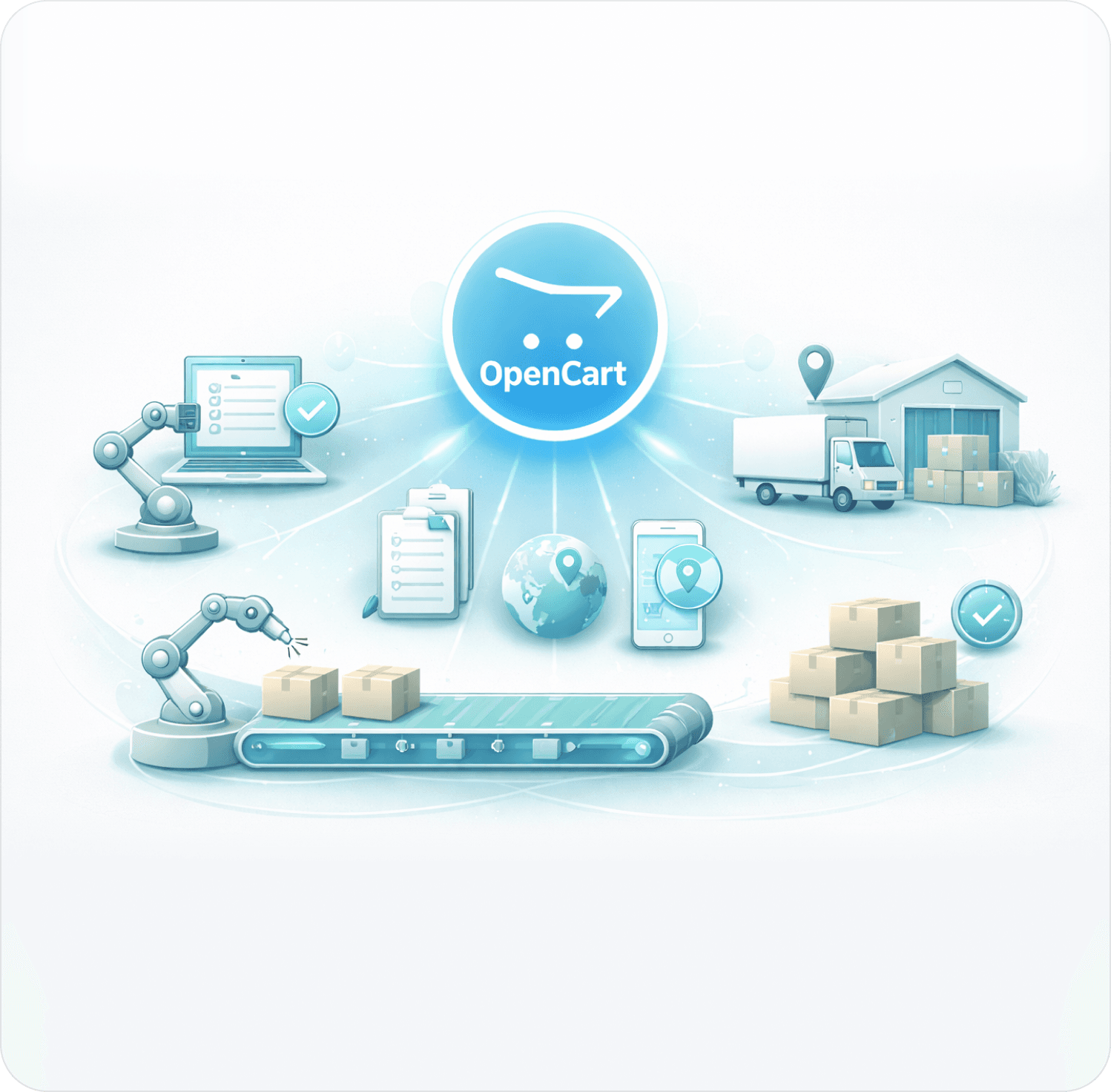
Shipping operations relied heavily on manual steps, causing delays, errors, and limited customer visibility as order volumes increased.
- Manual label creation and dispatch
- No direct integration with the shipping provider
- Limited shipping options
- Lack of real-time tracking
- Delayed fulfillment and poor transparency
- Built a custom OpenCart shipping extension integrated with DPD Ireland
- Digitized shipment creation and label generation
- Automated dispatch workflows from orders
- Enabled real-time rate calculation and tracking updates
- Removed manual data entry
- Reduced order fulfillment time
- Achieved a 50% improvement in operational efficiency
- Eliminated manual effort
- Increased customer satisfaction
- Strengthened logistics readiness for growth
Telecom Recharge Workflow Digitization & Automation
Recharge requests, payment verification, and provider coordination were handled manually, leading to delays and limited scalability.
- Manual processing by support teams
- Limited payment gateway options
- No centralized transaction view
- Manual coordination with providers
- Delayed service activation
- Automated end-to-end recharge handling
- Integrated telecom provider APIs for real-time activation
- Implemented automated payment validation
- Connected payment confirmation directly to execution
- Built an admin dashboard for transaction visibility
- Transaction success rate increased by 40%
- Operational cost reduced by 25%
- Manual effort eliminated
- User retention increased by 30%
- Enabled growth without expanding support staff

Start With Clarity Before Automating Further
A structured evaluation helps identify where manual work and fragmented automation slow execution.
Free Process Digitization Assessment
A focused review designed to uncover operational friction and define what should be digitized first.
What we assess
- Manual and error-prone workflows
- Fragmented automation
- Processes ready for digitization
- Differences between process and tooling issues
What you receive
- Clear view of operational gaps
- Prioritized recommendations
- Direction on next steps
Who This Is For
Organizations that:
- Operate with manual or partially digitized processes
- Experience workflow delays and errors
- Need clarity before investing in automation
Clear direction with no commitment required.
Free Process Digitization Assessment
A focused review designed to uncover operational friction and define what should be digitized first.
What we assess
- Manual and error-prone workflows
- Fragmented automation
- Processes ready for digitization
- Differences between process and tooling issues
What you receive
- Clear view of operational gaps
- Prioritized recommendations
- Direction on next steps
Who This Is For
Organizations that:
- Operate with manual or partially digitized processes
- Experience workflow delays and errors
- Need clarity before investing in automation
Clear direction with no commitment required.
Collaborate with Bobcares
Get actionable solutions for your business