





Managed Infrastructure Execution Support That Protects Engineering Focus
We help engineering organizations offload routine infrastructure work through structured execution and clear process ownership. Growth slows when operational work expands without dedicated capacity. Designed for organizations where senior engineers spend time on patching, maintenance, and after-hours coverage instead of strategic initiatives.
Execution Challenges in Growing Infrastructure Environments
Infrastructure grows over time, and operational tasks grow with it. Each task looks small, but when combined, they consume valuable engineering time.
Senior Engineers Handling Routine Maintenance
Senior engineers spend valuable time on routine maintenance instead of focusing on strategic work.
Project Delays Caused by Constant Interruptions
Projects move more slowly because engineers are repeatedly pulled into operational interruptions.
No Structured After-Hours Coverage
Lack of structured after-hours coverage leaves systems exposed during critical periods.
Runbooks Existing Only in Individual Memory
Operational knowledge stored only in individual memory increases dependency and risk.
Changes Made Without Rollback Planning
Infrastructure changes executed without rollback planning raise the chance of avoidable incidents.
The Biggest Risk Is Losing Engineering Leverage
Maintenance is not the real issue. Lack of structured execution capacity is.
Organizations often face challenges such as:
Innovation is slowing due to operational distractions
Technical strategy delayed
Key-person dependency increasing
Burnout risk rising
Coverage gaps create operational exposure
Infrastructure rarely blocks growth. Unstructured execution load does.Protecting the engineering focus becomes critical as systems scale.
How This Translates Into Ongoing Operations
Execution emphasizes clarity, predictability, and controlled workload distribution.
Phase 01
Operational Review and Scope Definition
Risk addressed: Operational work expanding without boundaries.
Identify repeatable infrastructure tasks
Define a clear execution scope
Establish boundaries between strategy and execution
Outcome: Clear execution ownership.Phase 02
Runbook Creation and Coverage Planning
Risk addressed: Person-dependent operations.
Document processes
Plan maintenance schedules
Define coverage structure
Outcome: Predictable execution.Phase 03
Active Execution and Reporting
Risk addressed: Interrupt-driven work affecting projects.
Handle routine tasks consistently
Manage alerts
Provide operational reporting
Outcome: Reduced interruptions for internal engineers.Phase 04
Continuous Process Improvement
Risk addressed: Stagnant processes increasing workload over time.
Refine workflows
Improve automation gradually
Increase execution efficiency
Outcome: Lower operational burden over time.
Proven Impact in Production Infrastructure Environments
Digitizing Legacy Finance Systems into High-Performance Platforms
Paykini is a financial services provider based in Malaysia. The platform delivers online payments, mobile recharges, and wallet management to thousands of users each day. Growth exposed weaknesses in legacy infrastructure, security posture, and mobile accessibility.
- Security breaches leading to stolen funds and altered accounts
- Unstable servers and outdated infrastructure causing crashes and slowdowns
- Weak database configurations and firewall policies increasing exposure
- Slow queries, timeouts, and resource spikes affecting transactions
- Limited mobile accessibility results in lost opportunities
- Migration requirements demanding secure data transfer without downtime
- Security issues were resolved, and systems were hardened.
- Firewalls were deployed, and protection was upgraded to Cloudflare.
- Database performance improved through query tuning and Redis caching.
- PHP-FPM was tuned for better transaction handling.
- Infrastructure was migrated to AWS using RDS and S3.
- Environments were maintained through audits and monitoring.
- A mobile-first platform and Ionic app were launched with secure APIs.
- Web and mobile experiences were unified.
- Security breaches were reduced to zero after remediation
- Infrastructure uptime improved to 99 percent
- Website load times improved by 50 percent
- Mobile traffic increased by 50 percent
- User engagement increased by 28 percent
- Conversion rates improved by 32 percent
- Infrastructure downtime reduced by 90 percent
- Backend systems prepared for peak load handling
- Expansion into mobile markets unlocked new revenue opportunities

Performance-Focused Cloud Hosting Infrastructure Upgrade for Appraise
Appraise Cloud Solutions is a cloud hosting provider based in the United States. As customer demand increased, the existing infrastructure struggled to maintain stability and performance during peak traffic. High-availability expectations required a stronger foundation.
- Frequent downtime and slow response times during traffic surges
- Limited dynamic scaling leading to performance degradation
- Delayed issue detection due to a lack of real-time monitoring
- Security risks from outdated deployment pipelines and unmanaged secrets
- Inefficient resource usage increases operational overhead
- A high-availability architecture improved resilience and uptime.
- Azure Application Gateway and NGINX were configured for SSL and traffic routing.
- AKS hosted containerized workloads with auto-scaling.
- Redis and PostgreSQL tuning improved performance.
- Prometheus and Grafana enabled real-time monitoring and alerts.
- Secrets were secured using Azure Key Vault.
- CI/CD pipelines were set up with Azure DevOps and Terraform.
- Failover, patching, backups, and redundancy were strengthened.
- Uptime improved to 99.99 percent
- Application response times improved by 45 percent
- Incident resolution improved by 60 percent
- Scaling speed doubled through automated provisioning
- Monitoring visibility shifted to real-time insights

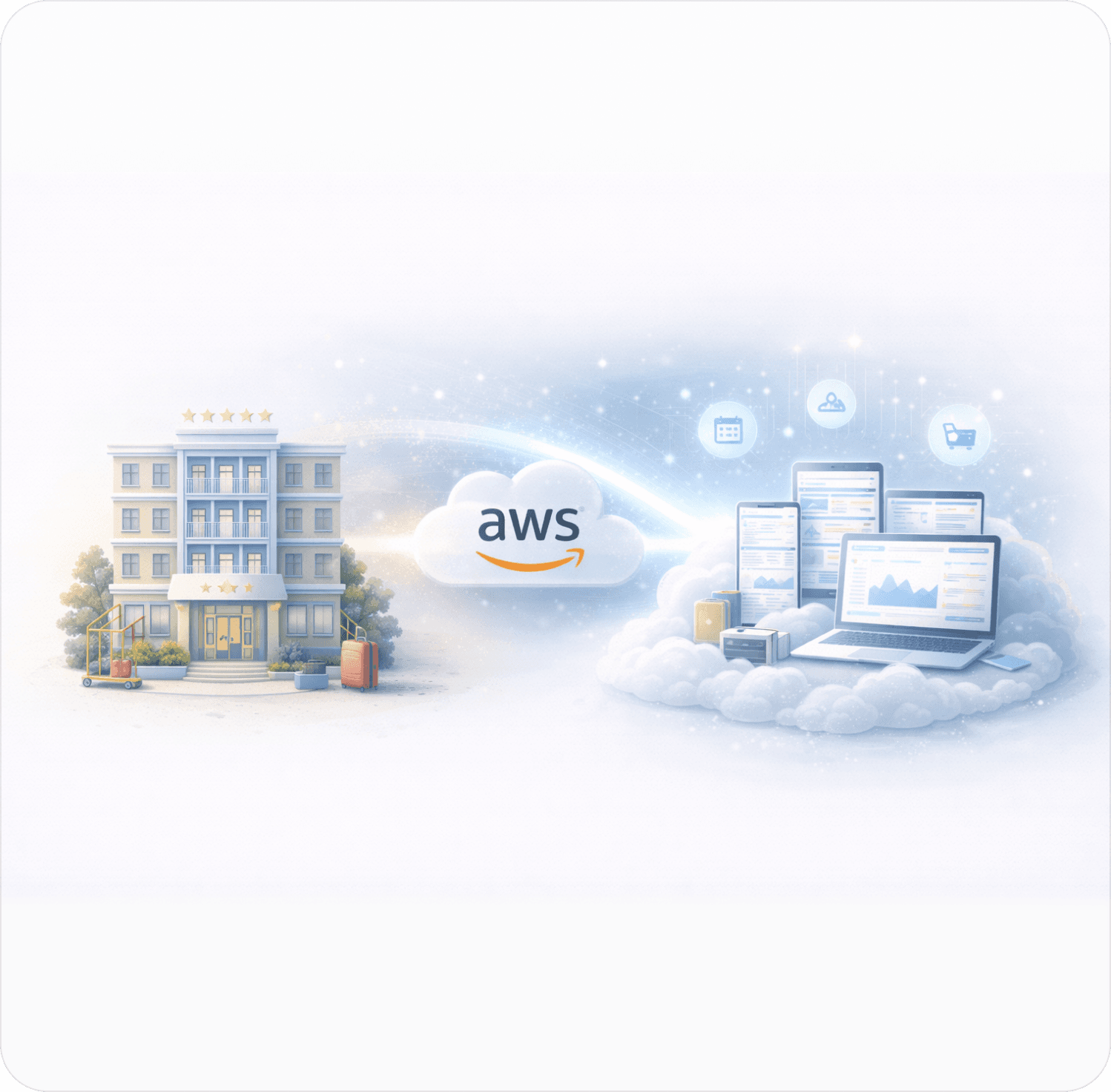
Scalable SaaS for Hotel Solutions on AWS
The client is a hospitality technology provider based in the United States. The company develops software solutions that improve hotel operations and efficiency. The goal was to build a scalable SaaS platform capable of managing hotel data, analytics, and workflows across multiple customers and regions. Growth expectations required strong performance, secure data handling, and reliable deployments.
- Difficulty scaling to support a growing number of hotel customers
- Performance pressure from real-time analytics and data retrieval
- Security requirements around sensitive hotel and guest data
- Deployment delays are causing operational disruption
- Cost growth as usage increased
- An AWS-based architecture was designed with EC2 auto-scaling and Elastic Load Balancers.
- RDS was configured with Multi-AZ support, and Redis was added for caching.
- S3 was used for secure storage with versioning and lifecycle management.
- A secure VPC was created with AWS WAF and Shield protections.
- CI/CD pipelines were automated.
- RDS read replicas were introduced to reduce database load.
- IAM roles and MFA strengthened access control.
- Data encryption was enabled using AWS KMS and SSL.
- Cost monitoring was enabled.
- Deployment time reduced by 40 percent through automated pipelines
- Operational costs reduced by 25 percent through cost monitoring and Reserved Instances
- System uptime maintained at 99.9 percent, exceeding SLA requirements
- Platform prepared to support a fivefold increase in users over three years
Execution support that keeps operations on track
Start with shared support and scale to dedicated engineers as execution demands increase.
Execution Support
A shared team that handles routine operational and maintenance tasks, helping your team move faster without added overhead.
What we assess
- Routine maintenance execution
- Runbook-driven tasks
- Patch and update execution
- Standard change implementation
- Operational task handling
What you receive
- Faster task completion
- Reduced internal workload
- Consistent execution quality
- Improved operational efficiency
- Reliable task handling
Who This Is For
- Teams with repetitive ops work
- Small DevOps teams
- Growing environments
- Teams needing execution support
- Cost-conscious organizations
Keep operations moving with execution support from $500–$900/month.
Execution Support
A shared team that handles routine operational and maintenance tasks, helping your team move faster without added overhead.
What we assess
- Routine maintenance execution
- Runbook-driven tasks
- Patch and update execution
- Standard change implementation
- Operational task handling
What you receive
- Faster task completion
- Reduced internal workload
- Consistent execution quality
- Improved operational efficiency
- Reliable task handling
Who This Is For
- Teams with repetitive ops work
- Small DevOps teams
- Growing environments
- Teams needing execution support
- Cost-conscious organizations
Keep operations moving with execution support from $500–$900/month.
Collaborate with Bobcares
Get actionable solutions for your business