



AI Automation Services

-1787333900860.png&w=3840&q=75)


What is AI Automation?
Many business processes follow the same rules every day, but they still require people to complete them manually. Tasks such as data transfers, document processing, approvals, notifications, and decision routing take time and reduce the time available for higher-value work.
AI automation addresses this by replacing these repetitive activities with automated processes. When AI is added, the system does more than follow predefined rules. In short, the system can understand documents, classify information, make context-based decisions, generate content, and handle exceptions using AI.
The result is a connected process that manages data movement, applies business rules, schedules tasks, handles errors, and automatically sends notifications. Bobcares develops intelligent automation solutions using n8n as the primary platform and deploys them in your environment, giving you full control over your data without per-task pricing.

Businesses adopt intelligent automation to:
When Do Businesses Need AI Automation?
The need for intelligent automation becomes clear when manual processes take up too much time and begin to slow down daily operations. As repetitive work increases, teams spend more time on routine tasks instead of work that supports business growth. At this stage, AI automation services help improve efficiency and reduce operational overhead.
Common signs your business is ready for intelligent automation:
Incoming documents, emails, and forms require manual review and classification before work can begin
Data is repeatedly exported from one platform and imported into another to keep systems updated with AI business automation
Notifications, follow-up emails, and status updates are sent manually, leading to delays or missed actions
Reports require collecting and combining data from multiple systems every week or month using AI automation software
New customer or user onboarding depends on completing the same manual tasks across different applications
Incident alerts and escalation processes rely on people checking dashboards and responding manually with AI workflow automation tools
Key Benefits
Manual data transfers
Saves 5 to 15 hours of weekly operational work per automated workflow
AI document processing
Removes manual review, classification, and routing of documents and emails
Automated reporting
Generates scheduled reports in seconds instead of taking hours
Client onboarding
Cuts onboarding time by 50%–70% with a consistent process
Alert automation
Reduces the mean time-to-notify from minutes to seconds
Cross-platform synchronization
Replaces manual reconciliation and reduces data inconsistencies
AI decision routing
Handles complex triage and categorization without manual review

Why Choose Our AI Automation Services?
Many automation projects solve an immediate problem but become difficult to maintain as business needs evolve. Workflows become difficult to maintain, changes require constant rework, and the automation struggles to keep up. Bobcares takes a practical approach to AI automation services. Our team develops automation that fits your business processes, remains easy to maintain, and supports long-term operational needs. Using n8n and AI where they add value, we deliver solutions that address real business requirements without unnecessary complexity.
Key Reasons Clients Choose Bobcares
Real experience running intelligent automation across our own business operations
Self-hosted n8n deployments that keep your data and workflows in your environment
AI-powered automation for document processing, classification, and content generation
Workflows are designed around your business processes
Reliable automation with built-in error handling, retries, and alerts
Clear documentation and workflow diagrams that make future updates easier
Connect With Our Engineering Specialists
Talk to Bobcares experts to explore the right solution for your business

Our AI Automation Services
Our AI automation services help businesses eliminate manual work and inefficient processes. We evaluate your workflows and technology stack to build the right solution, whether you need a single automation or automation across multiple business applications.
Workflow Automation with n8n
AI-Powered Document & Data Processing
AI-Assisted Decision Routing
API Integration Automation
Scheduled Data Pipelines
Monitoring & Alerting Automation
Client & User Onboarding Automation
Partners
We support businesses worldwide with reliable, expert-driven solutions. Trusted for our consistency, speed, and commitment to quality.


Customer Testimonials
We work with the Bobcares team across numerous brands and technologies, building on a relationship that spans many years. The team provide exceptional support, consistently demonstrating expertise, vigilance, and tenacity. Nothing is ever too much trouble for the team leader and her highly capable team, and their dedication and commitment are greatly appreciated.
Easyspace Division
Iomart Group
Bobcares has been an extension of our team at DNN4Less. We're a small shop running a big mix of platforms (cPanel/Linux, Windows/IIS, Plesk, DNN, email, and more), and their engineers handle our customer support with the technical depth and responsiveness we need. The team takes ownership of issues, knows when to escalate, and communicates clearly with our customers. Having Bobcares in our corner lets us focus on infrastructure and growth, knowing our customers are in good hands.

Jessie Haggerty
Hosting Manager, DNN4Less
Bobcares helped me with the configuration of server side settings that allowed for our development team to use Github with cPanel. Bobcares also guided me to another solution which may be better for my purposes. As always, Bobcares is looking out for my best interests and proactively offering ideas and recommendations. I highly recommend Bobcares for all of your technology support needs!

Matthew Owen
Founder, FastTrack CEO
We had a quick turnaround support from Ameer from BobCares team to fix a Cname issue we were facing with email delivery. This was rectified by Ameer instantly. We appreciate BC's support at all times and trust them and their expertise! 5 Stars and always reliable!

Shamil Abdul Latheef
Sr. Manager - Digital Biz, Chrysalis Digital

Bobcares provides comprehensive end-to-end product lifecycle support for ReformRX. From developing and maintaining the mobile app to handling customer support and Azure operations, no task was too small or too complex for their team. Their responsiveness to change, consistent high-quality deliverables, and can-do attitude helped us significantly scale the ReformRX app’s functionality. Bobcares’ team and leadership are engaged, reliable, and trusted partners for our IT services.
Kripa Krishnan
Product Lead, Reform RX

I wholeheartedly advise any company that needs an exceptional support team to take care of their internet and mail server to get in touch with Bobcares. They will experience exceptional, swift, and efficient service. Don’t wait—just go ahead and join them!
Cherif Bedran
Founder and CEO, Information Management Limited

Bobcares is a great service! I've been a user for nearly two years and whether it's regular server monitoring or responding to unexpected downtime, Bobcares has been there and done a good job. Most recently, we had an unexpected downed SQL server that Bobcares noticed through monitoring and brought back up to functioning in under an hour. Great work!
Ibrahim Chishti
Director of Technology, IMC DIGITAL UNIVERSE, INC
We have had many urgent issues with our Moodle instance and the team at Bobcares came to our rescue. This specific issue was no exception. Our production site was not loading, instead we were receiving this message, "error reading from database". However, I reached out to the techs at Bobcares and they rescued us in a short period of time! Our site is up and running again!

Sergio Estridge
E-Learning Manager, H. Lavity Stoutt Community College
We work with the Bobcares team across numerous brands and technologies, building on a relationship that spans many years. The team provide exceptional support, consistently demonstrating expertise, vigilance, and tenacity. Nothing is ever too much trouble for the team leader and her highly capable team, and their dedication and commitment are greatly appreciated.
Easyspace Division
Iomart Group
Bobcares has been an extension of our team at DNN4Less. We're a small shop running a big mix of platforms (cPanel/Linux, Windows/IIS, Plesk, DNN, email, and more), and their engineers handle our customer support with the technical depth and responsiveness we need. The team takes ownership of issues, knows when to escalate, and communicates clearly with our customers. Having Bobcares in our corner lets us focus on infrastructure and growth, knowing our customers are in good hands.
Jessie Haggerty
Hosting Manager, DNN4Less
Bobcares helped me with the configuration of server side settings that allowed for our development team to use Github with cPanel. Bobcares also guided me to another solution which may be better for my purposes. As always, Bobcares is looking out for my best interests and proactively offering ideas and recommendations. I highly recommend Bobcares for all of your technology support needs!
Matthew Owen
Founder, FastTrack CEO
We had a quick turnaround support from Ameer from BobCares team to fix a Cname issue we were facing with email delivery. This was rectified by Ameer instantly. We appreciate BC's support at all times and trust them and their expertise! 5 Stars and always reliable!
Shamil Abdul Latheef
Sr. Manager - Digital Biz, Chrysalis Digital
Bobcares provides comprehensive end-to-end product lifecycle support for ReformRX. From developing and maintaining the mobile app to handling customer support and Azure operations, no task was too small or too complex for their team. Their responsiveness to change, consistent high-quality deliverables, and can-do attitude helped us significantly scale the ReformRX app’s functionality. Bobcares’ team and leadership are engaged, reliable, and trusted partners for our IT services.
Kripa Krishnan
Product Lead, Reform RX
I wholeheartedly advise any company that needs an exceptional support team to take care of their internet and mail server to get in touch with Bobcares. They will experience exceptional, swift, and efficient service. Don’t wait—just go ahead and join them!
Cherif Bedran
Founder and CEO, Information Management Limited
Bobcares is a great service! I've been a user for nearly two years and whether it's regular server monitoring or responding to unexpected downtime, Bobcares has been there and done a good job. Most recently, we had an unexpected downed SQL server that Bobcares noticed through monitoring and brought back up to functioning in under an hour. Great work!
Ibrahim Chishti
Director of Technology, IMC DIGITAL UNIVERSE, INC
We have had many urgent issues with our Moodle instance and the team at Bobcares came to our rescue. This specific issue was no exception. Our production site was not loading, instead we were receiving this message, "error reading from database". However, I reached out to the techs at Bobcares and they rescued us in a short period of time! Our site is up and running again!
Sergio Estridge
E-Learning Manager, H. Lavity Stoutt Community College
Our Automation Framework
Every Bobcares automation project follows a structured process to deliver reliable workflows through AI automation services.
Step 1
Workflow Discovery & Mapping
We analyze your procedures, look for tasks that can be automated, map data movements, and determine where automation will deliver the greatest business value.Step 2
Architecture & Tool Assessment
We evaluate your technology stack, review your available APIs, build the workflow architecture, and identify AI gaps. We also assess your hosting and deployment needs.Step 3
Workflow Build & Implementation
We incorporate business rules, data transformations, AI capabilities where appropriate, and error handling with retry logic and execution logging to support AI process automation.Step 4
Testing & Validation
Every workflow is tested using real business scenarios to verify data accuracy, workflow logic, AI outputs where applicable, and error handling before deployment, including AI test automation where required.Step 5
Deployment & Monitoring
We deploy the workflows in your environment, set up monitoring, execution logs, and alerts, and ensure everything works as intended.Step 6
Documentation & Knowledge Transfer
We create workflow documentation, diagrams, and maintenance guidelines. We conduct a knowledge transfer session and hand over the workflows to your team so they can manage them independently.
What Makes Our AI Automation Services Different
Many automation projects solve an immediate problem but become difficult to maintain as business needs evolve. Workflows become harder to update, business logic grows more complex, and the automation no longer delivers the expected value. Our approach focuses on creating AI automation services that operate reliably, remain easy to manage, and fit your day-to-day business processes.
n8n Foundation
No per-task costs or vendor lock-in
AI-Powered Automation
Smarter decisions beyond rule-based workflows
Built-In Reliability
Visual Workflows
Post-Launch Support
Ongoing monitoring and maintenance
Tool-First Design
Common AI Automation Risks and How We Handle Them
Risk
How Bobcares Prevents It
Workflow failures after API or data changes
Validation, schema checks, and alerts catch issues early
Expired credentials and API keys
Credentials are tracked, reviewed, and monitored for expiry
Unintended actions in production systems
Workflows are tested, and critical actions require confirmation
Inconsistent AI outputs in production
AI prompts are validated, with manual review for anomalies
Data loss during automated transfers
Data is verified before and after every transfer
API rate limits exceeded
Request throttling and batch processing control API usage
Single points of failure in workflows
Retry logic, fallback paths, and logging improve reliability
Risk
Workflow failures after API or data changes
Expired credentials and API keys
Unintended actions in production systems
Inconsistent AI outputs in production
Data loss during automated transfers
API rate limits exceeded
Single points of failure in workflows
How Bobcares Prevents It
Validation, schema checks, and alerts catch issues early
Credentials are tracked, reviewed, and monitored for expiry
Workflows are tested, and critical actions require confirmation
AI prompts are validated, with manual review for anomalies
Data is verified before and after every transfer
Request throttling and batch processing control API usage
Retry logic, fallback paths, and logging improve reliability


Technologies & Tools We Use


Workflow Automation
n8n, Webhooks, Custom HTTP Nodes, JavaScript Code Nodes

AI & Intelligent Automation
OpenRouter API, LLM Prompt Chaining


Cloud & Infrastructure
AWS, DigitalOcean, Docker


Monitoring & Alerting
PagerDuty, OpsGenie, Grafana


Business Communication
Slack, Microsoft Teams, SMTP Email


Data & Integrations
MySQL, PostgreSQL, Redis, Google Sheets, REST APIs


Version Control
GitHub, GitLab, Bitbucket
Engagement Models
Select the engagement model that supports your project scope, business goals, and AI automation requirements.
Project-Based Implementation
A fixed-scope engagement with a defined timeline and deliverables. We design, develop, test, and deploy your automation workflows, followed by complete documentation and a structured handover to your team.
Dedicated AI Engineering POD
A dedicated Bobcares engineering team that works alongside your organization to develop, maintain, and expand automation across multiple business processes as your requirements grow.
Industries We Serve
Auxiliary Industry-Specific Use Cases
AI-Powered Operations Automation
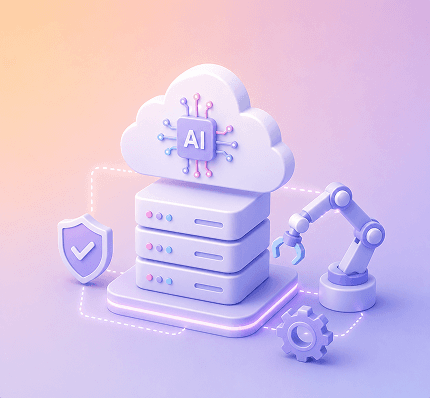
Impact
Challenge
Solution
AI-Powered Operations Automation
Challenge
Solution
Impact
Case Studies
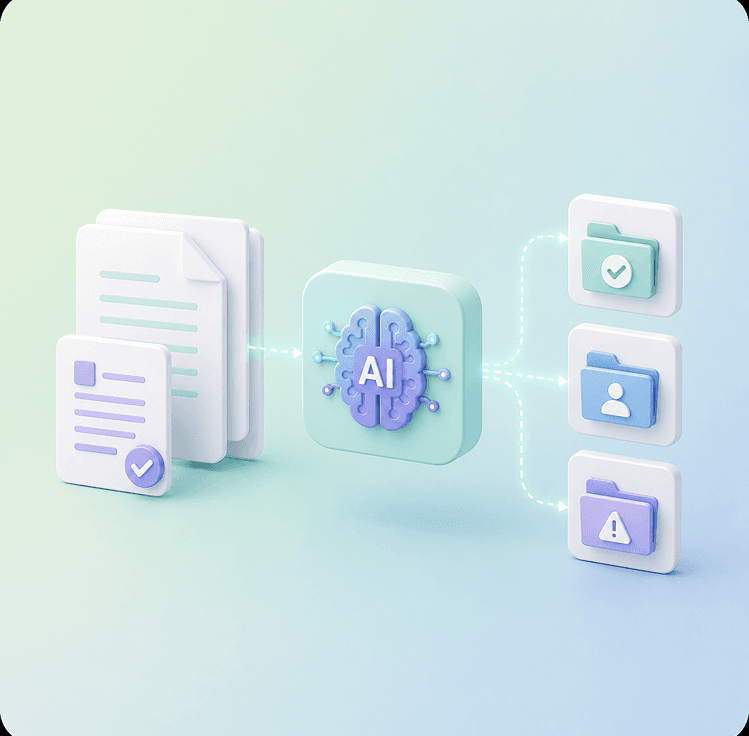
AI-Powered Document Processing and Triage Automation
A professional services company manually processed 150-200 invoices, contracts, and compliance documents each week, leading to delays and data entry errors.
- Time spent on manual document processing.
- Data entry errors across business systems.
- Delayed invoice and client record updates.
- Limited capacity to handle increasing document volumes.
- AI-powered document processing using n8n.
- Automated document classification and data extraction.
- API-based updates to CRM and accounting systems.
- Manual review only for low-confidence results.
- Document processing was reduced to exception-based reviews.
- Data entry errors were reduced significantly.
- Higher document processing capacity.
- Faster invoice processing and client updates.
Operational Workflow Automation for a Managed Services Provider
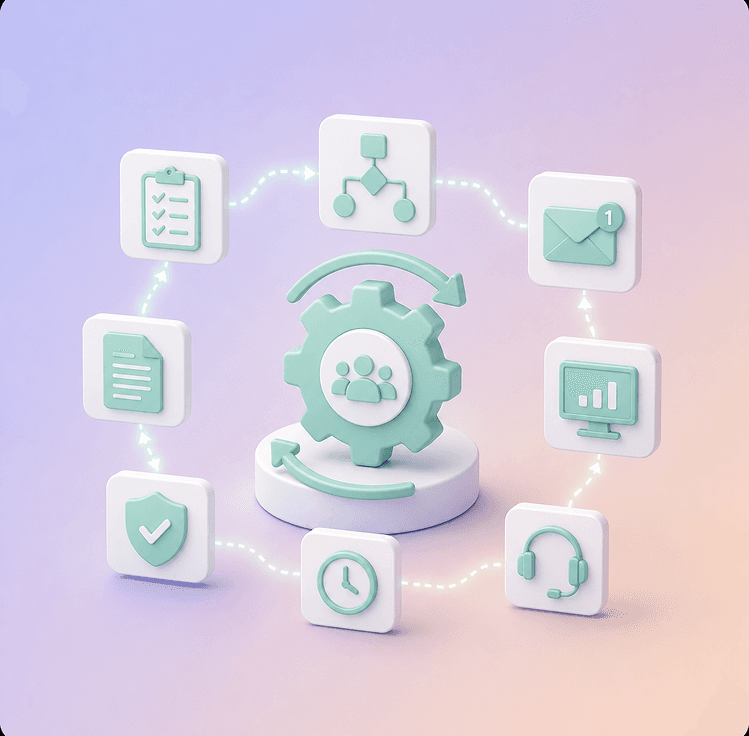
A managed services provider spent several hours each week on reporting, notifications, CRM updates, and client onboarding tasks using manual processes instead of AI workflow automation.
- Repetitive operational work every week.
- Delays in reporting and client communication.
- Manual CRM updates.
- Inconsistent onboarding activities.
- n8n workflows for reporting and notifications.
- Automated CRM updates after ticket resolution.
- Workflow-based client onboarding.
- Built-in error handling and execution logging.
- Reduced weekly manual operational work.
- Faster report and notification delivery.
- Improved CRM data accuracy.
- Consistent client onboarding.
API Integration and Data Synchronization for an Ecommerce Platform
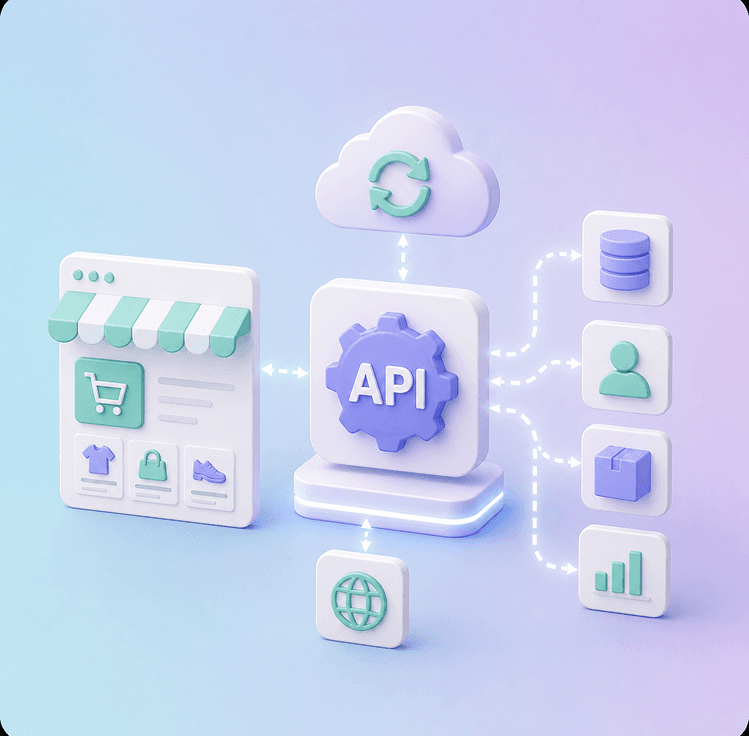
An ecommerce business relied on manual data transfers between business systems, causing delays and data inconsistencies.
- Manual data synchronization.
- Stock and invoice discrepancies.
- Delayed customer notifications.
- Time-consuming operational tasks.
- API integration using n8n.
- Automated data synchronization across platforms.
- Real-time order and inventory updates.
- Automated alerts for failed synchronizations.
- Manual data synchronization was eliminated.
- Reduced stock discrepancies.
- Faster order processing and invoicing.
- Reliable customer notifications.
AI-Powered Document Processing and Triage Automation
A professional services company manually processed 150-200 invoices, contracts, and compliance documents each week, leading to delays and data entry errors.
- Time spent on manual document processing.
- Data entry errors across business systems.
- Delayed invoice and client record updates.
- Limited capacity to handle increasing document volumes.
- AI-powered document processing using n8n.
- Automated document classification and data extraction.
- API-based updates to CRM and accounting systems.
- Manual review only for low-confidence results.
- Document processing was reduced to exception-based reviews.
- Data entry errors were reduced significantly.
- Higher document processing capacity.
- Faster invoice processing and client updates.
Operational Workflow Automation for a Managed Services Provider
A managed services provider spent several hours each week on reporting, notifications, CRM updates, and client onboarding tasks using manual processes instead of AI workflow automation.
- Repetitive operational work every week.
- Delays in reporting and client communication.
- Manual CRM updates.
- Inconsistent onboarding activities.
- n8n workflows for reporting and notifications.
- Automated CRM updates after ticket resolution.
- Workflow-based client onboarding.
- Built-in error handling and execution logging.
- Reduced weekly manual operational work.
- Faster report and notification delivery.
- Improved CRM data accuracy.
- Consistent client onboarding.
API Integration and Data Synchronization for an Ecommerce Platform
An ecommerce business relied on manual data transfers between business systems, causing delays and data inconsistencies.
- Manual data synchronization.
- Stock and invoice discrepancies.
- Delayed customer notifications.
- Time-consuming operational tasks.
- API integration using n8n.
- Automated data synchronization across platforms.
- Real-time order and inventory updates.
- Automated alerts for failed synchronizations.
- Manual data synchronization was eliminated.
- Reduced stock discrepancies.
- Faster order processing and invoicing.
- Reliable customer notifications.
Frequently Asked Questions
Collaborate with Bobcares
Get actionable solutions for your business