


Compare Apache Flume vs Sqoop to choose the best tool for data ingestion needs. Our Apache Support team is ready to assist you.
Apache Flume or Sqoop: Which Data Ingestion Tool Suits You
Big data moves efficiently from multiple sources into Hadoop for analysis using specialized tools. Apache Flume and Apache Sqoop are two powerful options for data ingestion, each serving different purposes. This article includes how Flume and Sqoop work and their key differences to help you choose the right tool for your data needs.
What is Apache Flume?
Apache Flume is a reliable system for collecting and moving large streams of data, such as logs, to central storage like HDFS. It uses sources, channels, and sinks to ensure data flows efficiently and safely, helping avoid issues like fixing the “WRITE_ERROR_TO_CLIENT” Apache error.
Key Components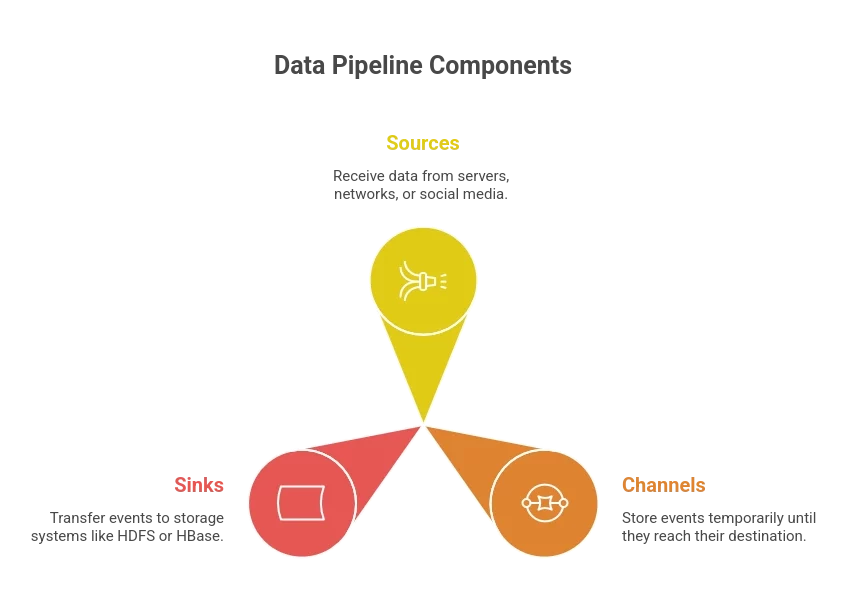
- Sources receive data from servers, networks, or social media.
- Channels store events temporarily until they reach their destination.
- Sinks transfer events to storage systems like HDFS or HBase.
Flume runs in a distributed setup, handles large volumes, and supports fault-tolerant, event-driven data processing. It is widely used to move logs, IoT data, and social media streams into central repositories for analysis, and is often configured alongside Apache virtual hosts setup for organized server management.
What is Apache Sqoop?
Apache Sqoop was an open source tool for fast, bulk transfer of data between Hadoop and relational databases. It supported moving data from SQL databases to HDFS and back, using Hadoop MapReduce for parallel processing. Sqoop handled incremental loads, direct integration with Hive and HBase, and could be automated through the command line, often requiring server maintenance tasks such as Apache2 restart Debian after installations.
Optimize your data ingestion process

Apache Flume vs Apache Sqoop: Key Differences Explained
This table compares Apache Sqoop and Apache Flume feature by feature, showing how each tool handles data, architecture, and use cases. It helps you quickly understand which tool fits specific data ingestion needs.
Feature | Apache Flume | Apache Sqoop |
| Primary Use Case | Collects, aggregates, and transports streaming data like logs, social media feeds, or IoT events into Hadoop | Transfers structured data between relational databases (RDBMS) or NoSQL databases and Hadoop (HDFS, Hive, HBase) |
| HDFS Integration | Data flows to HDFS through channels | HDFS is the destination for imported data |
| Features | High throughput, low latency, scalable from few to thousands of machines, fault-tolerant, stream-oriented, easily extensible | Bulk imports, parallel processing, direct input into Hive/HBase, programmatic access through Java classes, efficient resource use |
| Data Type | Unstructured or semi-structured streaming/event data | Structured data from relational or NoSQL databases |
| Fetch Data | Designed to fetch streaming data such as logs, social media, or application events | Designed to fetch data from structured sources only |
| Data Flow | Handles continuously generated streaming data in Hadoop environments | Works with relational databases using JDBC connectivity, allows import/export to Hive or HDFS |
| Architecture | Agent-based; agents fetch data from sources and send to destinations | Connector-based; connectors handle database connectivity and fetching data |
| Loading Type | Event-driven, real-time or near real-time ingestion | Batch-oriented, not event-driven |
| Operation | Used for collecting, aggregating, and transporting data reliably | Used for parallel data transfers, fast imports, and batch processing |
| When to Use | Best for bulk streaming data from sources like JMS, log files, or spooling directories | Ideal for databases like Teradata, Oracle, MySQL, PostgreSQL, or any JDBC-compatible system |
| Use Case Example | Aggregating logs from multiple servers or collecting real-time IoT sensor data | Importing MySQL tables to HDFS or Hive |
[Need assistance with a different issue? Our team is available 24/7.]
Conclusion
Apache Flume vs Sqoop shows the right tool for your data needs. Flume handles real-time streams, while Sqoop manages bulk transfers from databases to Hadoop efficiently.

