


Explore tools, automation strategies, and best practices to cut cloud expenses while improving performance and scalability. Contact our Cloud Cost Optimization experts today to explore how cloud-native application development can transform your business.
Cloud-native development is transforming how organizations deliver software, enabling faster releases, dynamic scaling, and immediate responsiveness to business demands.
Yet these benefits also bring a new challenge. It involves managing costs in highly dynamic environments. Traditional IT budgets were easier to predict since infrastructure was fixed. In contrast, cloud-native systems scale up and down continuously, making costs harder to track.
This is where cost optimization in cloud-native DevOps plays a vital role. It ensures resources are allocated wisely, wastage is minimized, and financial decisions are embedded directly into technical processes. When done well, cost optimization doesn’t limit innovation. In fact, it fuels it by ensuring every dollar spent delivers real value.
Overview
What is Cloud Cost Optimization?
Cloud cost optimization involves aligning cloud spending with actual business and technical needs. It is not about slashing budgets but ensuring resources match workload requirements. For example, a data-intensive workload during peak hours may need more computing power, but that same application may need fewer resources at night.
Since cloud platforms constantly update their services and pricing, optimization becomes an ongoing process. Organizations need accurate metrics, analytics, and automation to make smarter decisions. When teams understand each workload’s performance thresholds and match them with appropriate resources, they improve efficiency without sacrificing reliability or compliance. For a deeper dive into practical methods and industry-proven approaches, check out our detailed guide on the best cloud strategies for cost optimization.
What is Cloud-Native DevOps?
Cloud-native DevOps combines modern DevOps practices with cloud-native technologies. It is more than just using containers or Kubernetes. It involves building a culture of collaboration, automation, and continuous delivery across the entire organization.
At its core, cloud-native DevOps enables three principles:

- Continuous development and delivery with shorter release cycles.
- Automation of testing, monitoring, and scaling.
- Collaboration across development, operations, and finance teams.
Key Concepts and Trends in Cloud Cost Optimization
Cloud Waste
Unused or underutilized resources like idle virtual machines, over-provisioned storage, or orphaned volumes can quietly inflate cloud bills. Eliminating this waste is often the fastest way to achieve savings.
Autoscaling
Autoscaling ensures applications use only the amount of resources required at any given time. By expanding resources during peak demand and reducing them during quiet periods, teams avoid paying for unused capacity.
CI/CD Integration
By embedding cost controls into Continuous Integration and Continuous Deployment pipelines, teams prevent expensive mistakes before they reach production. For instance, if a developer tries to deploy a resource-heavy configuration, alerts can trigger a review of the change.
Cloud-Native Tooling
Major cloud providers offer built-in cost tracking and forecasting tools. They provide granular visibility and control when combined with Kubernetes features like Horizontal Pod Autoscaler.
The Rise of FinOps
FinOps brings together finance, engineering, and operations to manage cloud spending collaboratively. This shift ensures accountability is shared across teams rather than falling on a single department.
Cost Optimization Checklist for DevOps Teams
Improve Cost Visibility in Cloud-Native Environments
Cloud-native environments can make it difficult to determine where cloud spending is coming from. Containers, Kubernetes workloads, dynamic scaling, and shared infrastructure can cause costs to change frequently.
Start by tagging resources consistently based on application, environment, project, and cost center. Kubernetes labels can also help associate workloads with specific applications or environments. This makes it easier to identify which workloads consume the most resources.
Track compute, storage, network, and managed service costs separately. Compare spending with actual resource usage to identify workloads that consistently consume more capacity than expected.
Cost reports should also show changes over time. A sudden increase in spending can indicate higher traffic, configuration changes, resource overprovisioning, or unexpected data transfer.
Clear cost ownership helps development, operations, and finance understand the impact of technical decisions. Regular reviews can then identify unusual spending and address waste before it becomes a recurring expense.
Tips to Reduce Cloud Costs in DevOps
- Use tools like AWS Cost Explorer, Azure Cost Management, or Google Cloud Billing to gain detailed insights into spending. Visibility is the first step to accountability.
- Tag resources by team, project, or environment. This clearly attributes costs and prevents confusion about ownership.
- Build budget checks and alerts into deployment pipelines. This avoids costly misconfigurations before they reach production.
- Configure Kubernetes Horizontal Pod Autoscaler and cluster-level scaling to dynamically adjust resources.
- Regularly audit compute, storage, and networking resources. Downsize instances or switch to lower-cost options where performance allows.
- Identify and terminate idle or orphaned resources automatically through scripts or third-party tools.
- Use spot instances for fault-tolerant workloads and reserved instances for steady usage patterns.
- Additionally, regular reviews, feedback loops, and automated improvements keep costs aligned with changing business needs.
Tools and Technologies for Cost Optimization
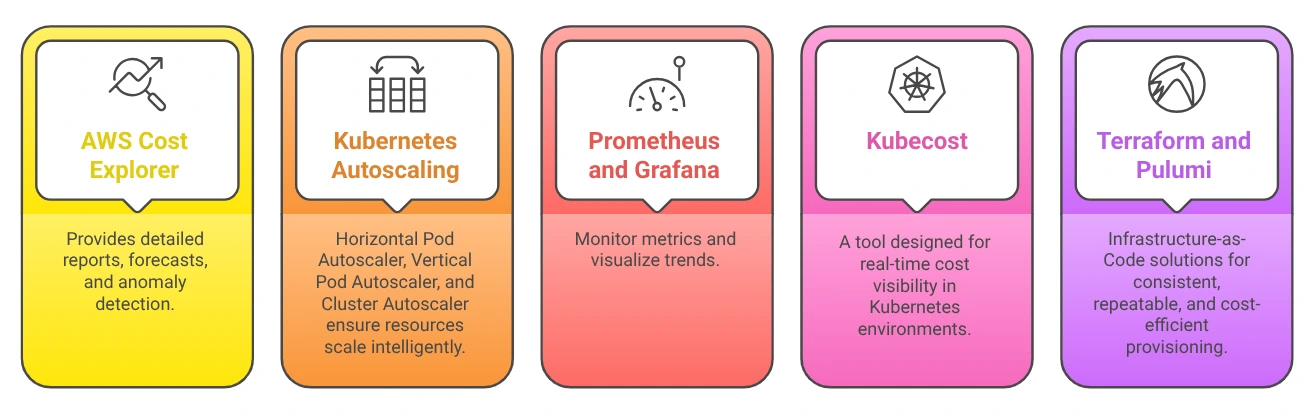
Practical Examples of Cost Savings
- E-commerce Case Study:
An online retailer integrated AWS Cost Explorer with Kubernetes autoscaling. They automated resource scaling based on real-time traffic and embedded cost alerts in their CI/CD pipeline. The result was a 30% cost reduction within three months while maintaining high availability.
- SaaS Case Study:
A SaaS company implemented a tagging strategy and automated shutdown of non-production environments during off-hours. This simple approach cut their cloud bill by 20% without reducing developer productivity.
[Not sure where to begin? Book a free consultation with our experts to assess your current cloud spending and identify immediate savings opportunities.]
Conclusion
Cost optimization in cloud-native DevOps is more than a technical exercise. Organizations can achieve significant savings while maintaining high performance by embedding cost awareness into development pipelines, automating scaling and cleanup, and adopting Infrastructure-as-Code.
Our Cloud Management Team can help you build cost-efficient, scalable, and performance-driven cloud-native environments.

