


Learn how to choose between Native and Cross-Platform Mobile Development and understand the trade-offs in cost, performance, tools, and user experience. Bobcares’ Mobile App Development Support helps you plan, build, and maintain mobile apps with confidence.
Deciding between native and cross-platform mobile development begins by considering the platforms your app is meant to support. Native development focuses on building applications specifically for Android or iOS. While, cross-platform development allows a single application to run on multiple operating systems.
Each approach differs in how applications are built, the tools involved, and the trade-offs in performance, cost, and development time.
An Overview
Native vs Cross-Platform Development at a Glance
Native development targets a single operating system and uses platform-specific languages and tools. Cross-platform development uses a single codebase to run across multiple platforms via specialized frameworks. The decision affects performance, user experience, development costs, and time-to-market.
| Criteria | Native Mobile Development | Cross-Platform Mobile Development |
|---|---|---|
| Target platforms | Built for a single operating system | Built to run on multiple operating systems |
| Codebase | Separate codebase for each platform | Single shared codebase |
| Programming languages | Java, Kotlin, Objective-C, Swift | JavaScript, Dart, C#, XAML |
| Development tools | Android Studio, IntelliJ IDEA, Xcode, AppCode | VS Code, Android Studio, IntelliJ, Visual Studio |
| Performance | High due to direct access to device resources | Lower due to abstraction layers |
| Access to device features | Full access to all APIs and services | Limited access through framework APIs |
| UI and UX | Follows platform design standards closely | Limited use of platform-specific components |
| Development cost | Higher due to separate platform teams | Lower due to a single development team |
| Development time | Longer due to independent platform builds | Shorter due to a single development cycle |
| Best suited for | Apps needing high responsiveness and hardware access | Apps focused on basic functionality and faster release |
What Is a Native Mobile Application?
Native mobile applications are built for a single operating system, either Android or iOS, using platform-specific programming languages. Android apps are written in Java or Kotlin, while iOS apps are developed using Objective-C or Swift.
Examples of native mobile applications include Google Maps, Pinterest, Spotify, and WhatsApp.
Native development requires operating system-specific software development kits and integrated development environments.
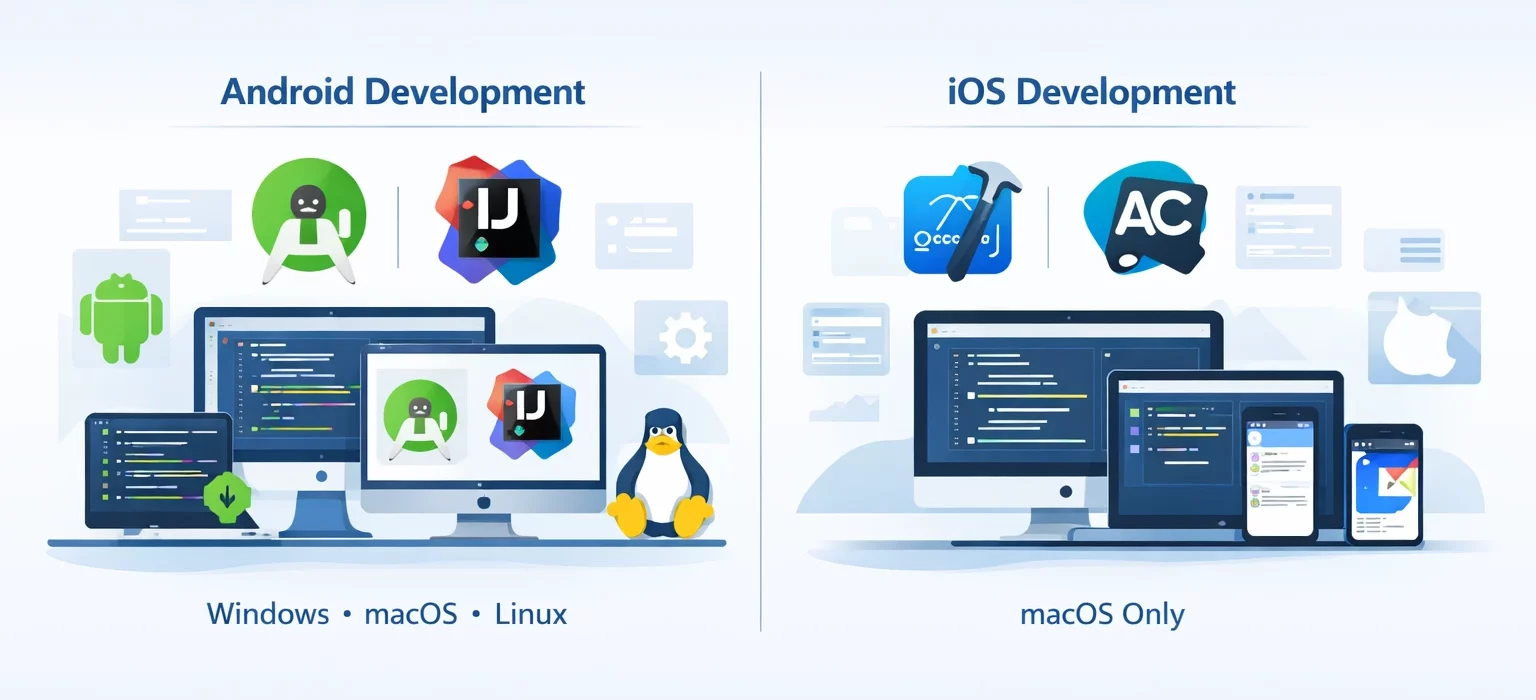
Here is a visual comparison of native mobile development tools, showing Android development with Android Studio and IntelliJ IDEA on Windows, macOS, and Linux, alongside iOS development with Xcode and AppCode on macOS.
Pros & Cons of Native Mobile App Development
Native development provides full access to platform APIs and device resources. This enables deeper integration with hardware features and system services.
Native applications are generally easier to publish and tend to perform better on app stores due to speed and responsiveness.
Applications built natively support flexible resource management and scale effectively as requirements grow.
Direct interaction between code and device resources delivers strong performance and user experiences that closely align with platform standards.
On the other hand, launching on both Android and iOS requires separate development efforts. Each platform needs its own codebase and development team, which increases costs.
Furthermore, development timelines are longer because work completed for one platform cannot be reused for the other.
What Is a Cross-Platform Mobile Application?
Cross-platform mobile applications are created from a single codebase and designed to run on multiple operating systems. Development relies on frameworks that provide a unified API while using platform-specific SDKs under the hood.
Popular frameworks include React Native (JavaScript), Flutter (Dart), and .NET MAUI (C# and XAML).
These frameworks compile applications to use native user interface elements, giving them a native look and feel. Access to device features such as GPS, battery status, camera, and microphone is provided through abstraction layers.
Examples of cross-platform applications include Instagram, Skype, Walmart, Airbnb, Google Ads, My BMW App, eBay Motors, The World Bank, and Alaska Airlines.
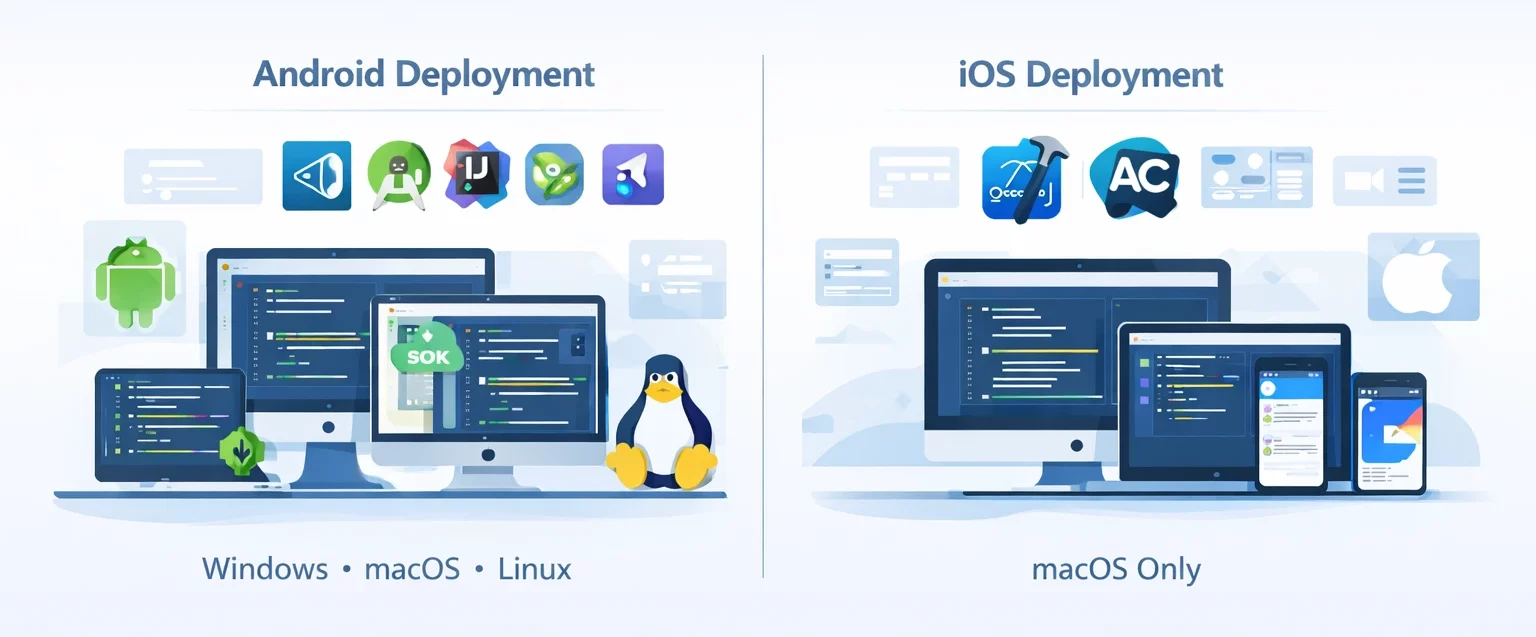
Here is a unified view of cross-platform development tools, showing Android and iOS deployment workflows supported by shared development environments across Windows, macOS, and Linux, with iOS builds requiring macOS.
Pros & Cons of Cross-Platform Mobile App Development
A single development team can build a single application for multiple platforms, reducing overall development costs.
Only one development cycle is required, allowing faster delivery across Android and iOS.
A shared codebase simplifies maintenance and ongoing updates.
Explore Bobcares Mobile App Development Support

On the other hand, additional abstraction layers can reduce performance compared to native applications.
Access to device features may be more limited than in native development.
Design flexibility is restricted because platform-specific user interface components are not fully available.
How to Choose Between Native and Cross-Platform Development
The right development approach depends on several practical factors.
- Applications that primarily display data from a network align well with cross-platform development. Apps requiring heavy processing or access to low-level device APIs such as Bluetooth are better suited to native development.
- Native development delivers strong performance but requires higher investment due to separate platform builds. Cross-platform development reduces costs by maintaining a single codebase for both Android and iOS, often saving 30-40%.
- Projects that need a minimum viable product quickly benefit from cross-platform development, as a single development cycle supports multiple platforms.
- Native development provides full access to platform-specific design components. Cross-platform development limits these options, which affects how closely the application follows platform conventions.
When Native Development Makes More Sense
Native development is a suitable choice when an application requires full access to device resources and hardware features. This approach supports highly responsive applications and allows easier expansion through new features over time.
When Cross-Platform Development Makes More Sense
Cross-platform development works well when broader platform reach and cost efficiency are higher priorities than maximum responsiveness. Applications focused on basic functionality and shorter market validation timelines fit this approach.
Conclusion
Choosing between native and cross-platform mobile development directly affects cost, development time, and user experience. Both approaches support Android and iOS, but each comes with distinct trade-offs.
No single method fits every project. Each mobile application has unique requirements related to performance, budget, scalability, and long-term plans. Evaluating these factors early helps determine which development approach is the better fit from the start.

