


Explore how AIOps in a Hybrid Cloud Setup helps teams handle monitoring, automation, and performance across mixed cloud infrastructures.
Struggling with visibility and control in hybrid cloud setups? Our Hybrid Cloud Management Services can help simplify day-to-day operations.
Hybrid cloud environments are a growing choice for businesses that want flexibility and control. These setups combine public cloud services with private cloud systems and traditional on-site infrastructure. Although the model offers flexibility, it also introduces challenges, including scattered data, complex configurations, and inconsistent performance.
If AIOps is new to you, this quick introduction to AIOPS breaks it down in a simple, easy-to-follow way.
Overview
AIOps in Hybrid Cloud
In a hybrid cloud setting, AIOps applies artificial intelligence, machine learning, and big data analytics to handle IT operations across diverse environments. It helps teams monitor systems, detect unusual behavior early, predict failures, and automate repetitive tasks so they can focus on bigger goals.
Hybrid clouds combine the strengths of public cloud scalability with private cloud security, but that mix also creates silos and blind spots. With many tools generating separate logs and alerts, it becomes difficult to see the full picture. AIOps works by gathering data from all these sources and turning it into actionable insights, so teams can identify and respond to issues quickly. Managing hybrid environments efficiently also requires strong financial governance. Here is a guide on cost optimization in hybrid cloud that explains how organizations can balance performance with predictable spending.
Key Building Blocks of AIOps
Some key components come into play when planning an AIOps implementation for hybrid clouds.
Unified Data Collection
AIOps platforms bring together data from cloud services, on-site systems, log files, monitoring tools, and ticketing systems. This gives IT teams a single source of truth rather than fragmented views.
Smart Algorithms
Machine learning models analyze both historical trends and current data to spot patterns, flag anomalies, and forecast potential problems before they impact users.
Automation and Workflow Handling
AIOps can trigger predefined actions for routine tasks such as incident responses or resource changes, reducing manual steps and helping teams move faster.
Predictive Insight
Rather than waiting for alerts to pile up, predictive capabilities allow IT teams to act on potential issues early, such as capacity shortages or performance dips.
Clear Dashboards and Reporting
Visual tools help teams track system behavior in real time, understand risks, and make data-driven decisions rather than relying on guesswork.
Support for Collaboration
Integrated communication tools help bridge gaps among DevOps, IT operations, and security teams, ensuring coordinated, effective responses.
AIOps Advantages for Hybrid Cloud Operations
- By handling routine tasks automatically and delivering real-time insights, AIOps reduces the burden on IT staff.
- AIOps equips IT teams with information to make informed decisions.
- Platforms often include communication tools that help teams stay informed and aligned on what’s happening across systems, speeding up problem resolution.
Need help managing hybrid cloud systems?

How to Implement AIOps in Hybrid Cloud Environments
- Review your existing cloud and IT infrastructure to identify where visibility is limited or where issues commonly arise.
- Decide what you want to achieve with AIOps, such as faster incident handling or more accurate forecasting.
- Choose a system that fits your hybrid environment and integrates well with your existing tools.
- Make sure all relevant data streams feed into the platform so your analytics are comprehensive.
- Give your IT staff the training they need to use the new platform and interpret its insights.
- Keep track of how the system performs and adjust configurations as your needs evolve.
AIOps already plays a role in many industries:
- Companies have used these methods to reduce unplanned downtime and improve customer experiences.
- Hospital networks rely on systems that keep patient data available and secure at all times.
- Banks use predictive insights to strengthen security and maintain compliance while managing complex workloads.
Challenges in Hybrid Multi-Cloud Environments
Hybrid multi-cloud setups combine public cloud, private cloud, and on-site systems. While flexible, this model also brings:
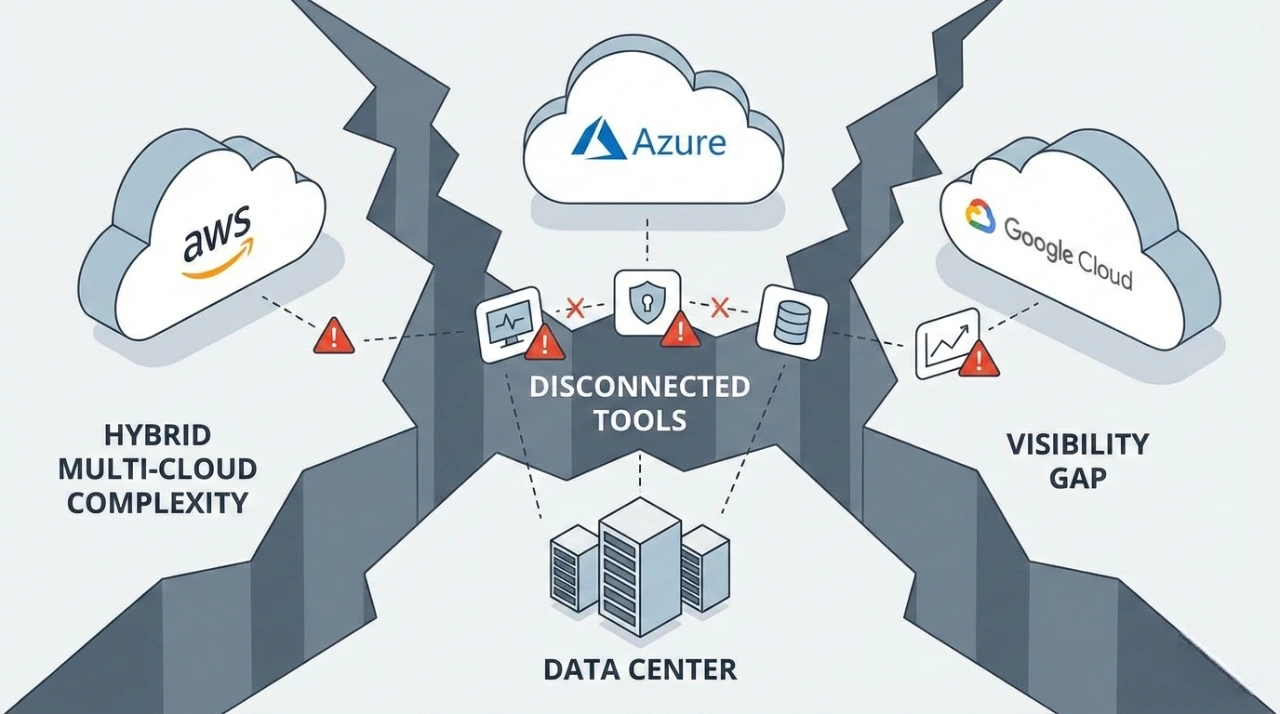
- Multiple tools and varied architectures require deep expertise and coordination.
- Regulated sectors such as healthcare and finance must ensure strict data controls.
- Without clear visibility, billing surprises and inefficient resource use can occur.
- Mismatched systems can limit data sharing and slow down processes.
- Disconnected tools can create blind spots that delay trouble detection.
- Performance bottlenecks can frustrate users and degrade the experience without proper management.
Conclusion
Hybrid cloud environments bring flexibility, but they also increase operational complexity. AIOps helps teams cut through this complexity by improving visibility, identifying issues earlier, and reducing manual effort across public and private cloud systems. When implemented with clear goals, unified data, and the right level of automation, AIOps becomes a practical way to keep hybrid cloud operations stable, predictable, and easier to manage as environments continue to grow.

