


IT teams depend on alerts to identify and resolve issues before they affect business operations. However, when monitoring systems generate a high volume of recurring notifications, important incidents can become difficult to identify. Reducing unnecessary alerts helps improve server performance while allowing engineers to focus on higher-value work.
Today, we will take a closer look at common alert management challenges, identify opportunities for improvement, and explain how outsourced support can reduce alert noise and improve operational efficiency.
Why Recurring Alerts Matter
Recurring alerts are often generated by issues such as disk usage and system load thresholds. Many of these notifications are repetitive and require little or no action, yet they still consume valuable engineering time.
Reviewing recurring alerts helps identify patterns that reveal opportunities for threshold tuning, automation, and permanent fixes.
| Opportunity Area | Observed Gaps | Potential Solution | Business Impact |
|---|---|---|---|
| Reduce recurring alerts | Excessive alerts from disk usage and load thresholds | Alert tuning and permanent fixes, including automation and load balancing | Improved server performance and reduced time spent resolving recurring issues |
Many recurring alerts represent monitoring noise rather than actionable incidents. Addressing root causes and refining alert thresholds can significantly reduce unnecessary notifications.
How Outsourced Support Improves Alert Management
Outsourced support adds an additional layer of monitoring by filtering and managing alerts before they reach internal teams.
Key responsibilities include:
- 24×7 triage: Low-priority alerts are filtered before reaching internal engineers.
- Prioritization and escalation: Only critical incidents are escalated for immediate action.
- Continuous improvement: Recurring alerts are analyzed to recommend threshold adjustments and permanent solutions.
Alert Management Workflow
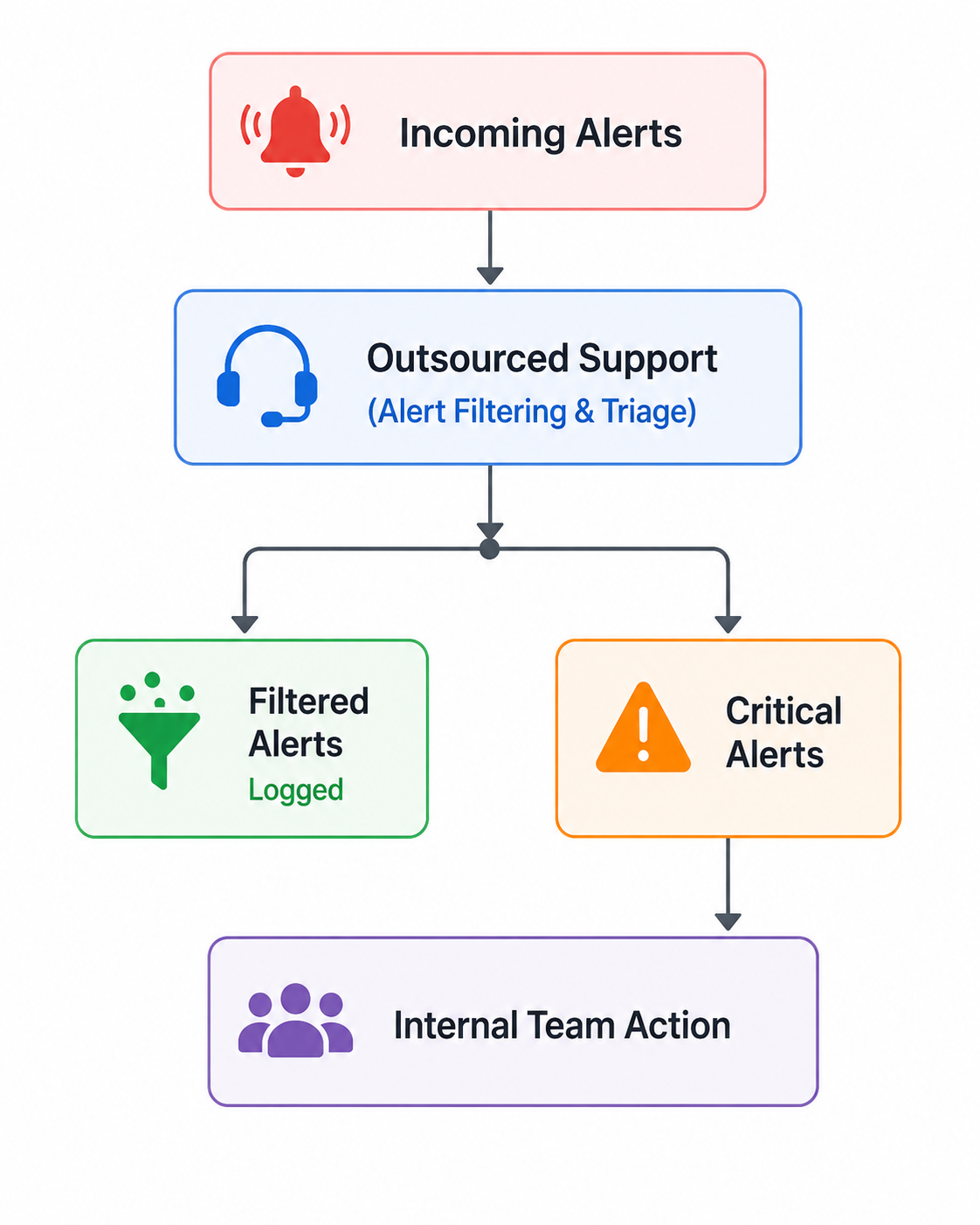
This workflow reduces unnecessary alert noise while helping internal teams respond more quickly to genuine issues.
Business Benefits of Reducing Alert Noise
Reducing recurring alerts improves both operational efficiency and infrastructure performance.
| Benefit Area | Details |
|---|---|
| Reduced Alert Volume | Low-value recurring alerts are filtered or eliminated. |
| Improved Server Reliability | Permanent fixes reduce performance issues and downtime. |
| Increased Team Productivity | Engineers spend less time resolving repetitive alerts and more time on strategic work. |
Initial tuning of disk usage and load alerts can reduce recurring alert resolution efforts by approximately 50%, freeing engineering time while improving server performance.
Ready to outsource support?

Turning Findings into Action
1. Tune Alert Thresholds
Review and adjust thresholds for recurring disk usage and load alerts to reduce unnecessary notifications.
2. Resolve Root Causes
Address recurring issues through automation, load distribution improvements, or permanent corrective actions.
3. Use Outsourced Support
Assign continuous alert triage, filtering, and ongoing analysis to outsourced support teams.
4. Measure Results
Track improvements in alert volume, server performance, and engineering workload to evaluate the effectiveness of these changes.
Conclusion
Recurring alerts can reduce operational efficiency when they overwhelm engineering teams with low-value notifications. Reviewing alert patterns, refining thresholds, and addressing root causes help improve server performance while reducing unnecessary work. Additionally, outsourced support strengthens this process by filtering alert noise, escalating critical incidents, and continuously identifying opportunities for improvement. Bobcares provides 24×7 infrastructure monitoring and managed support services that help businesses reduce alert fatigue, improve incident response, and maintain reliable IT operations. Our engineers assist with alert tuning, root cause analysis, automation, and ongoing infrastructure management to keep monitoring systems focused on actionable events.

