


Businesses today must operate faster, control costs, and deliver better results. To do this, they need to move beyond manual methods and adopt digital tools that support their core operations as part of the digitalization of business. This helps reduce repetitive work, improve accuracy, and make daily operations easier to manage.
It is not just about adopting tools but also about how they are used in the digitalization of business. Companies that start early gain an advantage. They improve systems, access information faster, and adapt easily. Those who delay face higher costs, outdated systems, and struggle to keep up with others using business digitalization services.
At the same time, customers expect speed and simplicity. Manual work cannot meet these expectations. As part of the digitalization of business, digital systems allow teams to focus on important work while routine tasks run automatically in the background.
So, digitalization of business is essential for staying competitive, improving efficiency, and supporting future growth.
An Overview
- What are “Core Processes” in a Growing Company?
- Digitization vs Automation in Business Workflows and Why Both Matter
- Why Early Digitization Gives Businesses a Lasting Competitive Advantage
- How Operational Efficiency Quickly Turns into Measurable ROI
- How Automation Actually Reduces Costs and Improves Productivity
- Why Manual Systems Fail as Businesses Grow
- How Structured Workflows Reduce Chaos And Improve Consistency
- Why Execution and Technology Decide Real Business Growth
- FAQs
What are Core Processes in a Growing Company
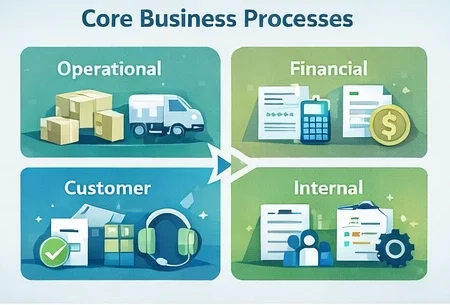
As a company expands, operations can get complicated. Teams often have trouble keeping everything in sync. At this point, it is really important to understand the processes as part of the digitalization of business. These are the workflows that make the company run every day. They affect how fast you deliver things, how well you handle money, how satisfied your customers feel, and how efficiently your teams operate.
When you clearly break down these core processes, it is easier to see where things need to get better and where technology and digitization of business processes can help.
Core Processes Overview
| Area | What it Includes | Business Impact |
|---|---|---|
| Operational | Order flow, inventory, and delivery | Faster fulfillment and fewer errors |
| Financial | Invoicing, payments, and records | Better cash flow and accuracy |
| Customer facing | Onboarding, support | Higher retention and satisfaction |
| Internal | HR, approvals, reporting | Improved efficiency and control |
Operational Processes
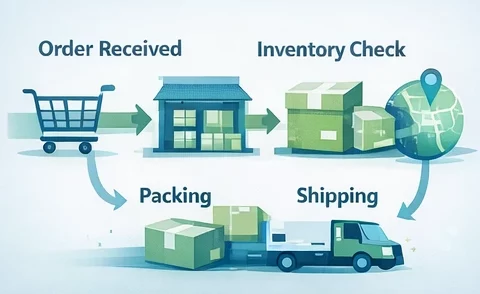
These processes are about managing orders from start to finish. This means getting the order, checking whether we have the product in stock, packing it up, shipping it out, and handling returns. When all these steps are well organized through the digitization of business processes, we can deliver products faster. We can also avoid stock mismatch and reduce delays.
Financial Processes
Financial processes are about handling money. This includes capturing invoices, verifying details, approving payments, recording transactions, and maintaining proper records. Good financial processes supported by the digitalization of business help prevent mistakes, improve visibility into spending, and ensure compliance with regulations.
Customer-Facing Processes

These processes are about how customers interact with our business. When customers sign up, we want to make sure they get started easily. When these processes are clear and supported by business digitalization services, customers gain confidence in your service and are more likely to stay long-term.
Internal Workflows
Internal workflows are about supporting employees and making decisions. These include hiring, leave requests, expense approvals, and reporting. When these processes are easy to follow and supported by the digitalization of business, teams spend less time on repetitive tasks and more time on work that helps the business grow.
Digitization vs Automation in Business Workflows and Why Both Matter
Many businesses move their files and records into digital systems and expect immediate improvements. However, they often notice that work still feels slow and repetitive. This happens because digitization of business processes is only one part of the solution. To truly improve efficiency, you need to understand how digitization and automation work together in the digitalization of business.
Understanding the Difference
| Area | Digitization | Automation |
|---|---|---|
| What it does | Converts information into digital form | Executes tasks using that digital data |
| Focus | Data and accessibility | Process and execution |
| Human involvement | Still required for many steps | Reduced significantly |
| Result | Organized information | Faster and consistent workflows |
Digitization
Digitization is about making information easy to use and access. It is the process of converting scattered data into digital formats that systems can understand as part of the digitization of business processes.
What this looks like
- Scanning paper documents into files
- Storing records in cloud systems in folders
- Converting manual logs into structured data
Benefits of Digitization
- Faster access to information
- Data organization
- Reduced risk of loss or duplication
However, after digitization, teams may still spend a lot of time reviewing, entering, or transferring data manually.
Automation
Automation uses digitized data to change how work gets done within the digitalization of business. It uses systems to handle rule-based tasks with minimal human input.
What this looks like
- Extracting data from documents
- Routing approvals without follow-ups
- Updating systems without reentering information
Benefits of Automation
- Faster processing times
- Fewer human errors
- Consistent execution of tasks
Why Both Are Needed Together
Digitization and automation are a combination in the digitalization of business. Digitization alone makes information more visible. It does not reduce workload. Automation alone cannot function without data. When combined, they create a system where information flows without handoffs and tasks are completed faster and more reliably.
Why Early Digitization Gives Businesses a Lasting Competitive Advantage
Many businesses delay digitalization of their business, assuming they can adopt it later without losing much ground. However, early action creates advantages that grow stronger over time. Companies that start early do not just improve efficiency. They build systems, data, and capabilities that competitors find difficult to replicate.
Early Vs Late Digitization
| Factor | Early Digitization | Late Digitization |
|---|---|---|
| Learning curve | Gains real experience early | Learns after others |
| Cost over time | Reduces efficiency | Increases due to rework |
| Data strength | Builds deep insights | Limited and delayed |
| Market position | Sets direction | Follows established players |
Builds a Strong Operational and Data Foundation
When businesses digitize early, they make sure their processes work well from the beginning. Instead of relying on manual work, they create workflows that make things faster and more accurate. This helps to lower costs and makes things more consistent over time.
Early digitization also helps companies collect and use data from the start. This data is very valuable. It helps businesses know how customers behave. It also helps them make decisions and improve how they work. As other companies try to catch up, early adopters have years of information to guide their plans.
Enables Faster Scaling And Reduces Future Complexity
Early digitization makes it easier for a business to grow. Digital systems help companies deal with customers without needing to hire a lot of new people. This gets rid of the things that slow businesses down and helps them grow smoothly.
If a company waits too long to digitize, it might have to build on old and hard systems to change later on. This can cause a lot of problems in the run, making it harder to come up with new ideas and requiring a lot of work to keep things running. Companies that digitize early do not have this problem because they build on systems that are easy to update and work with new technology.
In the end, digitization is not about making things better now. It helps businesses as a company moves faster, deals with changes better, and gets ahead of the competition. This makes it hard for other businesses to catch up with a company that has digitized early.
How Operational Efficiency Quickly Turns into Measurable ROI
Many businesses invest in systems, but they struggle to see financial returns right away. The key issue is usually how well they work. When day-to-day tasks get faster and more efficient through digitalization of business, the results show up instantly in saved costs and more work done.
Where the Immediate Gains Happen
| Area | Traditional Approach | Improved Approach | Result |
|---|---|---|---|
| Task handling | Repetitive manual work | System-driven execution | Reduced effort and cost |
| Process speed | Delays and bottlenecks | Smooth flow of tasks | Faster completion |
| Accuracy | Frequent mistakes | Consistent outcomes | Less rework |
| Work capacity | Limited by team size | Scales without extra hiring | Higher output |
Speed Directly Impacts Returns
When a company simplifies things and gets rid of steps that are not necessary, speed is increased across all teams. Tasks that used to take time to complete because they needed many approvals or follow-ups can now be done much faster. This faster Speed does not make the company work better on the inside, but it also helps the company make money sooner and take care of customer needs quickly.
Reducing Waste Improves Profitability
Routine repetitive activities such as data entry, error correction, and communication often take significant time without adding much value. By reducing or streamlining these tasks, organizations can save time and cost. Teams can then focus more on important work, which improves overall productivity and quality.
Consistency Makes Everything Easier
Standardizing how tasks are performed enhances predictability and control. When processes follow a consistent structure, it reduces ambiguity, accelerates onboarding and training, and creates a stable foundation for continuous improvement. Consistency also enables easier identification of inefficiencies and supports the integration of automation where it delivers the most value.
Turning Improvements into Measurable Gains
Incremental process improvements, when applied systematically, translate into tangible financial benefits. Organizations can achieve greater output with the same resources while maintaining consistent quality and speed. This operational efficiency allows companies to increase profitability without proportionally increasing costs, strengthening both performance and scalability.
How Automation Actually Reduces Costs and Improves Productivity
Many companies waste time on repetitive tasks like typing in data, getting approvals, and doing the same things over and over. Automation within the digitalization of business makes a difference by letting systems handle routine work, which makes things run more smoothly and gets more work done.
When automation comes in, these everyday tasks start running on their own. Work does not stop because someone is busy or away. It keeps moving. As a result, people spend less time on routine work and more time on things that actually need thinking and decision-making.
What Automation Improves
- Less time spent on basic, repetitive work
- Fewer delays caused by manual follow-ups
- Teams feel less overloaded with routine tasks
- Hiring pressure reduces because existing teams can handle more
Another thing you notice quickly is how much smoother things become. When people do the same task again and again, small mistakes are bound to happen. Automation removes that variation. The same steps happen the same way every time.
Key Benefits of Automation
- Work gets done faster without constant checking
- Mistakes are reduced, so there is less rework
- Processes become more predictable
- Teams manage higher workloads without feeling stretched
Over time, automation makes a big impact on how businesses perform. Costs go down, productivity goes up. Teams get more work done without being overwhelmed. Automation does not just replace people; it changes the way work is done, making things more reliable and easier to manage. Automation helps businesses run smoothly, and Automation makes things better for companies.
Why Manual Systems Fail as Businesses Grow
Manual systems may work in the beginning, but they start to break as the business grows. What once felt simple becomes difficult to manage when the volume of work increases. Without the digitization of business processes, more orders, more data, and more coordination create pressure that manual processes cannot handle.
What Starts to Happen
- Tasks slow down due to constant follow-ups
- Errors increase as workload grows
- Information gets scattered across files
- Teams depend heavily on specific individuals
As a result, small inefficiencies turn into bigger bottlenecks. Teams try to cope by adding more people or creating quick fixes, but this often makes things more complex.
Why Structured Workflows Matter
When workflows are clear and repeatable, work becomes easier to manage even as demand grows.
What Improves
- Tasks follow a consistent process
- New team members adapt quickly
- Errors reduce significantly
- Work scales without added chaos
In short, manual systems struggle with growth, while structured workflows help businesses stay efficient and in control.
How Structured Workflows Reduce Chaos And Improve Consistency
In many teams, work depends on how individuals handle tasks. This leads to confusion, missed steps, and constant follow-ups. As the business grows, these issues become harder to manage.
Structured workflows bring clarity by defining how each task should be done. Everyone follows the same steps, which makes work predictable and easier to track within the digitalization of business, and is supported by business digitalization services.
What Improves
- Tasks are completed in a consistent way
- Responsibilities are clearly defined
- Fewer errors and missed steps
- New team members adapt quickly
At the same time, structured workflows reduce dependency on specific individuals. Work no longer relies on memory or personal experience, so it continues smoothly even when team members change.
In simple terms, structured workflows replace guesswork with clarity. They help teams stay organized, reduce disruptions, and make it easier to scale without losing control.
Why Execution and Technology Decide Real Business Growth
Many businesses invest in new tools with high expectations, yet results often fall short. Growth happens when strategy turns into action, and that depends on both execution and the right technology choices in the digitalization of business.
Choosing Tools that Actually Fit the Business
Not every tool works for every company. The real value comes from selecting technology that supports how the business operates and plans to grow. Cloud platforms help teams scale without heavy infrastructure, while automation reduces repetitive work and keeps processes moving.
What Matters When Choosing Tools
- Fit with existing systems and workflows
- Ability to scale as the business grows
- Ease of use for teams
- Flexibility to adapt in the future
Where Most Implementations Go Wrong
Even good tools fail when execution is weak. Many businesses rush into adoption without clear goals or ignore how teams will actually use the system.
Common Challenges
- No clear direction on what success looks like
- Limited involvement from the people using the system
- Poor testing in real working conditions
- Resistance from teams due to a lack of clarity or training
Making Technology Work in the Long Run
For technology to deliver value, people need to use it comfortably and consistently. This requires proper training, clear communication, and systems that can evolve with changing needs.
In the end, technology alone does not create growth. The way it is implemented, adopted, and continuously improved is what truly makes the difference.
FAQs
1. Why does my business still feel slow even after going digital?
- Because storing data digitally is only one step. Work stays slow when tasks still depend on manual input or follow-ups.
2. What should I fix first to improve operations?
- Start with the processes that slow your team down the most. Look for repeated tasks, delays, and areas where errors happen often.
3. How do I know if I need automation?
- If your team spends a lot of time on routine work like data entry, approvals, or updates, automation can save time and reduce mistakes.
4. Will improving workflows really impact revenue?
- Yes. When work moves faster and errors are reduced, you save costs and complete more tasks in less time, which improves overall output.
5. When is the right time to start making these changes?
- As early as possible. The sooner you fix your processes, the easier it becomes to grow without running into bigger problems later.
Conclusion
You want work to move faster with fewer errors and less effort. That starts when you fix slow processes and use systems that handle routine tasks for you as part of the digitalization of business. Take a close look at where your work gets stuck, then simplify it step by step. When you act early with the digitalization of business, you make growth easier to manage and results easier to achieve.

