


Explore the top industries using cloud computing to boost efficiency, reduce costs, and stay ahead in a competitive market. See what our Cloud Management Team has to say!
Cloud computing has transformed from an optional technology to becoming a backbone for modern business operations. It is changing how organizations access data, store information, and deliver services. Instead of maintaining heavy infrastructure on-site, companies can tap into cloud-based platforms for storage, applications, and processing power. This has resulted in faster deployment, better collaboration, and smarter decision-making.
The real story lies in how industries are applying this technology in unique ways. The cloud is proving to be a powerful enabler of innovation and efficiency from agriculture to healthcare. Let’s take a closer look at the industries that are gaining the most from this shift.
Why Cloud Computing Matters
Here are some of the benefits of adopting cloud computing:
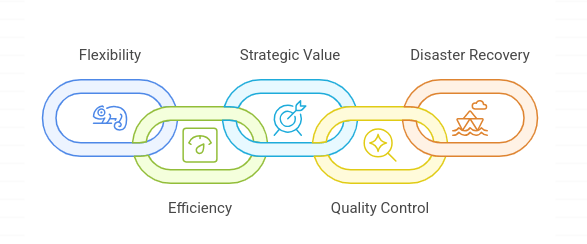
- Services can be scaled up or down as needed. Organizations no longer have to guess their future requirements and over-invest. They can add resources during peak demand and reduce them during slower times.
- Applications and services can be launched quickly without a large upfront investment in hardware.
- The latest tools available through cloud providers help companies gain a competitive advantage and can focus more on innovation rather than infrastructure maintenance.
- Data stored in one place and one format ensures consistency. Teams avoid confusion caused by multiple versions of files and outdated information.
- Cloud platforms provide fast recovery options in case of outages, natural disasters, or other emergencies. Companies that rely on the cloud often bounce back much quicker.
Now, let’s explore the ten industries seeing the most significant transformation.
1. Automotive Industry
 The automobile sector thrives on data. Large volumes of information need to be stored, analyzed, and accessed in real time from design to manufacturing to customer service. Cloud solutions make this possible by centralizing data and making it accessible across global teams.
Manufacturers have built private cloud environments to manage brand websites, production details, and internal collaboration. With a unified system, car makers can streamline operations, speed up innovation, and deliver a more personalized experience to customers.
In dealerships, cloud systems also help track inventory. Sales representatives can instantly locate vehicles and give customers accurate information, closing deals faster.
2. Education Industry
 Schools and universities often face tight budgets, making it difficult to invest in advanced infrastructure. Cloud computing provides a cost-effective alternative by allowing access to modern applications without heavy equipment costs.
Teachers can share assignments, track student progress, and collaborate with colleagues more easily. Students benefit too, since all the information they need is stored in one central hub accessible from anywhere. This levels the playing field, giving institutions of all sizes the ability to adopt cutting-edge learning tools.
Cloud-based platforms also support online classes and digital libraries, enabling distance learning at scale. For educational institutions, this technology has become a lifeline for delivering quality education to more students.
3. Financial Services Industry
 Security is often the biggest concern in finance. Sensitive client data, strict regulations, and constant cyber threats force institutions to choose solutions that protect information while supporting daily operations.
Modern cloud providers offer encrypted data, advanced authentication systems, and high-grade data centers, which help financial firms operate safely. After security is assured, the focus shifts to efficiency.
Banks and insurance companies are using cloud-based tools for billing, customer engagement, fraud detection, and compliance reporting. The cloud allows them to respond faster to market changes while keeping costs predictable.
4. Retail Industry
 Retailers deal with fluctuating consumer demand, massive amounts of product data, and fierce competition. Cloud platforms allow them to manage inventory, process online transactions, and analyze consumer behavior more effectively.
With real-time analytics, retailers can track buying patterns, anticipate trends, and run targeted campaigns. Cloud-based loyalty programs and customer relationship systems also help improve engagement.
By storing large datasets in the cloud, retailers get a complete view of customer preferences. This helps them deliver personalized experiences, optimize supply chains, and reduce waste.
5. Real Estate Industry
 The real estate industry has traditionally relied on face-to-face interactions and paper-heavy processes. Cloud technology is modernizing this space by streamlining data sharing and client communication.
Property listings, legal documents, and transaction records can all be stored online, making them accessible to agents and buyers at any time. Virtual tours and interactive listings hosted on cloud platforms provide potential buyers with more convenient options, especially for long-distance purchases.
Cloud-based analytics tools offer insights into housing market trends, buyer behavior, and pricing strategies for agents. This helps them close deals faster and with more confidence.
6. Agriculture Industry
 Agriculture may not be the first sector that comes to mind when thinking about advanced technology, but it is rapidly adopting cloud-based tools. Farmers are using platforms that provide weather forecasts, soil health data, and crop monitoring systems.
Farmers can make informed decisions about irrigation, fertilizer use, and pest control by gathering and analyzing this information. These insights lead to higher yields, reduced waste, and more sustainable practices.
Remote sensors connected to cloud platforms also enable precision farming.
7. Media and Entertainment Industry
 Streaming platforms, film studios, and gaming companies all rely heavily on the cloud. The ability to store large volumes of media files, support collaborative production workflows, and deliver content worldwide makes cloud computing invaluable in this sector.
Cloud-based tools make it easier to collaborate across geographies, edit content remotely, and distribute media quickly for smaller production houses. This democratizes entertainment, opening the door for more creators.
8. Telecommunications Industry
 Telecom providers manage complex networks that must handle constant demand fluctuations. Cloud platforms offer scalable solutions for network management, storage, and communication services.
Cloud technology supports the deployment and management of 5G. This enables faster connections and new applications like smart cities and Internet of Things (IoT) ecosystems.
Telecom companies are also using the cloud to reduce operational costs and introduce services such as virtual call centers, online billing systems, and advanced customer support.
9. Healthcare Industry
 Healthcare generates massive amounts of data, including patient records, diagnostic images, and treatment histories. Storing this information securely while making it accessible to doctors and nurses is a challenge that cloud technology addresses.
Electronic Health Records (EHRs) stored in the cloud allow instant access to patient details. This speeds up treatment decisions and reduces the risk of errors. Doctors across different hospitals can collaborate more effectively by sharing records seamlessly.
Cloud analytics tools are also helping researchers identify disease patterns, develop new treatments, and support personalized medicine. For healthcare providers, this technology improves patient outcomes while keeping costs under control.
10. Insurance Industry
 The insurance sector is using the cloud to analyze data, manage risks, and deliver personalized services. Insurers need systems that can process massive amounts of policyholder information quickly and accurately.
Cloud-based applications support everything from fraud detection to claims management. By combining artificial intelligence with cloud storage, insurers can offer tailored products and better predict risks.
The result is faster claim approvals, more transparent policies, and improved service for customers. The cloud reduces costs and helps insurers stay competitive in a fast-changing market.
As more industries adopt cloud solutions, we can expect to see even greater levels of innovation. What remains constant is the ability of the cloud to bring flexibility, efficiency, and new opportunities to businesses everywhere.
Cloud computing is no longer just a technology choice. It has become a growth driver across industries by enabling smarter decisions, faster innovation, and stronger customer experiences. Adopting cloud solutions today means building a foundation that keeps their organizations competitive in the years ahead.
[Need assistance with a different issue? Our team is available 24/7.]
Conclusion
Effective cloud management requires continuous observation, analysis, and adjustment. Monitoring the right KPIs and metrics empowers teams to act with clarity and maintain financial control.

