


Reduce deployment failures with our DevOps services. Improve release stability, reduce downtime, and strengthen collaboration across teams.
Fast releases allow businesses to create faster feedback loops. If you do too many releases, though, you introduce problems if development and operations remain disconnected. Developers build features and operations scale them. This results in outages, system slowdowns, and failed deployments for operations.
If releases lack confidence, it is not the people. It is the process of building software.
An Overview
Why Releases Become Unstable
Most companies have distinct development and operations teams. Developers implement features while operations teams manage the applications. Since their goals are different, issues in production become common.
- Different configurations in staging and production
- Server changes are done manually
- Tests that do not properly simulate production
- Visibility for issues is poor
Deployments then become risky, recovery takes even more time, and confidence in the releases is diminishing.
Build reliable releases with DevOps.

A Common Scenario
Consider a growing SaaS company that releases updates every Friday.
Before each release, Operations configures and prepares the servers, modifies the environment variables, and restarts the services. A short time after the deployment, the application begins to slow, and users report errors.
The operations team and the developers then go down the unproductive rabbit hole of tracing and reviewing logs. Finally, after about four hours, the service is operating normally again.
The failure was not due to faulty code. In fact, it was a configuration difference between staging and production. Each release was becoming a stressful risk because after some time, it would inevitably happen again.
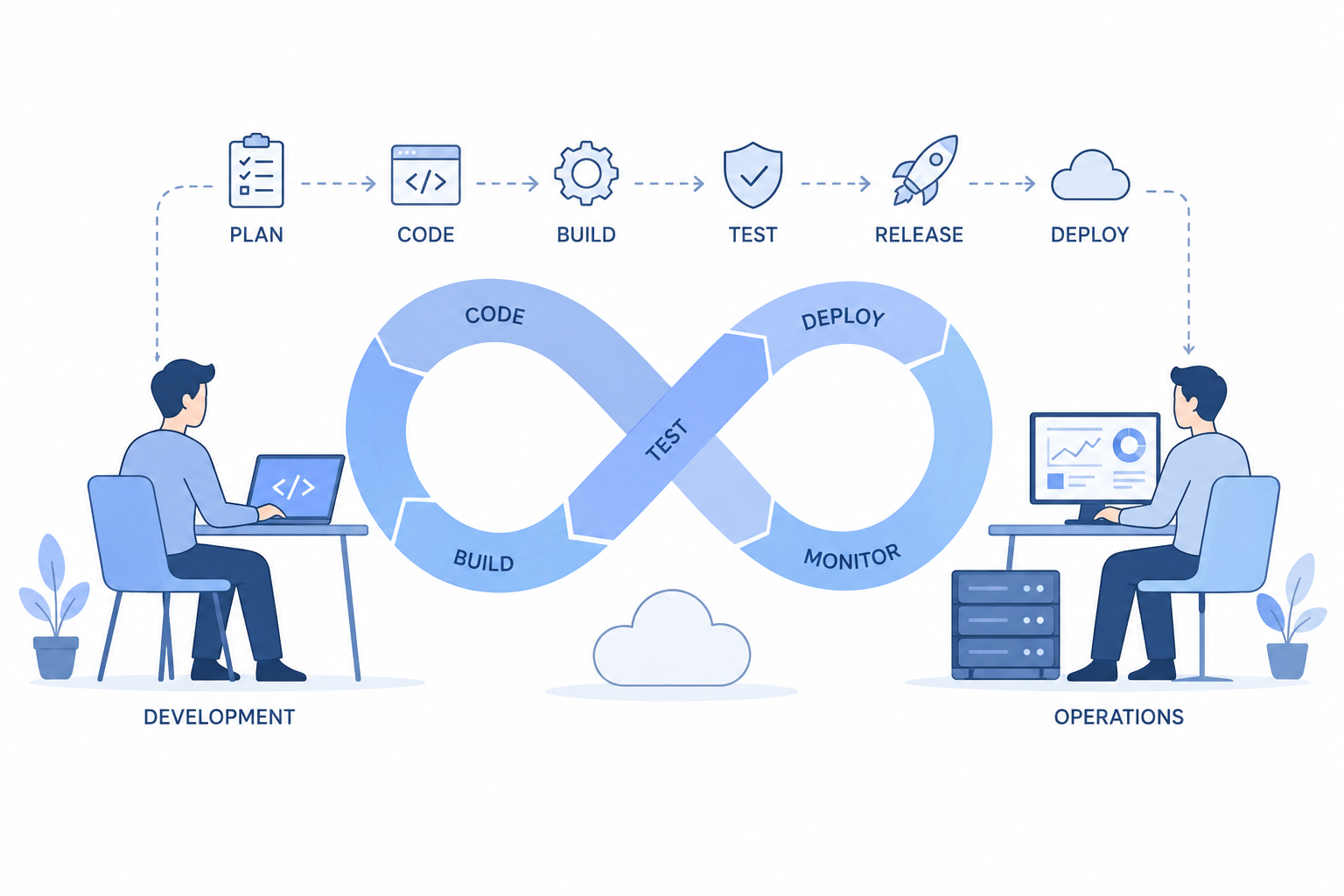
How DevOps Reduces Release Problems
A better DevOps process helps teams deliver software with fewer surprises.
| Practice | Benefit |
|---|---|
| CI/CD pipelines | Automatically build, test, and deploy code to reduce manual errors and increase reliability. |
| Infrastructure as Code (IaC) | Keeps staging and production environments consistent. |
| Early automated testing | Finds problems before deployment. |
| Centralized monitoring and logging | Helps teams identify and fix problems faster. |
| Shared ownership | Encourages developers and operations teams to work toward the same goal. |
Together, these practices reduce deployment risks and improve system reliability.
What Changes After Better DevOps Practices
Higher stability and reliability of systems is a byproduct of higher integration of development and operational teams. This integration results in greater predictability of releases and enables addressing issues and recovery to become more streamlined and easier.
Conclusion
Successful releases are dependent on many factors. These include building, testing, deployment, collaboration, environments, automation, and visibility. The easier releases are to manage, the less of a burden they become. Easier releases are more reliable for developers and operations teams.

