


Avoid integration failures with our API integration services. Stabilizing API connections with versioning, testing, and reliable systems.
Connecting a new application should make your business better, not create new problems. Yet many teams see unexpected issues after adding another integration. A payment gateway update affects order processing. A CRM change causes customer data to disappear. Even a small API update can interrupt several connected services, which is why stabilizing APIs is so crucial.
Most of these problems do not happen because the integration failed. Instead, they happen because the API architecture cannot handle change without stabilizing APIs in place.
Why New Integrations Cause Problems
For every connected system, there has to be an integration connection. Without clearly stated APIs, contracts or proper versions and tests, small changes affect many systems.
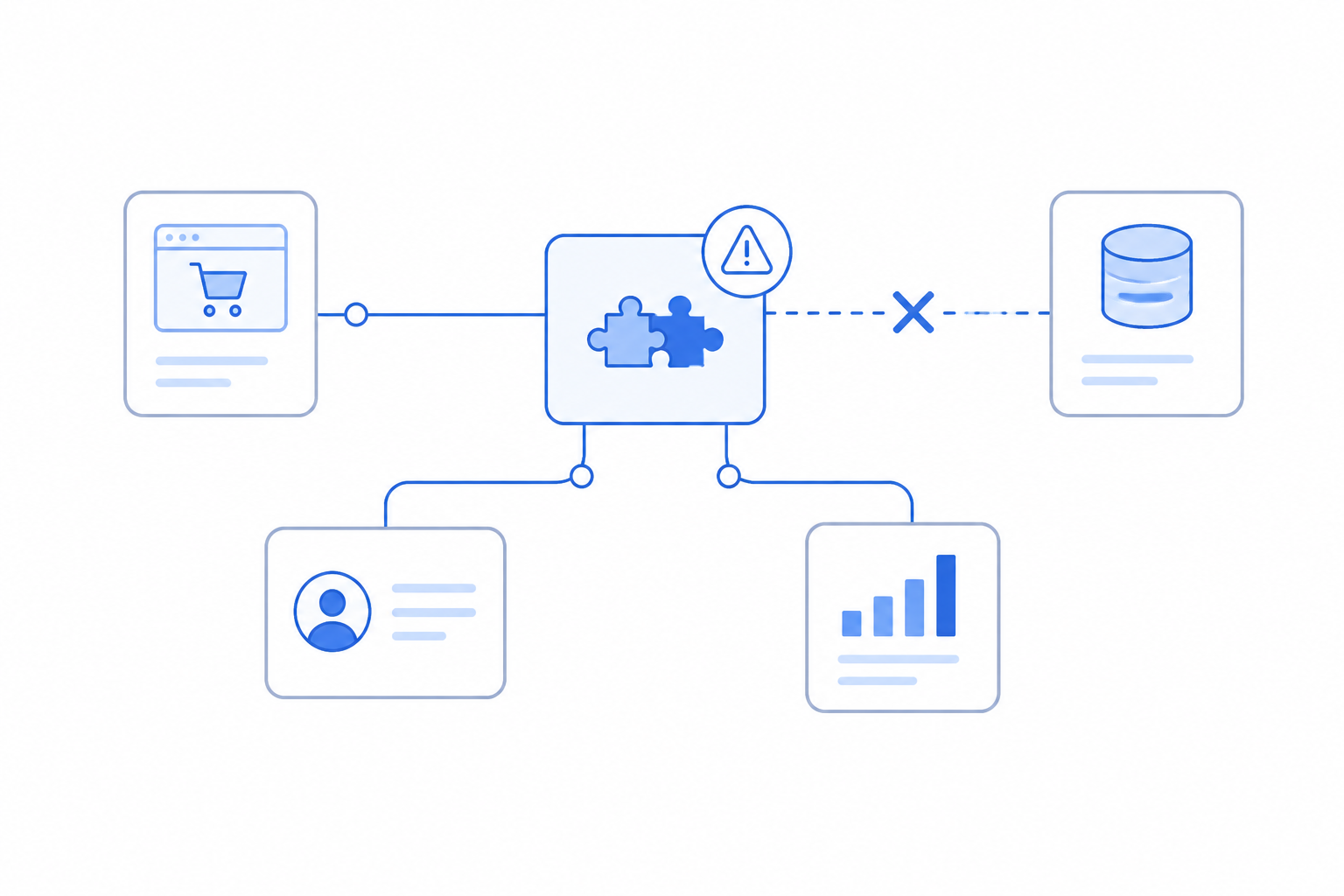
This creates issues for businesses such as:
- Broken business workflows
- Missing or inaccurate data
- Slower business transactions
- More time spent on fixing production issues
Teams find out about these problems after deployment, and by then customers have already experienced negative effects. Therefore, stabilizing APIs proactively helps prevent such issues.
A Real Example
A logistics platform works with a new shipping provider that returns expected_delivery instead of delivery_date in the API.
Although the shipping integration works, other systems expect the old field name, resulting in orders being delivered to customers with incorrect delivery dates.
Keep your APIs reliable.

The remedy was discovered only after many customer complaints, as multiple systems expect the old response.
The problem was not the new integration. It was the absence of a stable API contract, making stabilizing APIs a necessity for business continuity.
How to Build Stable API Integrations
A few good practices can prevent these issues before they reach production.
| Best Practice | Why It Matters |
|---|---|
| Establish clear API contracts | Consistency of API designs makes it easy to understand and implement the API. |
| Implement API versioning | There is flexibility to improve the API services without concerns about external services. |
| Conduct integration testing | It addresses issues before deployment. |
| Employ abstraction layers or API Gateways | This helps in mitigating the effects of unpredictable changes in outside vendor APIs. |
| API performance should be checked. | Issues are studied and resolved before they can lead to failures or delays. |
Conclusion
APIs that conform to set standards lead to better integration of systems and ease implementation with minimal disruptions to the end user.
Stable API architecture is the backbone of an effectively running application, as it ensures future growth is not at the expense of service failures.

