


Kubernetes Cost Optimization reduces cloud expenses and boosts efficiency. Our Cloud Cost Optimization Support team is ready to assist you.
Mastering Kubernetes Cost Optimization for Cloud Savings
Kubernetes is a powerful platform for running containerized applications, but its flexibility can lead to increased cloud costs if resources are not managed carefully. Inefficient autoscaling, overprovisioning, idle resources, and hidden expenses like storage or networking can quickly raise spending.
Effective Kubernetes cost optimization helps align cloud usage with actual needs, reduce waste, and maintain performance. This article highlights key cost drivers, common pitfalls, and practical strategies to control expenses and improve efficiency.
What is Kubernetes Cost Optimization?
Kubernetes cost optimization is the process of managing and reducing cloud expenses for applications running on Kubernetes by improving resource efficiency and removing waste. The process focuses on aligning resource allocation with actual workload needs, fine-tuning autoscaling settings, and rightsizing compute, memory, and storage. The goal is to minimize overspending while maintaining performance. Since Kubernetes offers great flexibility, costs can quickly rise due to overprovisioning or inefficient scaling if not properly managed. The key areas of Kubernetes Cost Optimization includes rightsizing resources, efficient autoscaling, storage and networking, minimizing waste, cost monitoring, governance and policies, and control plane overhead.
Why Kubernetes Cost Optimization Matters
Kubernetes cost optimization is essential for aligning cloud spending with actual resource usage. It prevents wasted spending as it can result in excessive provisioning of CPU, memory, and storage resources, leading to idle or orphaned instances that increase cloud bills unnecessarily. It plays a crucial role in profitability and ROI, thereby strengthening the company’s overall profitability.
Optimization introduces transparency and visibility, making it easier to track and manage costs across environments and teams. Furthermore, strong cost management practices contribute to long-term financial resilience, allowing businesses to sustain cloud operations efficiently and predictably.
Optimize your Kubernetes costs efficiently

What Drives Kubernetes Costs
Kubernetes is a powerful platform for running containerized applications, but its flexibility and scalability can lead to rapidly increasing cloud costs if not managed carefully. There are certain factors which drive Kubernetes costs, they are briefed below.
-
Computer resources
The major factor for the Kubernetes cost is virtual machines or nodes running workloads. If CPU and memory are located more than the requirement may result in wasted spending.
-
Cost seasonality
Cost is also driven by the fluctuating demand during peak times. Proper capacity planning and optimization can mitigate this issue.
-
Storage
Persistent volumes, I/O operations, and using high-performance storage when it is not required also raises the cost.
-
Inefficient scaling
Misconfigured autoscaling may over-scale, increasing costs, or under-scale, impacting application performance.
-
Networking
Transferring data between clusters, cross-region traffic, and ingress/egress traffic.
-
Monitoring and logging tools
Tools like Prometheus, Grafana, and the ELK Stack require infrastructure and sometimes licensing costs, which will add to the total spend.
-
Managed services
Usage of managed Kubernetes platforms such as GKE, EKS, or AKS causes additional costs on top of standard cloud resource costs.
-
Control plane
Even in managed clusters, the control plane consumes resources continuously, contributing to overall costs.
-
Backups and snapshots
Regular backups and snapshots may increase storage usage and expenses.
-
Idle and unused resources
Nodes, persistent volumes, and workloads that are not actively used still generate charges.
-
Container image storage
Hosting large or frequently updated container images in registries can accumulate significant costs.
-
Overprovisioning
Allocating excess resources for caution results in unnecessary expenses without improving performance.
Practical Kubernetes Cost Optimization Tips
Kubernetes offers flexibility and scalability, but without careful management, costs can quickly grow. Optimizing your cluster ensures resources are used efficiently, performance stays high, and budgets are controlled. Here are some tips to mitigate the Kubernetes cost.
-
Enable Autoscaling
Autoscaling helps your workloads adjust automatically based on demand, saving money and preventing idle resources. Horizontal Pod Autoscaling adjusts pods based on CPU or memory usage, Vertical Pod Autoscaling recommends resource limits for pods, Cluster Autoscaler adds or removes nodes depending on workloads, and Karpenter provides fast and efficient node provisioning. Enabling autoscaling ensures you pay only for what you actually need.
-
Implement Policies and Governance
Policies enforce responsible resource usage and prevent overspending. Set resource quotas per namespace, enforce limits with LimitRanges, protect critical workloads with Pod Disruption Budgets, and use a Policy Controller to block non-compliant deployments. Strong governance provides control and visibility over your cluster costs.
-
Tag Workloads for Cost Visibility
Label pods, nodes, and namespaces by team, application, or environment to track resource usage and costs. Use cloud provider billing tools to analyze spending based on labels. Proper labeling improves cost allocation, accountability, and decision-making.
-
Set Realistic Resource Requests and Limits
Align resources with actual usage to avoid waste and performance issues. Monitor pod usage to define the minimum resources needed, cap the maximum resources to prevent overuse, and start with Vertical Pod Autoscaler in recommendation mode before applying changes automatically. Right-sizing keeps your cluster lean and cost-efficient.
-
Optimize Storage and Networking
Efficient storage and networking reduce costs while improving performance. Use appropriate storage classes, manage persistent volumes effectively, reduce cross-zone traffic, and implement Ingress controllers for container-native load balancing. Smart planning of storage and network usage prevents unexpected cloud expenses.
-
Improve Workload Placement
Strategic pod placement increases cluster utilization and reduces idle nodes. Apply affinity rules to control pod placement and use TopologySpreadConstraints to distribute workloads across nodes, zones, or regions. Efficient placement lowers the number of nodes needed and reduces costs.
-
Clean Up Unused Resources
Idle resources increase costs silently. Automate the teardown of temporary clusters, delete stale persistent volumes, and remove old deployments regularly. Consistent cleanup keeps your cluster efficient and avoids unnecessary spending.
-
Use Cost-Effective Compute
Choosing the right compute options lowers cloud bills. Spot Instances allow non-critical workloads to run at discounted rates, Reserved Instances provide predictable savings for stable workloads, and ARM-based processors reduce compute costs for compatible applications. Selecting compute types based on workload needs ensures efficient spending.
Common Kubernetes Cost Traps and How to Avoid Them
-
Overprovisioning
Allocating more CPU and memory than workloads actually need is a frequent mistake. Overprovisioning leads to unused capacity that drives up costs, especially in shared clusters. Keeping resources aligned with actual usage prevents unnecessary spending.
-
Forgotten or Idle Resources
Orphaned persistent volumes, old deployments, and underutilized nodes quietly consume your budget. These idle resources can create a persistent waste leak, gradually increasing unnecessary expenses over time. Regular cleanup reduces this hidden cost.
-
Shared Cluster Accountability
When multiple teams or applications share a cluster without proper cost attribution, no single team takes ownership of efficiency. Without consistent tagging and showback or chargeback processes, costs become a shared problem, reducing incentives to optimize.
-
Inefficient Autoscaling
Poorly configured autoscaling rules can cause pods or nodes to scale up too aggressively or too often. This creates extra infrastructure and higher costs even when workloads do not require it. Fine-tuning autoscaling ensures efficiency without overspending.
-
Ignoring Hidden Costs
Costs such as storage, network transfers, and backup operations are often overlooked. Even if compute resources are optimized, these hidden expenses can erode savings. Including all costs in your optimization strategy ensures more accurate budgeting.
-
Poor Cost Visibility
Without clear visibility into resource usage, it is hard to know where costs are coming from. Multi-cloud setups, different cost centers, and missing labels make it difficult to track spending. Monitoring usage and labeling resources helps teams identify waste and optimize costs.
How to Overcome These Challenges
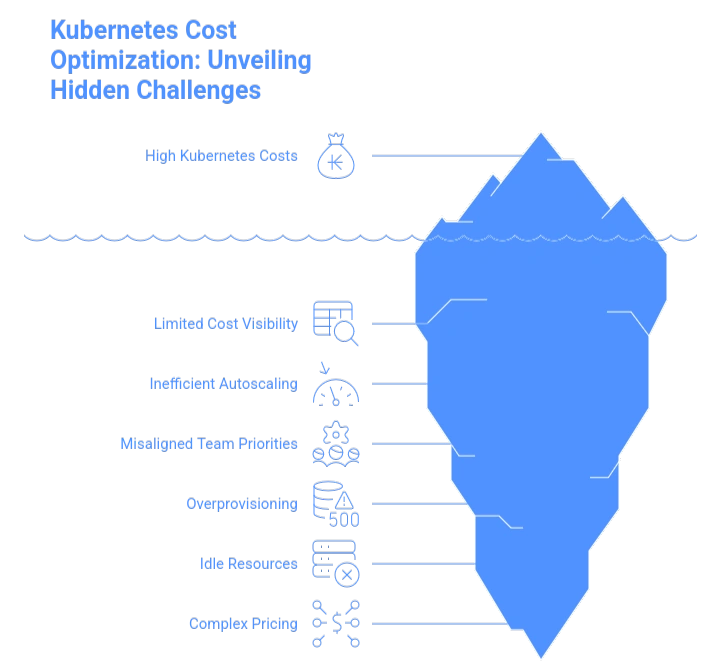
-
Limited Cost Visibility
Kubernetes can hide actual resource usage, making it hard to see which applications, teams, or projects drive costs. Centralized monitoring and consistent labeling help track spending and identify waste.
-
Inefficient Autoscaling
Misconfigured autoscaling rules can scale resources too often or too aggressively. Refining Horizontal and Vertical Pod Autoscalers ensures workloads scale efficiently without overspending.
-
Misaligned Team Priorities
Engineering teams often focus on performance, while finance or FinOps teams focus on cost. Promoting collaboration and a FinOps mindset ensures cost considerations are integrated into development workflows.
-
Overprovisioning
Allocating more CPU and memory than needed is common to ensure stability. This leads to unused capacity and higher costs. Right-sizing resources based on actual usage prevents unnecessary spending.
-
Idle or Forgotten Resources
Unused nodes, persistent volumes, or old clusters quietly accumulate costs. Regular audits and automated cleanup of non-production resources reduce waste and save money.
-
Complex Pricing and Shared Clusters
Cloud pricing models can be confusing, and multiple teams sharing a cluster make cost attribution difficult. Using Spot Instances for interruptible workloads, Reserved Instances for stable workloads, and clear tagging improves accountability and lowers costs.
[Need assistance with a different issue? Our team is available 24/7.]
Conclusion
In conclusion, Kubernetes Cost Optimization ensures efficient resource usage, lowers cloud expenses, and prevents waste, helping businesses maintain high performance while achieving cost-effective, sustainable operations.
In brief, our Support Experts demonstrated how to fix the “554 5.7.1 : Relay access denied” error.

