


Learn how DevSecOps helps prevent application vulnerabilities by integrating security into development, testing, and deployment from the start.
In the rush to deliver features and meet aggressive deadlines, where does security often land on the priority list? For many organizations, the answer is: after deployment. This mindset—treating security as a final checklist item rather than an integrated part of the development lifecycle—has become one of the most critical and painful exposures for production applications today.
If this scenario sounds familiar, you’re not alone. The result of this “afterthought” approach isn’t just technical debt; it’s a mounting bill of hidden costs and escalating risks that directly impact your business and customer trust.
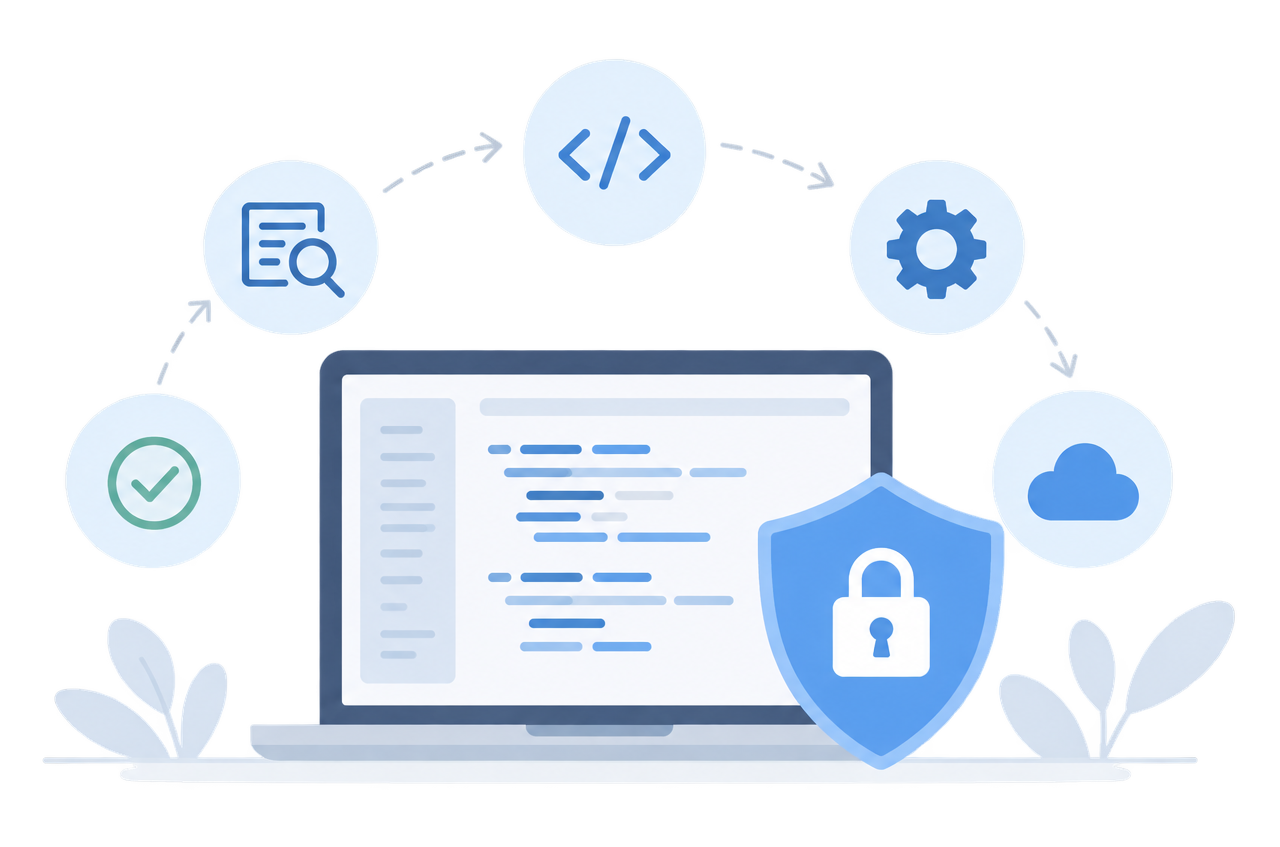
Why Application Vulnerabilities Accumulate
Here are the top pain points organizations face when security isn’t “shifted left” into the earliest stages of development:
Pain Point 1: The Exponential Cost of Retrofitting
It’s an industry truth: a security vulnerability found during the requirements stage costs pennies to fix. That same vulnerability, when discovered after the application is live in production, can cost thousands—or even millions—in emergency patching, engineer overtime, and service downtime.
Emergency Mode: Security vulnerabilities in production trigger high-stress, all-hands-on-deck scenarios. This diverts valuable developer and operations resources from working on new features to fighting fires, effectively crippling your development momentum.
The Code Overhaul: Trying to bolt security features onto a massive, complex code base that wasn’t designed with them in mind often requires significant architectural changes. This is time-consuming, expensive, and introduces new risks in the process.
Talk to us about DevSecOps.

Pain Point 2: The Widening Gap Between Development and Security
The “security-as-an-afterthought” model creates a fundamental tension between your development and security teams. Developers are incentivized for speed, while security is seen as the final gatekeeper, often saying “No” right before a launch.
Delayed Deployment: Security reviews that happen late in the cycle often find critical flaws, leading to painful deployment delays and friction between departments. The pressure to bypass or rush these checks grows every time.
Blind Spots: When security is not part of the initial design discussion, key architectural decisions are made without a risk-based view. This results in foundational vulnerabilities that are difficult, if not impossible, to remediate without a complete redesign. Your teams are building on a weak foundation they can’t even see.
Pain Point 3: The Threat to Reputation and Regulatory Compliance
When an application is running exposed in production, the risks are no longer theoretical; they are real-world threats to your business’s viability.
Data Breach Fallout: A security incident isn’t just a technical problem—it’s a public relations crisis. The loss of customer data destroys trust, leads to significant customer churn, and results in costly legal settlements and regulatory fines (like GDPR or CCPA penalties).
Compliance Stress: Meeting industry and government regulations (PCI DSS, HIPAA, etc.) becomes an exhausting, last-minute sprint instead of a continuous, built-in process. Compliance failure can lead to operational shutdown or severe financial penalties.
Stop Paying the Afterthought Tax
The path forward requires abandoning the old, reactive model and embracing a continuous, proactive approach. Security must move out of the silo and into the workflow. When you integrate security tooling, training, and processes from the start through DevSecOps, you build secure applications, meet compliance requirements by design, and release them with confidence rather than hope.
Conclusion
Don’t wait for the next emergency. It’s time to make security a first thought, not an afterthought.

