


Explore 10 DevSecOps best practices to integrate security into the SDLC, automate testing, protect software supply chains, and reduce security risks.
Software delivery continues to accelerate, making security an essential part of the development process. Treating security as a separate stage is no longer sufficient. Integrating security throughout the software development lifecycle (SDLC) helps development, operations, and security teams work together to identify vulnerabilities early, automate security checks, maintain compliance, and reduce business risk. Bobcares offers DevSecOps services to help organizations integrate security into every stage of software delivery.
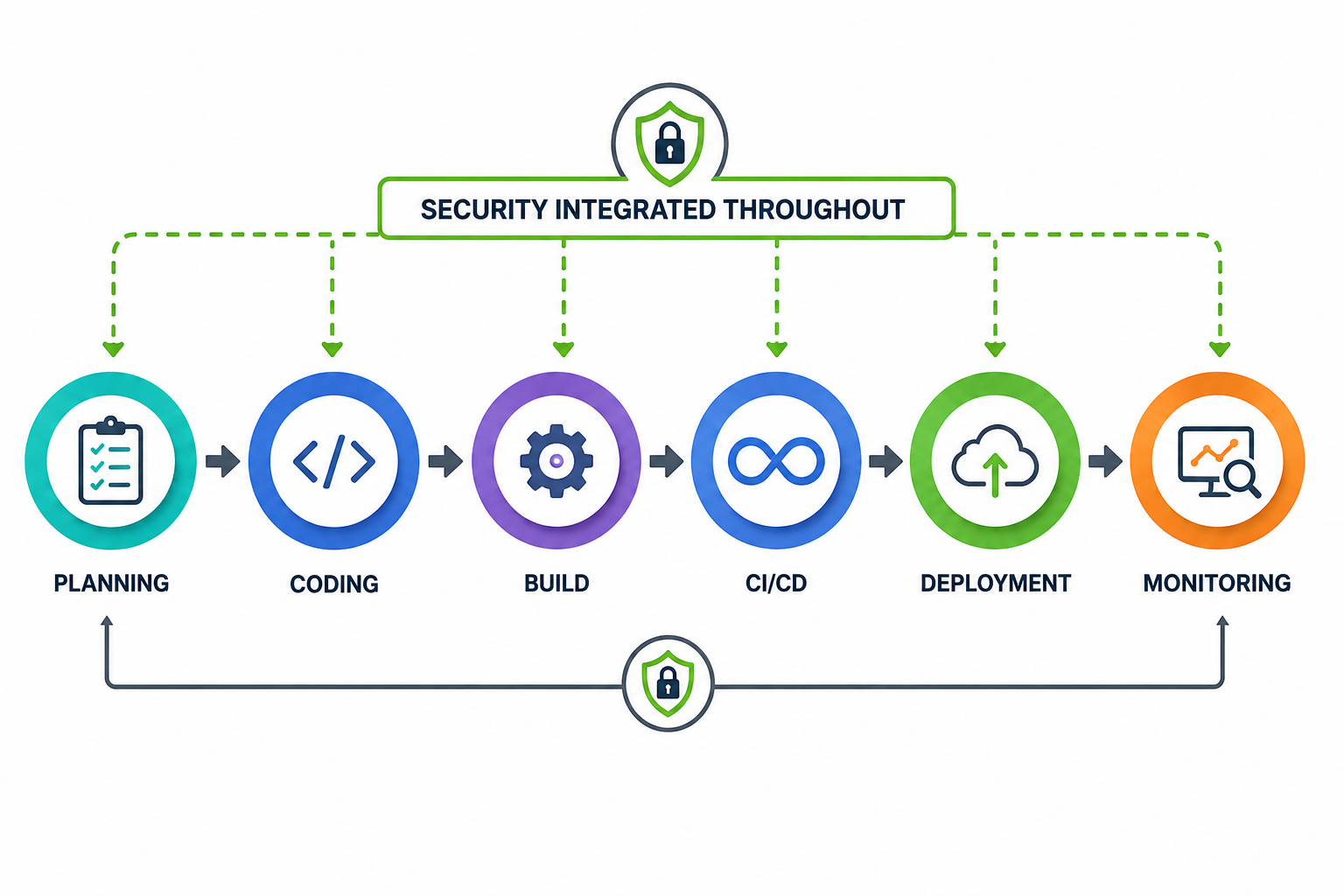
An Overview
- Shift Security Left
- Automate Security Testing in CI/CD Pipelines
- Protect the Software Supply Chain
- Strengthen Infrastructure as Code Security
- Implement Zero Trust Security Principles
- Secure Containers and Kubernetes
- Verify Status and Perform Risk Assessments
- Integrate Secret Management
- Use AI-Powered Security Tools Responsibly
- Build a Culture of Collaboration and Security
1. Shift Security Left
The Shift Left approach remains a key part of a successful DevSecOps strategy. Instead of waiting until deployment or production, security testing should begin during code development. This allows developers to identify and fix issues before code reaches an external repository.
Benefits include:
- Faster vulnerability remediation
- Lower development costs
- Higher code quality
- Reduced production incidents
Here are a few suggested actions from our experts:
- Use pre-commit hooks to detect formatting issues, anti-patterns, and accidental secret disclosures.
- Perform peer code reviews for business requirements and security controls.
2. Automate Security Testing in CI/CD Pipelines
Manual security reviews cannot keep pace with modern release cycles. Automated security scans should become mandatory checks within CI/CD pipelines to verify code without creating operational bottlenecks.
Important security tests include:
- Static Application Security Testing (SAST)
- Dynamic Application Security Testing (DAST)
- Interactive Application Security Testing (IAST)
- Dependency scanning
3. Protect the Software Supply Chain
Modern cloud applications rely on open-source libraries, third-party packages, and external container images. Protecting the software supply chain helps ensure that dependencies come from trusted sources before deployment.
Key practices include:
- Maintaining a Software Bill of Materials (SBOM)
- Automating dependency auditing
- Verifying package signatures
Need Help with DevSecOps?

4. Strengthen Infrastructure as Code Security
Infrastructure as Code (IaC) security helps prevent costly security incidents by enforcing security policies throughout infrastructure deployment.
Recommended practices include:
- Enforcing Policy as Code (PaC)
- Detecting configuration drift
- Automating IaC validation within CI pipelines
5. Implement Zero Trust Security Principles
Traditional network trust models are no longer sufficient. Zero Trust assumes a breach may already exist and requires authentication for every user, device, and workload.
Core principles include:
- Least privilege access
- Continuous verification
- Micro-segmentation
6. Secure Containers and Kubernetes
Containerized applications and Kubernetes clusters require security throughout the entire environment, from base images to runtime execution.
Best practices include:
- Using minimal base images
- Implementing admission control
- Monitoring runtime threats
7. Verify Status and Perform Risk Assessments
Operational security is an important part of DevSecOps. During incident response, preserving data takes priority over speed.
Always validate the current system status instead of relying on historical data or outdated logs. Check cluster health, data replication, and unique chunks before running commands that affect production systems. Additionally, proactive risk management helps reduce operational failures.
8. Integrate Secret Management
Passwords, tokens, and private keys should never be stored in source code. Centralized vaults help protect sensitive information and reduce exposure to hardcoded credentials.
Recommended practices include:
- Creating dedicated vaults
- Replacing long-term access keys with short-lived tokens
- Scanning Git repository history for exposed credentials
9. Use AI-Powered Security Tools Responsibly
AI supports faster threat detection, log analysis, and risk prioritization. However, AI should supplement cybersecurity expertise rather than replace it.
Important practices include:
- Prioritizing security risks
- Detecting anomalous behavior
- Validating AI-generated code changes before production deployment
10. Build a Culture of Collaboration and Security
Technology alone cannot deliver successful DevSecOps. Development, operations, and security teams must share responsibility for secure software delivery.
Organizations can strengthen collaboration by:
- Developing Security Champions
- Conducting interactive workshops
- Performing blameless post-mortems after production vulnerabilities
Conclusion
Security should be integrated throughout the software delivery lifecycle instead of being treated as a final step. Shifting security left, automating security testing, protecting the software supply chain, securing infrastructure, and building a collaborative culture help reduce risk while supporting software delivery. These DevSecOps best practices enable organizations to strengthen security as digital transformation continues through 2026. Bobcares helps businesses implement these practices through its DevSecOps services, supporting secure software delivery and continuous improvement.

