


Migrate Data from Redis Open Source to Redis Enterprise for higher performance. Our Redis Support team is ready to assist you.
Migrating Data from Redis Open Source to Redis Enterprise
Redis powers many high speed applications, especially where instant responses matter. However, as systems grow, teams often find that open source Redis requires more hands-on work, more oversight, and more planning to stay reliable. That is why many engineering teams eventually consider moving to Redis Enterprise.
This guide explains why the move makes sense and how to complete the migration smoothly.
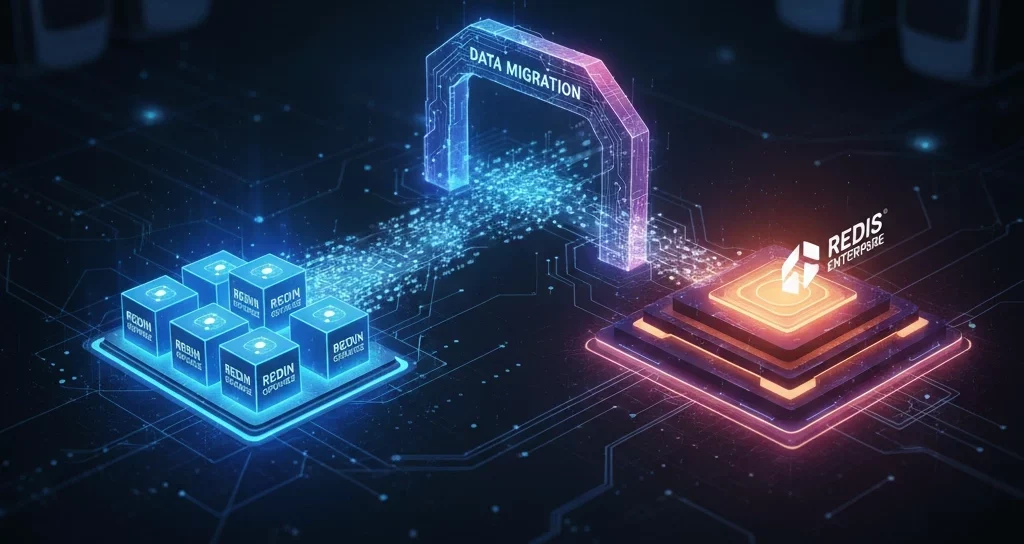
Why migrate from Redis Open Source to Redis Enterprise
Teams choose Redis Enterprise when they want fast performance without spending time managing complex infrastructure.
Redis Enterprise delivers
Redis Enterprise delivers effortless scaling to handle rising traffic smoothly, while maintaining strong reliability through automatic recovery and multi-region support. It also offers simple monitoring and streamlined operations with an intuitive interface, making management easier for teams. In addition, it supports advanced data models such as JSON, search, and time series, giving developers greater flexibility. Security remains a priority, as it protects sensitive information and even supports advanced capabilities using Redis bloom filter commands for efficient data validation. With professional support available for critical workloads, businesses can operate with confidence and long-term stability.
Begin your Redis Enterprise migration now

How to migrate from Redis Open Source to Redis Enterprise
Every environment is different. Still, these proven approaches help you move confidently.
Zero downtime migration using Replica Of
Many production teams prefer this option since users never notice the change.
Steps
- Create a new database in Redis Enterprise
- Set it to replicate from your current Redis Open Source instance
- Allow data to sync and continue updating in real time
- Point your applications to the new Redis Enterprise address when ready
- Remove replication once the cutover is complete
This method keeps your system active throughout the transition.
Migration with RIOT
RIOT suits cases where you need more control or want to move data in phases.
Steps
- Install RIOT where it can reach both databases
- Set source and target connection details
- Run the migration and monitor progress
- Validate and point applications to Redis Enterprise
This approach also allows evaluating Redis cache alternatives to improve performance and reliability during the migration.
Teams often use RIOT for selective migration or large environments.
Offline migration with RDB file
This option works well for smaller applications or when short downtime is acceptable.
Steps
- Export your Redis Open Source data using SAVE or BGSAVE
- Move the RDB file to the Redis Enterprise environment
- Load it into the Redis Enterprise database
- Restart and connect your application to the new database
It is simple and reliable when a maintenance window is available.
[Need assistance with a different issue? Our team is available 24/7.]
Conclusion
Migrating Data from Redis Open Source to Redis Enterprise ensures faster performance, stronger reliability, and effortless scaling. With the right approach, the move stays smooth and positions your application for long term success.

