


Discover key steps and metrics to measure ROI in digital transformation. Empower your business with data-driven strategies that deliver real value. Ready to See the Impact of Digital Transformation?
Digital transformation is no longer optional for business leaders. It has become a strategic imperative. Every organization, regardless of size or sector, is investing in technology to drive efficiency, innovation, and customer engagement. However, despite significant investments, many executives struggle to define and measure the real value of these initiatives. Hence, business owners and leaders need to understand ROI in digital transformation to ensure that every technological decision translates into measurable business outcomes.
Measuring ROI goes beyond simple cost-benefit analysis. It involves assessing how digital tools enhance productivity, strengthen customer relationships, and create sustainable competitive advantages. Businesses that can quantify these outcomes are better positioned to justify budgets, align teams, and steer their organizations toward long-term success.
Today, we will explore metrics and strategies to measure and improve ROI effectively. This will empower you to make data-backed transformation decisions that deliver real value.
How to Measure ROI
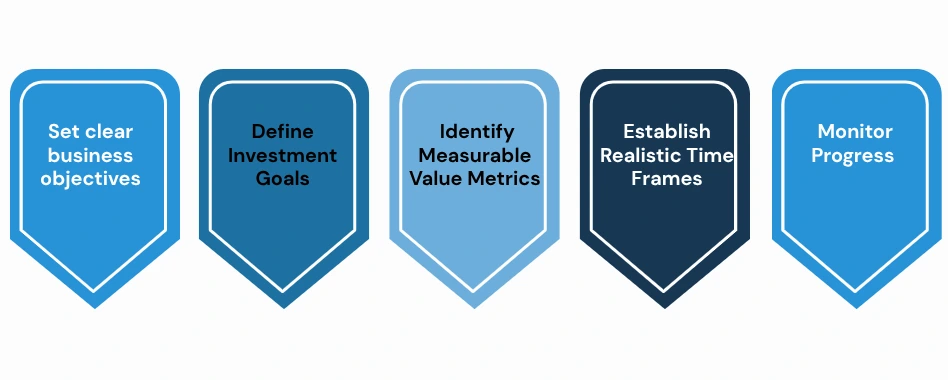
1. Set clear business objectives
Identify the core purpose of your transformation initiative. This may be to increase revenue, enhance operational efficiency, or improve customer satisfaction. Focusing on a single priority helps maintain clarity and direction.
2. Define investment goals
Outline how much you’re investing and where those resources are going. Include costs related to software, infrastructure, training, and change management.
3. Identify measurable value metrics
Analyze what success looks like for your organization. Metrics such as process completion times, customer retention rates, or employee performance improvements help quantify progress and validate investments.
4. Establish realistic time frames
ROI is best understood over specific intervals. Set clear timeframes like quarterly, biannual, or annual to track incremental gains and compare them against baseline data.
5. Monitor progress and refine strategies
Regular performance reviews help identify bottlenecks and reveal opportunities for optimization. Leaders should encourage continuous learning and data-driven adjustments to sustain results.
Metrics That Matter
Selecting the right metrics is vital for accurate ROI measurement. These indicators reflect how effectively digital transformation drives organizational performance. Understanding the broader strategy behind modernization is key. Our guide on digital transformation strategy explains how aligning technology with business goals drives measurable value.
1. Financial metrics
Track quantifiable outcomes like revenue growth, operational cost savings, and profitability. These figures show how digital initiatives impact financial stability.
2. Operational efficiency
Evaluate improvements in speed, accuracy, and automation. Reduced downtime, faster project completion, and increased employee output are all signs of successful digital implementation.
3. Customer-centric metrics
Customer engagement and satisfaction often define transformation success. Tools like satisfaction scores, retention rates, and feedback trends can provide actionable insights into customer experiences.
4. Employee performance and engagement
Monitor how digital tools influence employee productivity and morale. Efficient collaboration and reduced manual workload often translate into higher retention and better performance.
5. Innovation and adaptability
Measure the pace of innovation like faster time-to-market, number of new products launched, or technology adoption rates. These metrics reflect how prepared the organization is for future challenges.
6. Risk management and security
Assess cybersecurity incidents, recovery times, and compliance achievements. Strengthened security and data integrity are critical ROI contributors often overlooked in traditional calculations.
| Metric Type | Examples |
|---|---|
| Financial Metrics | 1. Revenue growth from new digital channels 2. Cost savings through process automation 3. Increased profit margins |
| Operational Efficiency | 1. Average project completion time 2. Reduction in process bottlenecks 3. Employee output per hour |
| Customer-Centric Metrics | 1. Customer Satisfaction Score (CSAT) 2. Net Promoter Score (NPS) 3. Customer retention rate |
| Employee Performance Metrics | 1. Task completion rate 2. Collaboration tool adoption rate 3. Employee satisfaction surveys |
| Innovation & Adaptability | 1. Number of new products launched 2. Time-to-market for innovations 3. Technology adoption rate |
| Risk & Security Metrics | 1. Number of security incidents 2. Data breach recovery time 3. Compliance audit success rate |
Assess your Digital Transformation ROI today!
How to Improve ROI
Once measurement systems are in place, the focus should shift to maximizing ROI. Sustainable improvement requires a balance of strategy, culture, and adaptability.
1. Define ROI growth expectations
Set realistic growth targets that align with business goals. Regularly review expectations against actual performance and adapt as necessary.
2. Empower employees and engage the audience
Employees and customers are at the core of transformation success. Empower your workforce through training and give them ownership of digital initiatives. At the same time, refine customer targeting through data insights to increase engagement and conversion rates.
3. Introduce incremental changes
Introducing technology in smaller stages allows for easier adoption, less disruption, and more accurate measurement of returns.
4. Strengthen customer loyalty
Long-term customers are a major source of ROI. Boost loyalty by improving service consistency, collecting regular feedback, and rewarding engagement. Positive experiences drive repeat business and word-of-mouth growth.
5. Use analytics for decision-making
Data analytics tools can visualize trends, reveal inefficiencies, and predict outcomes. Leaders can make informed decisions by connecting digital initiatives directly with business results.
6. Continuously evaluate and refine
ROI is dynamic, not static. Regular reviews of key metrics and objectives help organizations stay agile and ensure that every investment continues to produce measurable value. Companies looking to improve ROI in digital transformation can also explore strategies like outsourced support to optimize costs and efficiency, as discussed here
Maximize ROI with Our Digital Transformation Solutions!

Conclusion
The challenge of digital transformation is not just adoption, we need to demonstrate its impact as well. Measuring ROI helps translate technological advancement into tangible business results. It aligns financial goals with strategic vision and ensures accountability across teams.
True ROI measurement involves more than tracking numbers. It’s about understanding how transformation strengthens operations, enhances customer experiences, and builds long-term resilience. Organizations that commit to data-driven evaluation and continuous improvement will consistently outperform those that treat transformation as a one-time project.

