


B2B mobile app development helps enterprises boost sales, speed operations, and gain control. Learn how to build an app that actually delivers ROI. Our 24/7 Mobile App Development Live Support Team is always here to help you.
Enterprise buying has changed. Decision-makers expect speed, clarity, and instant access to data. As a result, companies that still depend on emails, spreadsheets, and desktop tools are already falling behind. This is exactly where B2B mobile app development becomes a serious competitive advantage.
Today, mobile apps are no longer optional tools. Instead, they act as revenue drivers, operational control panels, and relationship builders rolled into one. When built right, a single app can shorten sales cycles, reduce manual work, and improve trust across partners, vendors, and internal teams.

Overview
Why enterprise-focused mobile apps are seeing rapid adoption
Traditional enterprise systems were designed for offices, not fast-moving teams. However, field staff, sales leaders, distributors, and partners now work from everywhere. Because of this shift, mobile access is no longer a “nice to have.”
With B2B mobile app development, organizations gain real-time visibility into orders, inventory, approvals, and performance metrics. As a result, decisions happen faster. Errors drop. Accountability improves.
More importantly, mobile apps remove friction from complex workflows. Instead of waiting for updates or chasing emails, stakeholders see exactly what they need, when they need it.
What separates enterprise apps from consumer apps
Unlike consumer apps, enterprise apps solve very specific business problems. They are built for repeat usage, role-based access, and data accuracy. Every screen exists to save time or reduce effort.
For example, a sales executive may need instant pricing and stock data, while a manager may only care about approvals and reports. Through B2B mobile app development, these experiences are customized without creating chaos.
Security also plays a major role. Strong authentication, encrypted data, and permission controls are built into the foundation, not added later.
The real business benefits leaders care about
First, operational efficiency improves almost immediately. Manual tasks get automated, workflows move faster, and teams stop duplicating work.
Next, collaboration becomes easier. Teams across locations stay aligned because everyone works from the same data source. Consequently, delays and miscommunication reduce significantly.
In addition, data insights become clearer. Mobile apps track usage, actions, and outcomes. Over time, this data helps leaders forecast demand, adjust pricing, and refine strategies.
When a mobile app is tied to a defined business problem and measurable outcomes, improvements in workflow efficiency, sales operations, or customer engagement can contribute to measurable ROI.
A practical roadmap to building a high-impact app
Successful apps start with clarity. Before development begins, identify one core problem worth solving. Trying to fix everything at once usually leads to bloated products and poor adoption.
Next, define your first version carefully. Focus on must-have features only. Once users see value, enhancements can follow.
Before development starts, map the workflow, user roles, data sources, and system dependencies behind the chosen use case. Define which users can view or modify each type of data, how the app will authenticate users, and which existing systems it must integrate with. These decisions help prevent costly changes later and provide a clearer scope for the first release.
Design also matters more than many expect. Enterprise users value speed over aesthetics. Clear navigation, fewer clicks, and readable data layouts always win.
From a technical standpoint, integration is critical. Your app should connect smoothly with existing systems like CRM, ERP, or inventory tools. This is where experienced B2B mobile app development teams make a real difference.
Build your ROI-driven B2B app

Security and reliability are non-negotiable
Enterprise mobile apps can expose sensitive business and customer data, so security needs to cover the entire application stack. Authentication and role-based access should control who can access specific functions and data. Data should be protected both in transit and at rest, while APIs and backend services should enforce their own authorization controls. Organizations should also consider device security, session management, logging, and secure handling of locally stored data.
Testing is equally important. Apps should perform consistently across devices, networks, and usage conditions. A slow or unstable app will lose trust quickly, no matter how useful it looks on paper.
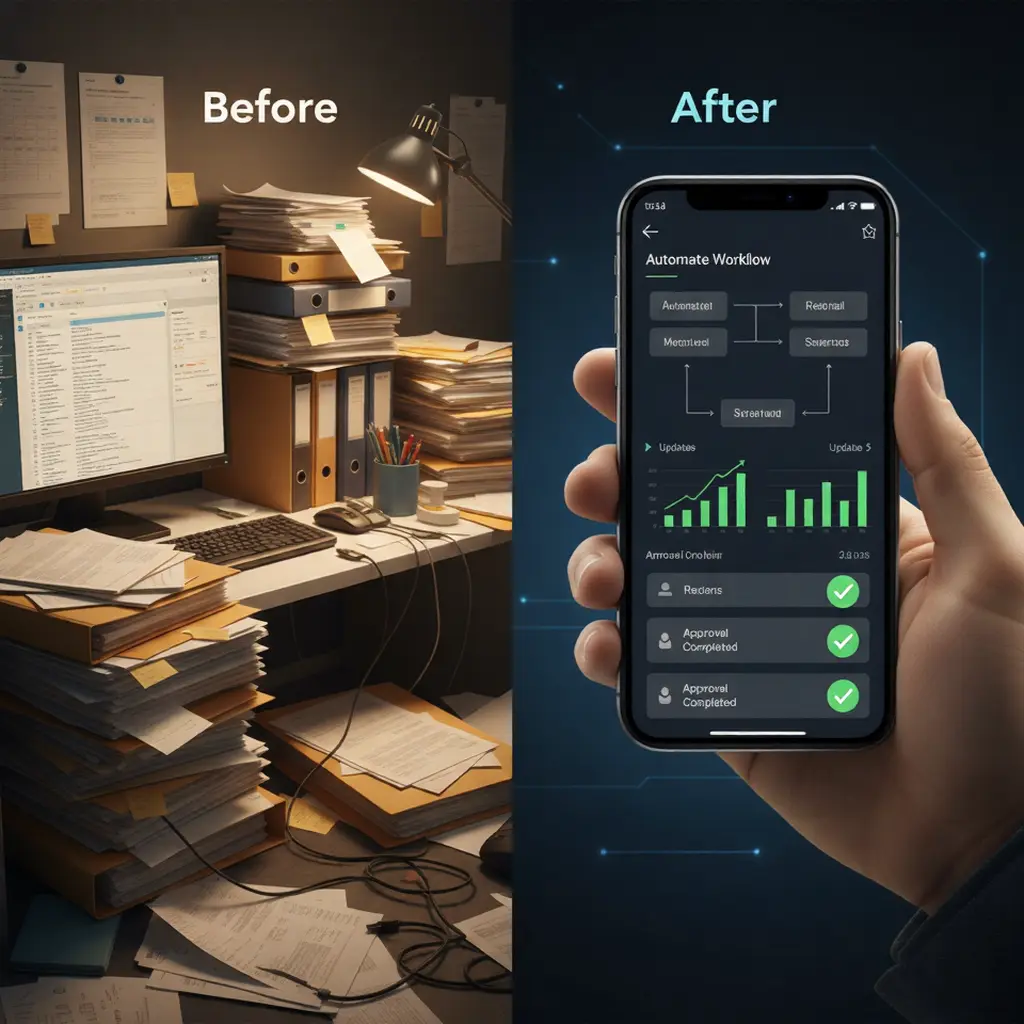
How mobile apps directly improve ROI
Mobile apps increase revenue by shortening buying cycles and enabling faster transactions. Customers place orders easily, track status instantly, and return more often.
At the same time, operational costs drop. Automated workflows reduce paperwork, manual errors, and administrative overhead. Staff spend less time managing processes and more time driving growth.
Brand visibility also improves. Having your platform installed on a customer’s device builds familiarity and credibility over time.
When the app addresses a well-defined workflow and achieves sustained adoption, it can improve sales operations, efficiency, or customer engagement without requiring proportional increases in manual effort.
Conclusion
Enterprise growth now depends on speed, insight, and experience. Mobile apps bring all three together in one powerful platform. When built with strategy, clarity, and long-term vision, they stop being tools and start becoming assets.

