


Discover why businesses move from AEM to Headless CMS for faster delivery, lower cost, and true omnichannel flexibility. Our Headless CMS Support Team is always here to help you.
Why Top Enterprises Choose to Move from AEM to Headless CMS

Many organizations today look to move from AEM to Headless CMS to gain flexibility and speed in content delivery. Adobe Experience Manager (AEM) has been a leading CMS for enterprises, offering tools for web content management, digital asset management (DAM), and personalization. However, its monolithic setup, where content management, presentation, and delivery are all tightly integrated, has become a significant limitation in today’s fast-paced digital landscape.
Moreover, modern applications demand content flexibility across web, mobile, and IoT platforms. Although Adobe added AEM Content Services and GraphQL API, these were extensions, not native features. Therefore, companies seeking real API-first, scalable, and lightweight content solutions often find dedicated headless CMS platforms more efficient.
An Overview
What Makes a Headless CMS Different
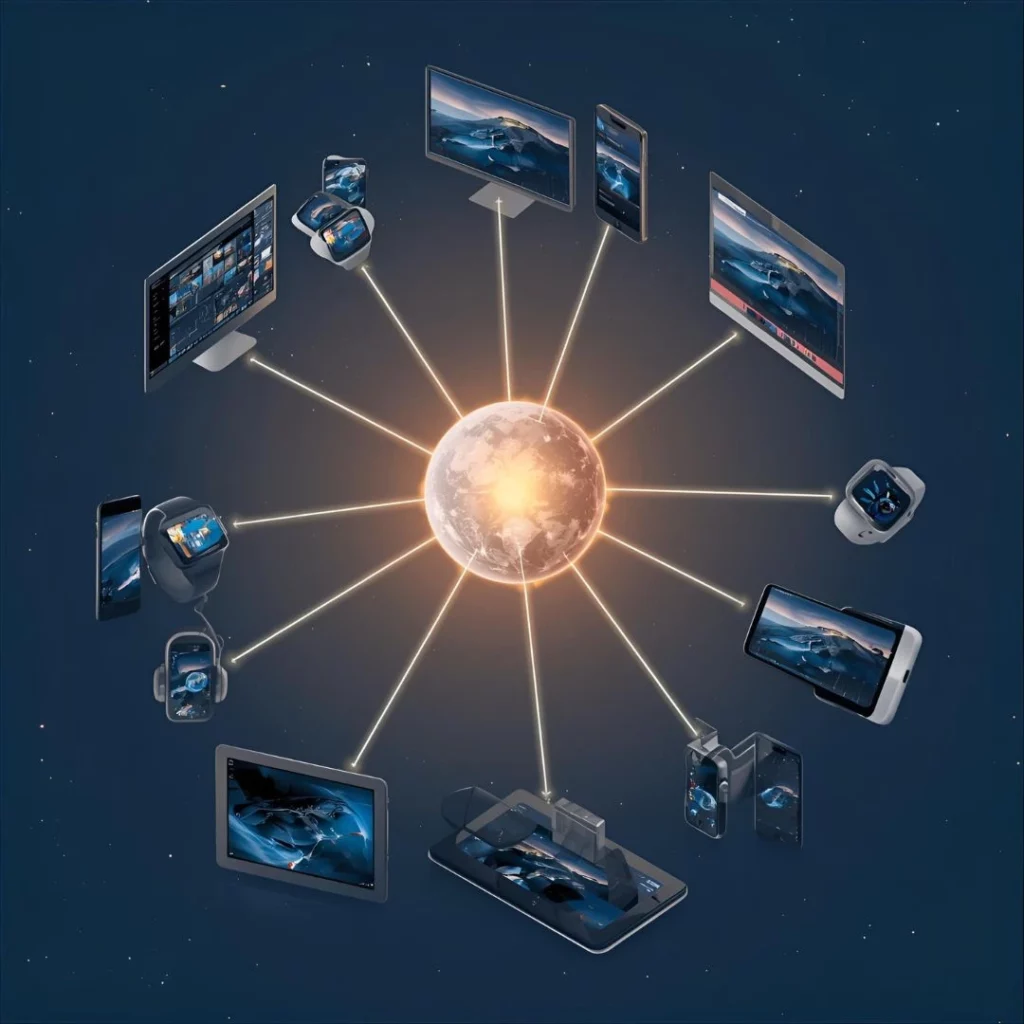
A headless CMS is essentially a central content repository that connects to any frontend via APIs. Consequently, it separates content management from presentation, allowing the same content to be reused across websites, mobile apps, social media, and other channels without duplication.
As a result, this approach enables faster content delivery, greater efficiency, and the freedom to update presentation layers without affecting the content.
Why Headless CMS is Essential
Traditional CMS platforms tightly couple frontend and backend, limiting flexibility and slowing updates. In contrast, headless CMS platforms overcome these limitations:
Better Experience for Developers and Marketers
Developers work with clean APIs and structured content models, marketers manage content independently, and users receive consistent content across all channels. Additionally, the system improves overall workflow efficiency.
Simplified Third-Party Integrations
Content can be shared securely with external partners without requiring IT involvement. Furthermore, access permissions are easy to manage, giving teams control and efficiency.
Agile Design Freedom
Developers can choose any frontend framework or technology. Similarly, switching frameworks no longer disrupts content creation or management.
Why Enterprises Move from AEM to Headless CMS
There are several challenges that make moving from AEM to a headless CMS a strategic decision:
- High Costs: AEM licensing can exceed $50,000 per year, excluding implementation and maintenance.
- Limited API Flexibility: AEM’s GraphQL API is less developer-friendly than platforms like Hygraph.
- Omnichannel Limitations: AEM was originally designed for web pages, making structured content delivery across channels cumbersome.
- Vendor Lock-in: Tight integration with Adobe tools makes leaving the ecosystem complex.
- Slower Development: AEM’s configuration-heavy workflows delay content updates.
Companies like Samsung have experienced this firsthand. By moving from AEM to Headless CMS for their Members platform, they achieved a 50% faster content update cycle and 15% higher user engagement. Developers focused on innovation, while content teams managed updates independently, a balance impossible on AEM.
Preparing for the Move
Preparation is key to a successful transition.
- Evaluate Your Content Needs: Understand how your team creates, manages, and delivers content in AEM’s monolithic system.
- Select the Right Platform: Look for API-first design, omnichannel support, localization, and robust editor experiences, all built into Hygraph.
- Conduct a Content Audit: Determine what content to migrate, archive, or restructure. Optimize metadata and document relationships to prevent broken links.
Four Phases of Moving from AEM to Headless CMS
Planning and Preparation
- Audit the existing AEM setup, including all integrations.
- Document content structure and workflows to define project scope.
- Involve stakeholders early and clarify objectives.
- Create a realistic timeline, budget, and training plan.
- Decide what content to migrate or discard.
Data Mapping and API Integration
- Conduct a content audit to understand existing AEM data structures.
- Define new schemas with all content types and metadata.
- Use automated mapping tools for accuracy and speed.
- Validate data integrity frequently.
- Plan API integrations for seamless content interaction.
- Test mapped data thoroughly before completing migration.
Team Training
- Prepare developers and marketers for the new system.
- Train developers in API usage and content structuring.
- Train marketers to manage content independently.
- Conduct hands-on, role-specific training sessions.
Execution and Testing
- Start with a pilot migration to identify issues early.
- Monitor data integrity and adjust as needed.
- Test performance, integrations, and delivery speeds.
- Conduct user experience testing across devices.
- Gather feedback and refine the CMS setup.
Overcoming Common Migration Challenges
Data Integration Complexity
AEM stores data differently than headless CMS platforms. Differences in formats (XML vs. JSON) can cause mapping errors.
Solutions: Use automated mapping tools, middleware for standardization, and frequent validation checks.
Migrate to headless CMS Today

Global Team Coordination
Teams across time zones may face delays and miscommunication.
Solutions: Use centralized project tools, shared roadmaps, and milestone reviews.
Adapting to New Workflows
Shifting from AEM’s monolithic workflow to API-first CMS can be challenging.
Solutions: Provide hands-on training, early involvement, and detailed documentation.
Maintaining Brand Consistency
Regional variations can lead to inconsistent messaging.
Solutions: Use reusable content blocks, maintain design systems, and enforce brand guidelines.
[If needed, Our team is available 24/7 for additional assistance.]
Conclusion
For enterprises, the decision to move from AEM to Headless CMS is about speed, cost efficiency, and flexibility. Platforms like Hygraph empower developers and marketers to work independently while delivering consistent, high-quality content across channels.
With proper planning, data mapping, training, and testing, this transition transforms content management into a modern, agile process, freeing teams to innovate while maintaining brand integrity.

