


Avoid costly project delays with custom software development services. Plan better, control budgets, and deliver software on time.
Custom software lets businesses design solutions to fit their specific requirements, but many projects fall short and/or go way over budget.
A small business may start a project with a budget and time estimate that seem appropriate. However, after only a few months, the original project goal may still be incomplete, project costs may be much higher, and deadlines may have slipped.
In most cases, budget overruns do not happen because of poor development. They happen because of planning gaps that grow throughout the project.
This article explains the common reasons custom software projects exceed their budgets and the practical ways to avoid them.
An Overview
Why Custom Software Projects Go Over Budget
Unclear Project Scope
A feature list is not enough to define a project.
More often than not, projects start because a client has requested certain functionality. However, the client may have unaddressed data migration, security, user, performance, or integration requirements. Unaddressed requirements lead to an increase in the time and cost of the project.
The clearer the project scope is at the beginning, the fewer surprises appear later.
Weak Architecture Planning
Development begins with a plan, but execution without preparation for architecture expanding can create large issues that increase cost.
Teams may have to go back and redo APIs or update the structure of their databases during the development process. All of these changes will cause the development process to take longer and delivery to happen much later.
Continuous Scope Changes
Small requests that may not seem impactful can be the beginning of large increases in the project cost.
The time to do testing should not be saved for the last minute, as more development and extensive testing will lead to the need for more releases and an increase in the overall cost for the project.
A solid design offers future improvements and reduces changes during project development.
Build smarter software.

Underestimated Integration Work
Most custom software integrates with other systems as CRMs, ERPs, payment gateways, and in-house built systems.
Integration tasks usually take longer to complete due to issues dealing with APIs and data and stakeholder authentication. The overall costs and timelines for the project increase.
Late Testing
Testing along the way is vital and should not be neglected in order to keep the project on budget.
Development with a strong design and technical architecture offers the ability to anticipate growth and reduce large defects.
How to Keep Software Projects Within Budget
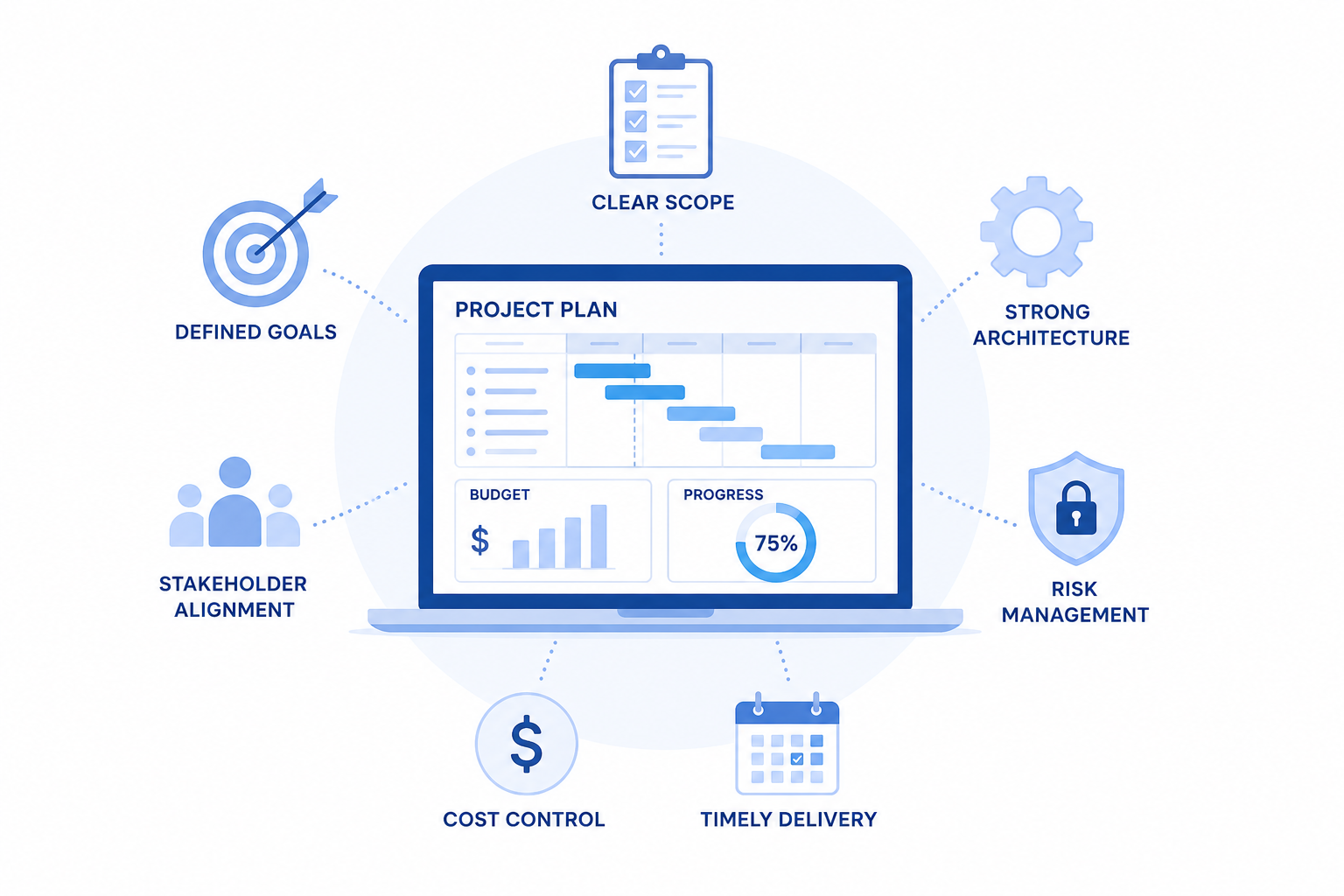
Define the Scope Carefully
Before development begins:
- Document business workflows.
- Identify integration points.
- Define user roles.
- Review performance requirements.
- Confirm data structures.
Plan the Architecture First
Development with a strong design and technical architecture offers the ability to anticipate growth and reduce large defects.
Early architecture planning helps the selection of the appropriate technology and database structure.
Keep the MVP Focused
Not everything has to be launched simultaneously.
Release the core features first. Then, move others based on their estimated business value, timeline, and cost to future releases.
Deliver the Project in Phases
Breaking the project into smaller phases improves budget control.
For example:
| Phase | Focus |
|---|---|
| Phase 1 | Core functionality |
| Phase 2 | Additional integrations and enhancements |
| Phase 3 | Advanced features |
This approach gives better visibility into both progress and spending.
Start Testing Early
Build in preparation for testing and deployment from the start.
Early quality checks decrease the chances of expensive bugs and improve the stability of the release and project.
Monitor Scope Along With Budget
Tracking development hours alone is not enough.
Also monitor:
- Feature completion
- Scope changes
- Change requests
- Rework levels
These indicators focus on budget control and quality suboptimal process management before they become larger issues.
Signs Your Project May Go Over Budget
Watch for these warning signs:
- Frequent scope changes
- Architecture updates during development
- Increasing QA defects
- Delayed integration testing
- Unclear feature requirements
- Constant priority changes
Early resolution of these issues aid in goal accomplishment of the process.
Conclusion
Most of the time, modular software increases in price due to poor planning rather than a lack of expertise.
A scope that provides structure and architectural phases limiting deliveries with controlled changes, early evaluations, and testing helps reduces costs.
Thorough planning before the commencement of development minimizes appropriate budget allocation for software.

