


Learn how closing the customer feedback loop builds trust, improves customer experience, strengthens retention, and drives continuous service improvement.
Customer feedback plays an important role in improving service quality. Every complaint, suggestion, or appreciation provides valuable insight into the customer experience. However, collecting feedback alone is not enough. Real value comes from acting on customer input, communicating the outcome, and using those insights to improve service over time. Bobcares offers Feedback Management Systems that help businesses manage customer feedback and support continuous service improvement.
Overview
- What Does Closing the Loop Mean?
- Why Closing the Loop Matters
- Turning Feedback into Action
- The Power of Follow-Up
- Empowering Teams to Close the Loop
- Creating a Feedback-Driven Culture
What Does “Closing the Loop” Mean?
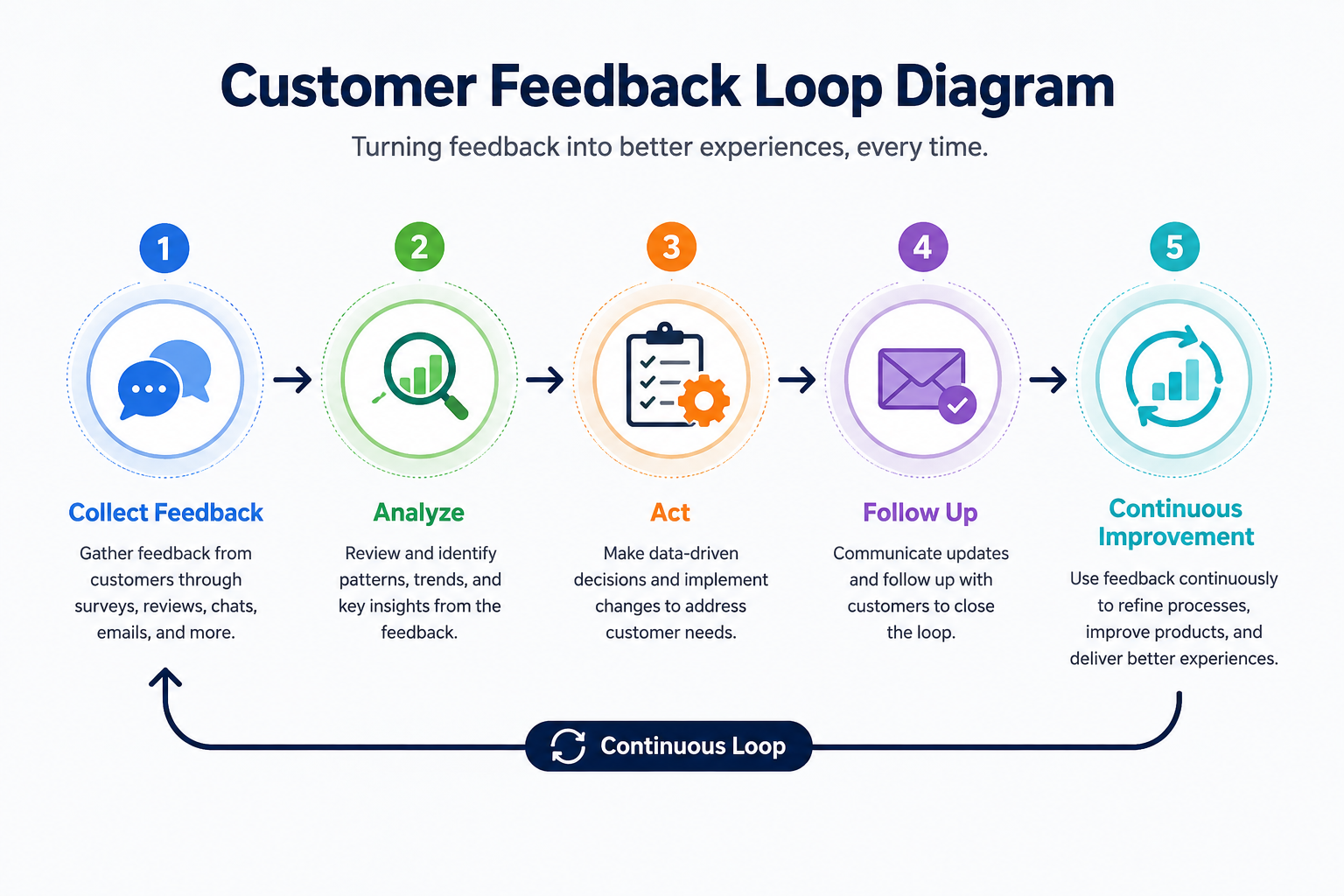
Closing the loop involves collecting customer feedback, analyzing it for insights, acting on those insights, and finally following up with customers to let them know their feedback mattered.
This approach transforms feedback from a passive activity into an ongoing process that supports business growth and customer satisfaction.
Why Closing the Loop Matters
Builds Trust and Transparency
Customers gain confidence when they see their feedback leading to meaningful changes. This shows that the organization listens and values customer input.
Improves Customer Experience
Recurring issues become easier to identify and resolve. As a result, customers experience more consistent and reliable service.
Boosts Customer Retention
Customers are more likely to remain loyal when they feel heard. Handling negative feedback effectively can also strengthen long-term customer relationships.
Drives Team Accountability
A structured feedback process encourages teams to take ownership of customer concerns and continuously improve their performance.
Turning Feedback into Action
Collecting feedback is only the first step. Meaningful improvements come from acting on the information received.
Identify Patterns, Not Just Problems
Look beyond individual complaints to identify recurring issues. Similar feedback from multiple customers signals an opportunity to address the problem at a broader level.
Prioritize What Matters Most
Focus on feedback that affects the greatest number of customers or has the biggest business impact. This helps direct efforts where they matter most.
Implement Improvements Quickly
Responding to feedback promptly demonstrates that the organization values customer input. Additionally, faster action strengthens customer confidence.
The Power of Follow-Up
Following up with customers is an important part of closing the loop. This includes informing customers when their issue is resolved, thanking them for their feedback, and sharing improvements made because of their input.
These simple actions enhance the customer experience and reinforce customer loyalty.
Empowering Teams to Close the Loop
Closing the loop should become part of everyday operations for customer-facing teams.
Teams can support this process by:
- Using standardized response templates for consistency
- Maintaining a shared knowledge base of common issues and solutions
- Encouraging proactive outreach for recurring problems
- Tracking metrics such as resolution time and customer satisfaction
Meanwhile, the right tools and processes help teams respond more efficiently and consistently.
Creating a Feedback-Driven Culture
Closing the loop is more than a process. It is a mindset that supports continuous improvement.
Organizations can encourage this culture by:
- Viewing feedback as an opportunity rather than criticism
- Sharing customer insights across departments
- Celebrating improvements driven by customer feedback
Therefore, making feedback part of everyday operations helps continuous improvement become a natural part of the organization.
Conclusion
Customer feedback becomes valuable when it leads to meaningful action. Collecting feedback, acting on insights, and following up with customers help strengthen trust, improve service, and support long-term success. When customers know their feedback has made a difference, better service becomes part of daily operations. Bobcares supports businesses with Feedback Management Systems that help organize customer feedback and support continuous service improvement.

