


Reduce business risk with legacy application modernization services. Upgrade critical applications with a less disruption.
Most companies are still using software built ten or even fifteen years ago. Because software systems evolve over time, daily operations become more difficult when companies try to avoid updating their systems. Legacy systems become more expensive and risky, as well as harder to maintain.
It’s best to modernize software phased over a period of time. This helps mitigate the risk associated with large legacy system replacements.
An Overview
Why Legacy Systems Become a Business Risk
An older application may still work, but it creates challenges that affect the entire business.
Security Risks
Legacy frameworks and dependencies pose security concerns, as well as compliance issues. As these standards continue to change, legacy technology becomes increasingly unsafe to maintain securely. Further, the software becomes more difficult to defend, as well as unmaintained.
Talent Challenges
It only gets harder to gain interest from engineers towards legacy technology. New hires require a longer learning curve for legacy systems, while experienced engineers migrate to technology with more modern infrastructure.
Operational Challenges
Adding new features to legacy applications increases operational risk, and connecting legacy applications to modern platforms often requires significant work.
Future-proof your applications.

Common Problems with Legacy Systems
| Challenge | Business Impact |
|---|---|
| Outdated technology | Higher security and compliance risk |
| Limited engineering expertise | Higher hiring and maintenance costs |
| Difficult system changes | Slower feature delivery |
| Poor integration capabilities | More manual work and higher operational risk |
A Practical Example
For example, a financial services company using a 2011-built monolithic application to run its core transactions.
Regulations gradually increased in speed and volume, and the company’s applications needed to become more real-time, more reporting-compliant, and capable of responding to the rapidly changing payment networks. Code changes, even minor, could still disrupt payment processing.
The company hired several experienced engineers to expand the applications, but they all left after a prolonged effort spent working around old code. A modernization assessment a few months later even estimated a multi-year project with a hefty budget. Leadership decided to postpone the project as a cost-saving initiative.
While this decision saved money, the impacts of delaying the project resulted in growing business risks in both the operational and compliance domains.
A Smarter Way to Modernize
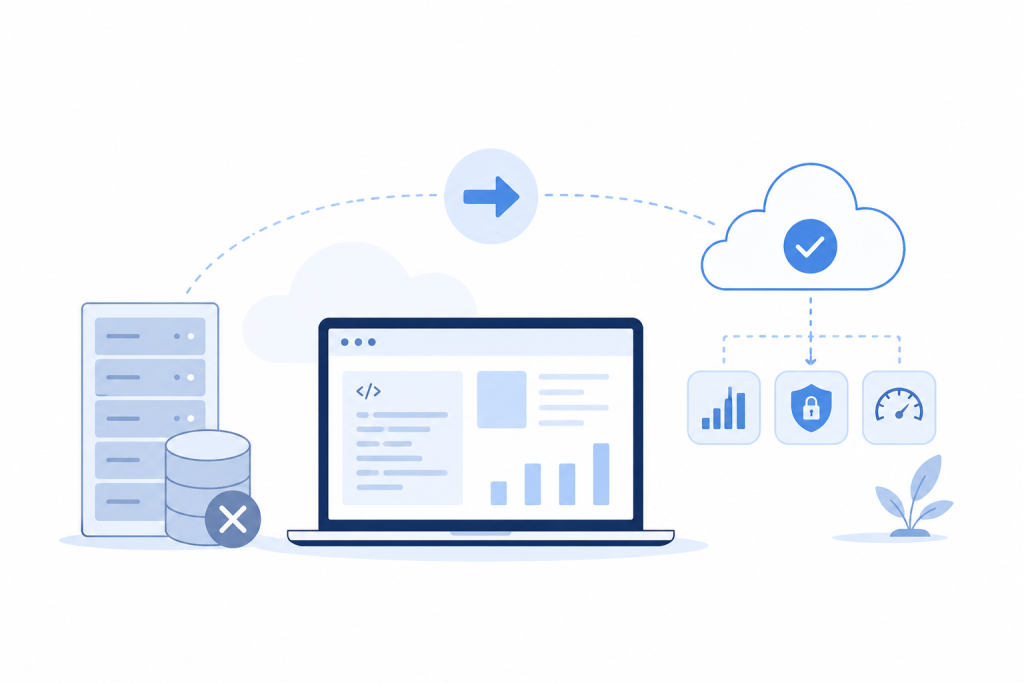
Modernization does not require replacing everything at once. Instead, businesses can improve systems in stages.
- Replace the highest risk components first.
- Build modern services alongside existing applications.
- Strengthen APIs, data synchronization, and identity management before moving more workloads.
- Add logging, monitoring, metrics, and tracing to every new service.
- Measure progress through deployment speed, incident rates, feature delivery time, and engineer satisfaction.
This approach allows businesses to reduce risk while continuing normal operations.
Benefits of Legacy System Modernization
A planned modernization strategy helps businesses achieve long term improvements.
- Faster delivery of new features
- Better security and easier compliance
- Lower dependence on a few experienced engineers
- Easier integration with modern systems
- Improved system reliability
Conclusion
Modernizing a legacy system carries a good amount of risk, as does waiting to modernize. A phased modernization reduces the risk a business faces as they maintain service levels while increasing system stability, decreasing operational risks, and improving business positioning for further growth.

