


Legacy Application Modernization reduces security risks, lowers maintenance costs, and helps businesses support growth with modern systems.
Does your organizations still use software that was built years ago? The system might continue to function, but it can also cause issues that can be easily missed. Security gaps grow over time, maintenance costs increase, and every change takes longer than expected.
Many businesses continue to use outdated systems since replacing the system is quite expensive and disruptive. But the older systems may be more expensive in the long run. Usage of legacy technology can easily expose sensitive data, slow product development, and hinder business growth.
Here are some of the greatest threats of continuing to rely on legacy systems.
1. Security Risks Continue to Grow
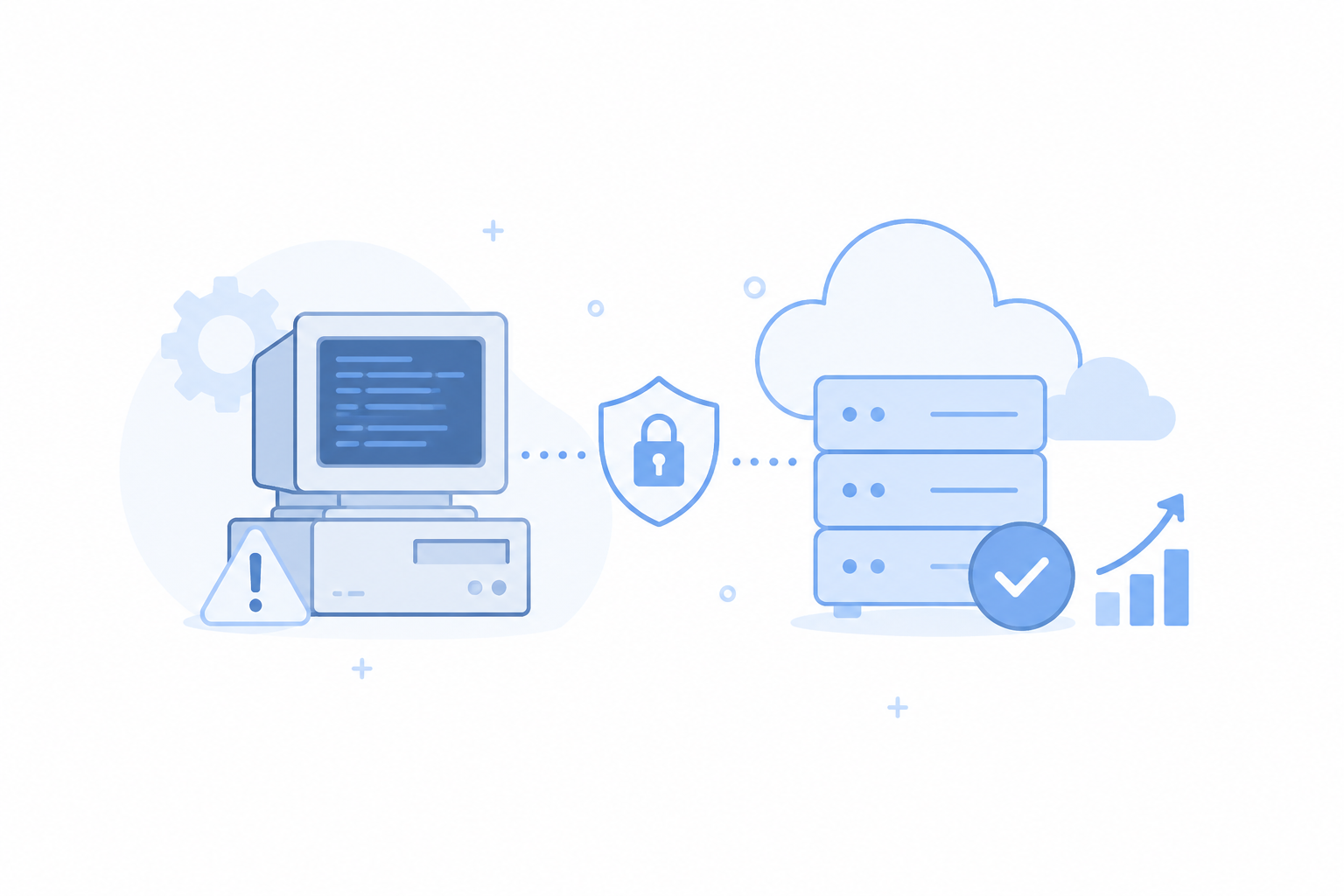
No doubt that legacy software cannot keep pace with today’s security demands. Technology grows rapidly, which makes the systems easier targets for cyberattacks.
- Missing Security Patches: As vendors stop supporting older software, newly discovered vulnerabilities remain unfixed, making exploitation easier for attackers.
- Difficult Compliance: Meeting regulations like GDPR, HIPAA or other industry standards can be more difficult. Organizations tend to spend extra time and money to provide temporary solutions to protect sensitive information.
- Limited Security Support: Many legacy systems are unable to support modern security systems like advanced threat detection, Zero Trust security, or Identity and Access Management (IAM). This results in limiting the security teams ‘ ability to detect and stop threats.
2. Innovation Slows Down
Keeping pace with businesses is really important. Unfortunately, older systems often make it harder to keep up.
- Integration Becomes Difficult: Many legacy applications are based on outdated technologies and offer very limited API support. So, integrating them with cloud services, business applications, or reporting tools can be challenging.
- Development Takes Longer: Outdated code is often hard to understand, particularly if it is not well documented. Furthermore, even a minor change will be challenging with a significant amount of testing and review, postponing new features.
- Finding Skilled Developers Gets Harder: Most of the developers work with the existing programming languages and cloud platforms. The more people are looking for legacy skills, the more expensive it will be to hire experienced professionals.
Modernize your legacy systems today.

3. Costs Keep Increasing
Since replacement costs are higher, many organizations continue using legacy systems. However, this will become more expensive over time.
- Higher Maintenance Expenses: They need regular fixes, dedicated support, outdated hardware, and unforeseen repairs, which are all part of their maintenance expenses. As the years have passed, cost increases have been a problem, and the budget has been cut for new business ventures.
- Lost Business Opportunities: Delays new products, customer improvements, and internal projects. At the same time, those who compete on modern platforms can react to market changes far more quickly.
Conclusion
Replacing every legacy application at once is rarely necessary. Alternatively, start with the systems that create the highest business risk or cost the most to maintain. A phased modernization plan will minimize disruption and enhance security, performance and long-term reliability.
Modern systems are also easier to integrate with newer technologies, to roll out updates faster and to accommodate future business expansion. Doing something now will help to mitigate risk today and set up your business for tomorrow.

