


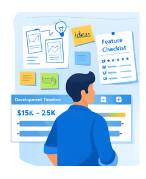
 An idea might sound great in meetings or pitch decks, yet real users may react very differently once they try it. Building a new product always begins with uncertainty.
Many businesses avoid this risk by building a Minimum Viable Product (MVP). An MVP is the first working version of a product that includes only the most important features. Its purpose is simple. It helps to test the idea in the real market before committing a large budget. Users try the product, share feedback, and reveal what actually matters. Product decisions then rely on real user behavior instead of assumptions.
In fact, building an MVP helps you test your idea out before spending money on a product.
This is when a common question appears:
This is what we attempt to answer in this blog. Today, we will take a quick look at MVP development costs and how to estimate a realistic budget.
An Overview
- What Is an MVP?
- Why Do Businesses Build MVPs First
- Is Planning an MVP Budget Important?
- How to Estimate MVP Development Cost
- How Much Does an Average MVP Development Cost?
- Sample MVP Cost Scenarios
- What Features Should Be Included in an MVP?
- How Does Platform Choice Affect MVP Development Cost?
- How Long Does It Take to Build an MVP?
- Key Factors That Influence MVP Development Cost
- Web vs Mobile MVP Cost Comparison
- Development Team Options
- What are the Hidden MVP Development Costs?
- How to Reduce MVP Development Cost?
- Future Trends That May Affect MVP Development Cost
- FAQs
What Is an MVP?
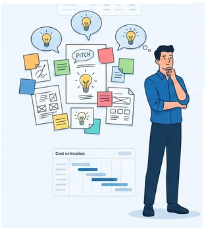 A Minimum Viable Product is the earliest version of a product that solves a single problem for users. In an ideal MVP, only essential functionality is included. Extra features are added later after the product proves its value.
The goal of an MVP is validation. It helps confirm that people actually want the product before investing heavily in full development. Many successful companies began with very simple MVPs.
For instance, Airbnb began as a basic website where people could rent out spare rooms in their homes. Similarly, Dropbox introduced its concept using a short video demonstration before building the full product. Instagram originally focused on photo sharing, without many of the features that exist today.
These early versions helped these companies learn what users valued. As a result, their products grew gradually based on that feedback.
Why Do Businesses Build MVPs First?
Launching a fully featured product without testing the idea first can lead to expensive mistakes. An MVP provides a safer starting point.
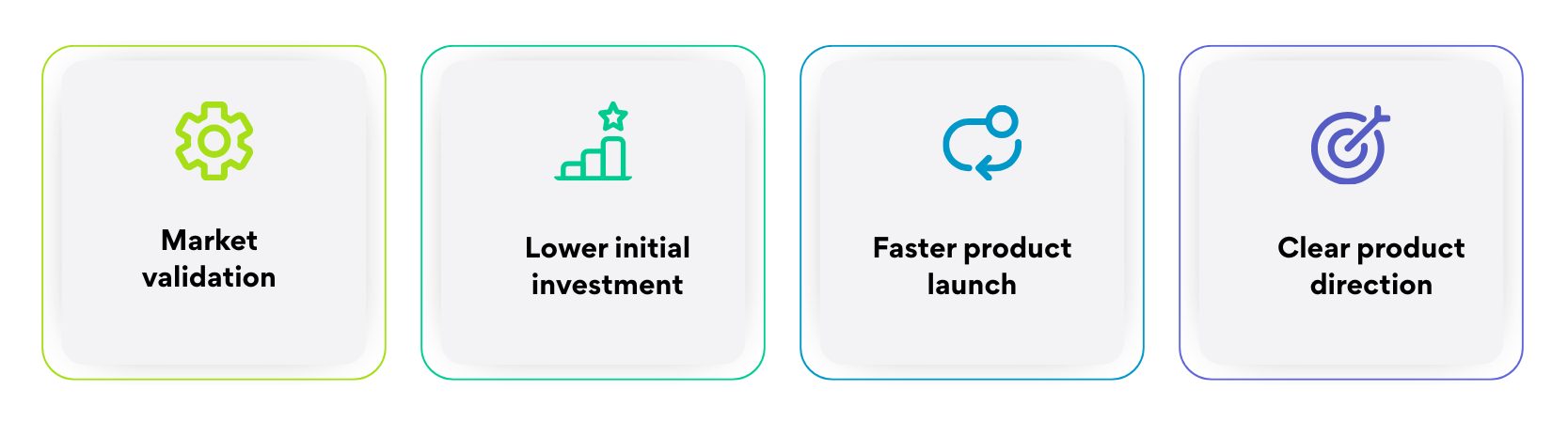
- Market validation
Real users interact with the product and reveal whether the idea solves a meaningful problem. Honest feedback helps you understand the true demand.
- Lower initial investment
A small feature set reduces early development costs. Money is spent only on essential functionality.
- Faster product launch
Development becomes faster when the scope remains limited. Products reach the market sooner.
- Clear product direction
User behavior reveals which features deserve further investment. Future development becomes more focused.
Studies have shown that companies that adopt this approach often learn faster and waste less money during early development. In short, investing in an MVP makes financial sense. Product engineering services can help streamline MVP builds and scale products once validation is complete.
Is Planning an MVP Budget Important?
Although an MVP sounds simple enough, a product with simple features. But reality can be different.
Even a simple product requires design work, development time, infrastructure, and testing. A clear budget helps prevent unexpected financial pressure during development.
This is where a realistic budget supports better decision-making.
- Resource planning
Development requires different types of work such as research, design, coding, and testing. Budget planning ensures that each area receives enough attention.
- Alignment among stakeholders
Investors, founders, and developers must understand the scope of the project. Clear budgeting prevents confusion about timelines and expected costs.
- Risk control
A controlled budget protects you from investing too much before market validation.
- Planning for future growth
Architecture decisions made during MVP development affect how easily the product can grow later.

How to Estimate MVP Development Cost?
When it comes to building an MVP, cost estimation begins long before development starts. This is because there are several parameters that decide the costs. Before we dive into that, let’s take a look at the process behind estimating the cost.
During early planning, many teams evaluate not only development cost but also the long-term product roadmap. This is where a product engineering strategy can help ensure the MVP evolves smoothly into a full product.
- Define the main problem
Every MVP should focus on solving one primary user problem. Trying to solve many problems at once increases complexity and development cost.
For instance, a food delivery application MVP may include restaurant listings and order placement. Advanced features such as loyalty programs or recommendation systems can appear later.
- List the essential features
Teams often begin by writing down every possible feature they imagine. That list then becomes smaller through prioritization.
Feature Category Description Must have Required for the product to function Important Helpful but not essential Optional Added after validation Future ideas Long-term possibilities The first release should include only the must-have features.
- Choose the platform
Platform choice has a direct effect on cost.
Platform Cost Impact Web application Lowest development effort Mobile app Higher development effort Mobile for two platforms Greater complexity Web and mobile system Highest development cost Many startups launch web-based MVPs first because development is faster and less expensive.
- Select the development approach
Different development approaches lead to different budgets. Freelancers, agencies, and internal developers all have different cost structures.
- Estimate development time
Time strongly influences cost. Longer development schedules increase expenses.Complexity Typical Timeline Simple MVP 1 to 2 months Standard MVP 3 to 4 months Complex MVP 4 to 6 months
Get a clear estimate for your MVP.

How Much Does an Average MVP Development Cost?
The cost of building an MVP varies depending on complexity and scope. However, most MVP projects fall into three general categories.
| MVP Type | Estimated Cost | Timeline |
|---|---|---|
| Simple MVP | $5,000 to $15,000 | 2 to 4 weeks |
| Standard MVP | $15,000 to $50,000 | 1 to 3 months |
| Complex MVP | $50,000 to $150,000 or more | 3 to 6 months |
Simple MVPs are usually small applications that include only a few core features. Standard MVPs may involve integrations and additional functionality, while complex MVPs may include advanced systems such as AI, analytics, or large-scale user interactions.
Sample MVP Cost Scenarios
While MVP costs vary depending on product complexity, looking at practical examples can make budgeting easier. Different product ideas require different levels of development effort, infrastructure, and features. Here are some examples showing how MVP costs may differ based on the type of application being built.
| Startup Idea | Core MVP Features | Estimated Cost | Timeline |
|---|---|---|---|
| Food Delivery Platform | • Restaurant listings • Menu browsing • Order placement • Payment integration |
$30,000 – $60,000 | 3 – 4 months |
| Fitness Coaching App | • User accounts • Workout plans • Progress tracking • Subscription payments |
$25,000 – $50,000 | 2 – 3 months |
| AI Customer Support Tool | • Chatbot interface • Knowledge base integration • Analytics dashboard |
$80,000 – $150,000 | 4 – 6 months |
These scenarios highlight how the cost of MVP development depends heavily on the product’s complexity and feature scope. By focusing only on the core functionality required to validate an idea, teams can launch faster and keep development budgets under control.
What Features Should Be Included in an MVP?
One of the biggest challenges most organizations and startups face when building an MVP is deciding which features to include.
Adding too many features can increase development costs and delay the launch. On the other hand, launching with too few features may not properly demonstrate the value of the product.
A common approach is to prioritize features based on their importance.
| Feature Category | Description |
|---|---|
| Must have | Required for the product to function |
| Important | Helpful but not essential |
| Optional | Added after validation |
| Future ideas | Long-term possibilities |
By focusing on the must-have features, startups can launch faster and gather valuable insights before investing in additional functionality.
How Does Platform Choice Affect the Cost of MVP Development?
The platform you choose for your product also plays a major role in determining development costs.
Some startups begin with a simple web application, while others launch directly on mobile platforms.
| Platform | Cost Impact |
|---|---|
| Web application | Lowest development effort |
| Mobile app | Higher development effort |
| Mobile for two platforms | Greater complexity |
| Web and mobile system | Highest development cost |
For many startups, launching a web application first is often the most cost-effective way to validate an idea. Once the product gains traction, mobile apps can be developed later.
How Long Does It Take to Build an MVP?
The development timeline for an MVP depends largely on its complexity.
Simple products with minimal features can often be developed quickly, while more sophisticated applications require additional time.
| Complexity | Typical Timeline |
|---|---|
| Simple MVP | 1 to 2 months |
| Standard MVP | 3 to 4 months |
| Complex MVP | 4 to 6 months |
These timelines typically include design, development, testing, and deployment phases.
Key Factors That Influence MVP Development Cost
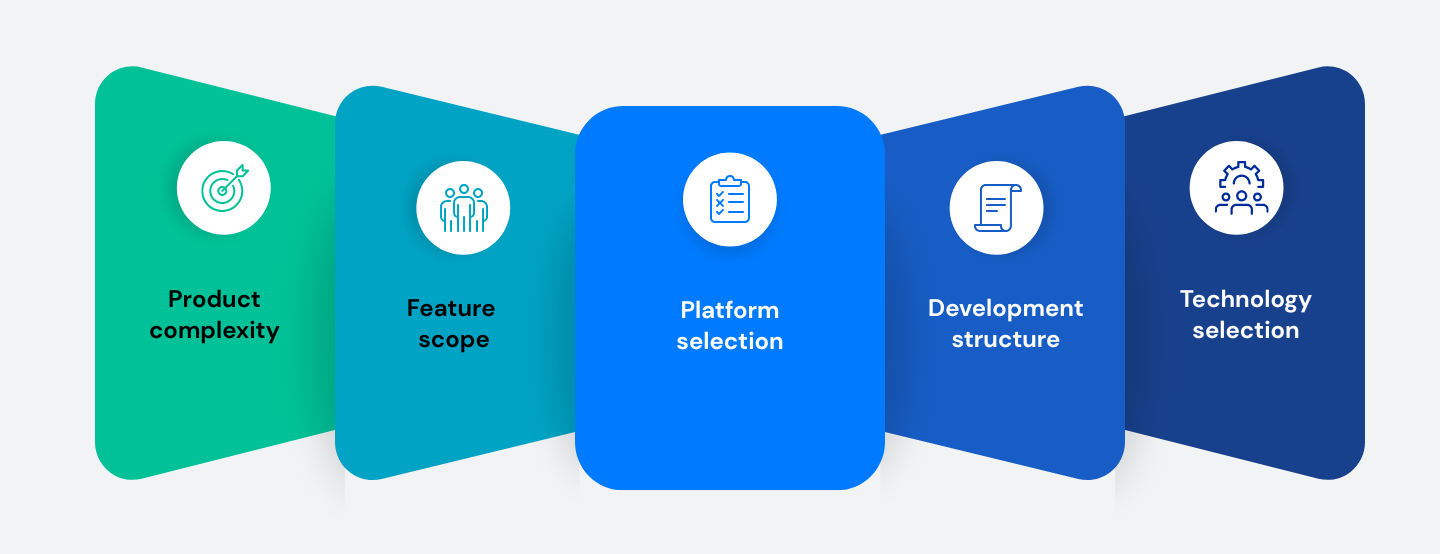
The cost range for MVPs is wide due to several key factors that influence the final cost:
- Product complexity
Simple applications require less development work. Advanced products demand additional architecture and testing.
- Feature scope
Each additional feature increases development time. Careful prioritization keeps budgets manageable.
- Platform selection
Mobile platforms introduce additional development work due to device compatibility.
- Development structure
Freelancers, agencies, and internal developers charge different rates.
- Technology selection
Some technologies accelerate development while others require specialized expertise.
Awareness of these factors helps you estimate costs more accurately.
Web vs Mobile MVP Cost Comparison
The platform decisions you make often account for a large portion of the budget.
Choosing between a web and mobile MVP can significantly affect development cost. A web MVP is usually the most economical starting point, as it allows startups to test their idea with a single platform. Mobile applications often require separate development for iOS and Android, additional UI optimization, and ongoing maintenance, which can increase the overall budget.
| Factor | Web MVP | Mobile MVP |
|---|---|---|
| Development Cost | Lower cost due to a single codebase | Higher cost, especially if building for iOS and Android |
| Development Time | Faster to build and launch | Longer due to platform-specific development |
| Maintenance | Easier updates and maintenance | Requires updates across multiple platforms |
| User Reach | Accessible from any device with a browser | Optimized experience for smartphone users |
| App Store Requirements | No app store approval needed | Must meet App Store and Google Play guidelines |
Some startups choose cross-platform frameworks to reduce the effort required for mobile development.
Development Team Options
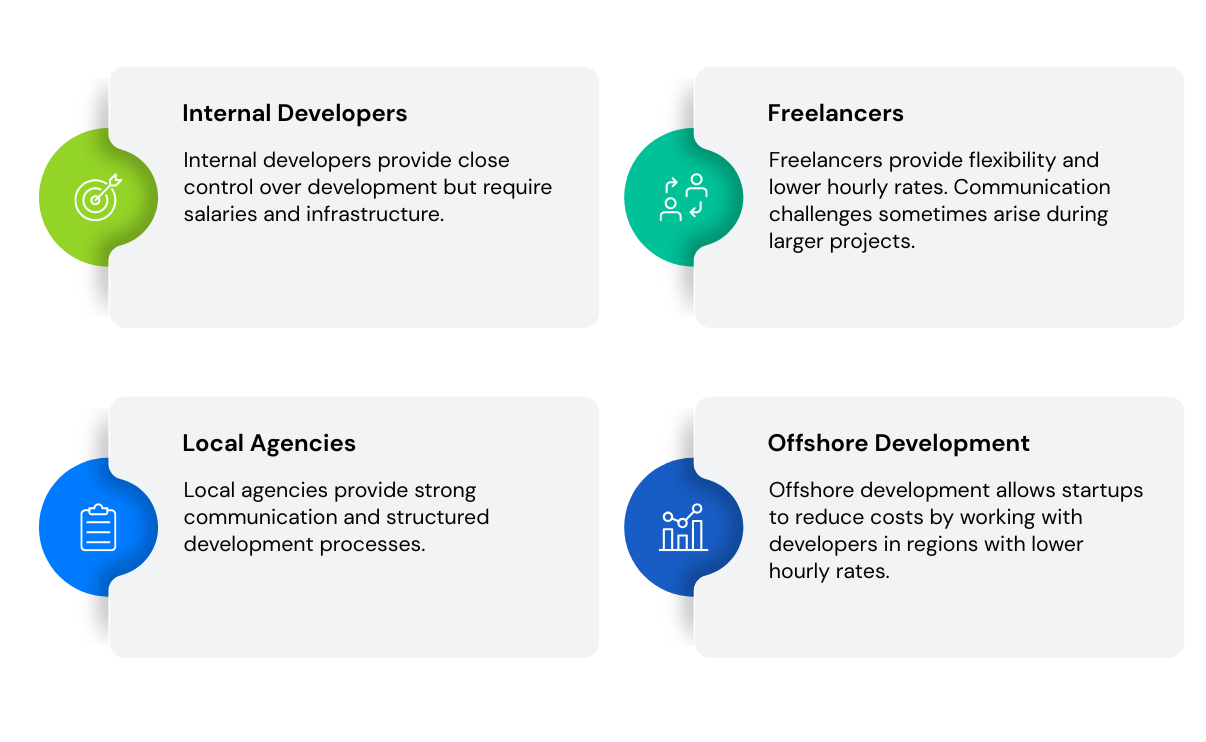
When planning an MVP, choosing the right development team is just as important as defining the product itself. Startups generally have several options, including building an in-house team, hiring freelancers, working with a local development agency, or outsourcing to an offshore development partner. Each option comes with different costs, levels of control, and project management requirements.
Many startups also work with experienced engineering teams to structure their MVP development process and reduce delivery risks. Working with a team that offers end-to-end product ownership can simplify planning, development, and scaling. You can explore how structured product engineering services help businesses design, build, and scale digital products efficiently.
For example, in-house teams offer full control but require higher long-term investment, while freelancers can reduce costs but may lack coordination for complex projects. Many startups choose development agencies or outsourcing partners because they provide a complete team with designers, developers, and project managers, helping speed up development while keeping costs manageable.
One of the biggest variables is developers’ hourly rates, which can vary widely by region. Developers in North America and Western Europe generally charge higher rates due to higher living costs and stronger technology markets.
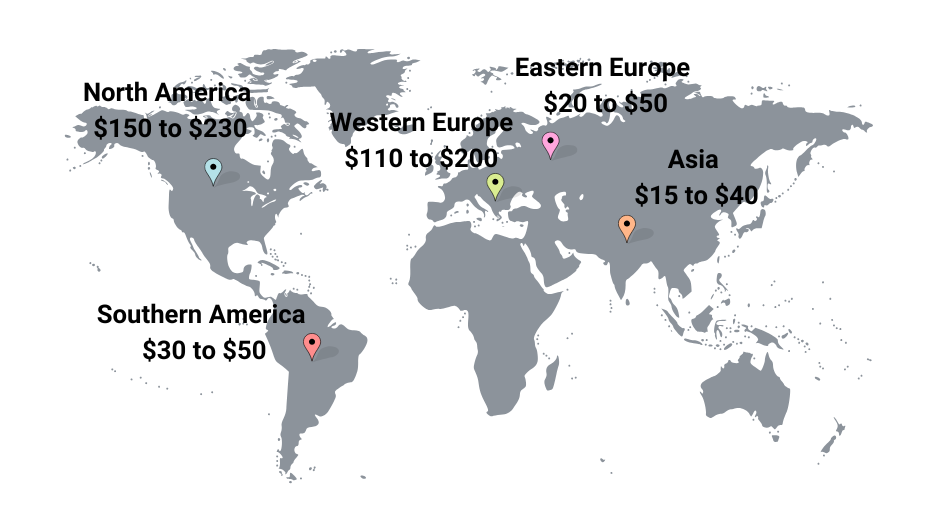
In contrast, regions such as Eastern Europe, South America, and Asia often offer skilled developers at more affordable rates. This is why many startups choose offshore or distributed development teams to balance quality and budget. Understanding these regional differences helps you plan development budgets more realistically and select the right team for the project.
What are the Hidden MVP Development Costs?
Any seasoned developer knows that several expenses appear after development begins. Here are some of the hidden costs to keep an eye out for:
- Third-party services
Payment gateways, messaging systems, and analytics tools often charge subscription fees.
- Legal requirements
Privacy policies and data protection measures may require legal consultation.
- Infrastructure growth
Higher traffic increases hosting and storage expenses.
- Product iteration
User feedback often leads to feature adjustments and interface improvements.
Planning for these costs early prevents unexpected financial pressure and helps you stay within budget.
How to Reduce MVP Development Cost?
Although most teams focus on the initial development budget, several additional expenses often appear during and after the MVP launch.
As the product attracts users, startups may also need to invest in monitoring tools, performance optimization, and customer support systems. Fortunately, planning for these costs early helps avoid budget surprises and ensures the MVP can scale smoothly once it gains traction.
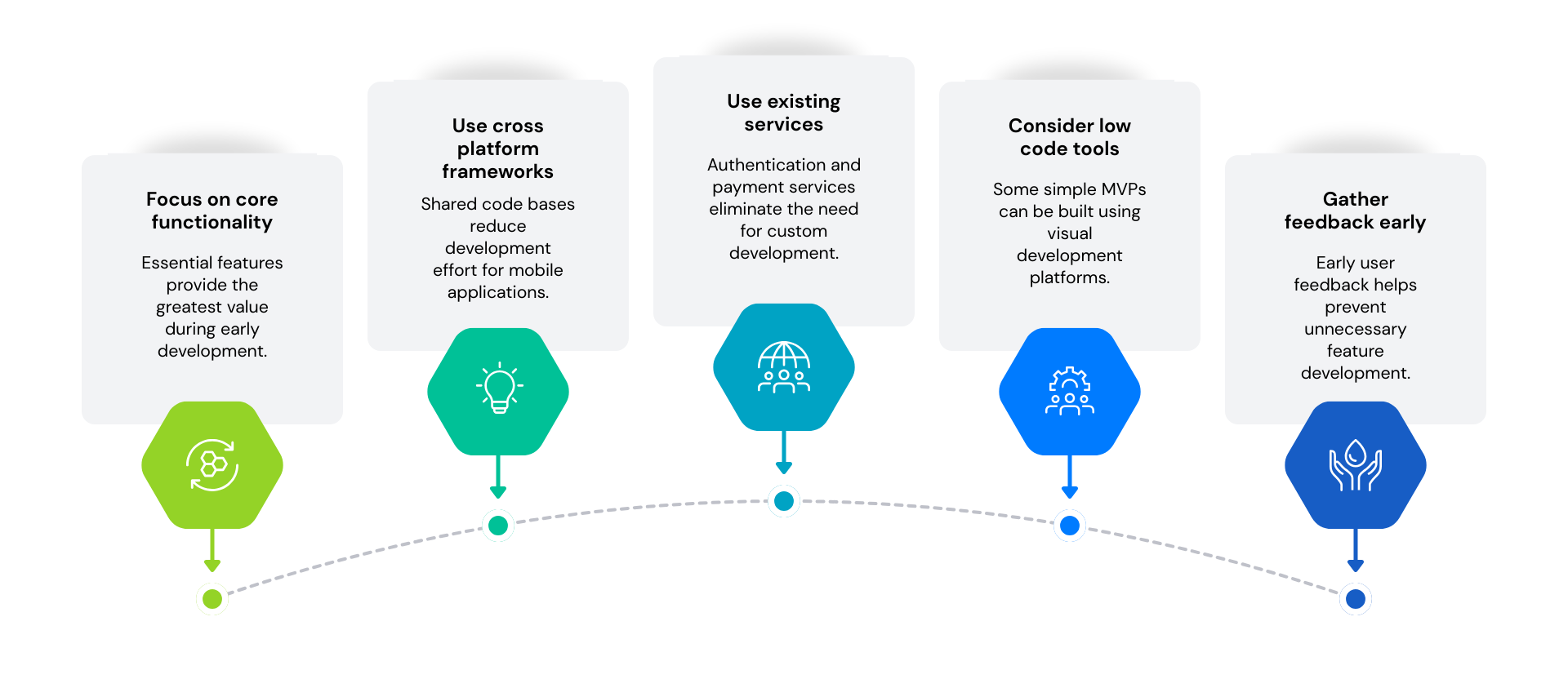
Here are a few strategies to manage development budgets.
Future Trends That May Affect MVP Development Cost
Technology trends are gradually changing how MVPs are built and how much they cost. Modern development tools, AI-assisted coding platforms, and automation frameworks are helping teams build and launch products faster than before.
Low-code development tools are also continuing to improve, making it possible to create simple products quickly while keeping development budgets lower.
At the same time, cloud infrastructure has reduced the need for expensive hardware during the early stages of development, allowing teams to scale resources only when needed. However, new security and privacy regulations are becoming more common, which means compliance planning may also influence future MVP budgets.
As these trends evolve, MVP development is likely to become faster, more flexible, and better suited for rapid product experimentation.
Frequently Asked Questions
Can an MVP be built using low-code or no-code tools?
Yes. Many simple MVPs can be created using low-code or no-code platforms. These tools allow teams to launch products quickly and at a lower cost. However, highly complex applications may still require custom development.
What happens after the MVP is launched?
After launch, the focus usually shifts to collecting user feedback, improving features, fixing bugs, and scaling the infrastructure. Many successful products go through several iterations after the MVP stage before reaching a full production release.
How do startups usually fund MVP development?
MVP development is often funded through personal savings, small investments, grants, or pre-seed funding. Some teams also bootstrap their MVP while validating the idea before seeking external investment.
Is building a web MVP cheaper than a mobile MVP?
In most cases, web MVPs are cheaper to build than mobile applications. A web application requires only one codebase and does not need app store approval. Mobile apps often require separate development for iOS and Android, which increases development effort, testing requirements, and maintenance costs.
How do you know if your MVP budget is too high?
A useful guideline is to compare the cost of development with the value of the problem being solved. If the MVP requires a very large investment before testing the idea, it may be worth simplifying the product or reducing features. Many successful startups begin with extremely simple MVPs and expand them later.
Should a startup build an MVP itself or hire developers?
The answer depends on the technical skills available within the team. If developers are already part of the team, building internally can reduce costs. Otherwise, startups often hire freelancers, work with development agencies, or outsource development to specialized teams to speed up the process.
Conclusion
In conclusion, the cost of MVP development can vary widely depending on the complexity of the idea, the features included, the platform selected, and the development team involved. However, building an MVP remains one of the most effective ways to validate a product concept before committing significant resources to full-scale development.
By focusing on core functionality, choosing the right development approach, and carefully planning the budget, businesses can launch a working product faster and gain valuable insights from real users. With the right strategy in place, an MVP can serve as a strong foundation for future development, helping teams refine and scale their product based on actual market needs.

