


Customers give emotional clues before they churn. Learn how sentiment analysis helps you catch these signals early, respond proactively, and build long-lasting customer loyalty. Our ecommerce team is here to guide you every step of the way.
Most businesses lose customers long before they realize anything is wrong. It’s already too late by the time churn becomes visible, in the form of canceled subscriptions, silent drop-offs, or angry emails.
Companies make this mistake by ignoring the subtle emotional signals customers express along the way.
This has made sentiment analysis a powerful tool in modern customer retention.
The modern customer is well-informed and knows exactly what they want. If they are not satisfied with your product or service, they can switch to your competitor in seconds. That is why building customer loyalty is key. Sentiment analysis is the secret to keeping an eye on how your customers truly feel.
With the advent of Churn prediction software, you can stop relying solely on surveys or end-of-journey feedback to understand real-time emotions.
Rather, take a deeper look at emotions hidden inside support tickets, chat conversations, social messages, and reviews. These early emotional cues reveal dissatisfaction long before a customer decides to leave.
According to Bain & Company, increasing customer retention by just 5% can boost profits up to 95%. This clearly shows that detecting emotional distress early is worth every effort.
Overview
What Is Sentiment Analysis?
Sentiment analysis is an AI technique that identifies the emotional tone behind text.
Modern tools can analyze customer conversations across channels and instantly classify them by emotional intensity. Pairing this with churn prediction workflows, sentiment analysis becomes a proactive engine for customer retention.
For example:
• A customer repeatedly expressing “still not working” or “I’m really disappointed” may trigger a high-risk alert.
• A negative sentiment trend over several interactions may signal rising churn probability.
Sentiment analysis uses Natural Language Processing (NLP) and Machine Learning (ML) to help software interpret text much like a human would.
These systems generally follow one of three models: rule-based, ML-driven, or a hybrid of both. Each comes with its own advantages. Rule-based systems offer near real-time results, while ML models are more flexible and better at understanding complex or nuanced language. Combining the two often delivers the best balance of speed and accuracy.
Why Traditional Retention Methods Fail
Most companies rely on NPS, CSAT surveys, and quarterly feedback to assess customer happiness. While helpful, these have major shortcomings:
- Customers don’t always say how they really feel.
- Feedback often comes too late.
- Manual review is difficult at scale.
- Teams don’t notice subtle emotional shifts.
How Sentiment Analysis Predicts Churn Before It Happens
Sentiment analysis addresses the exact gaps traditional retention methods miss. Here’s how:
1. Detecting Negative Emotions Early
AI spots words, patterns, and emotional cues that indicate dissatisfaction, such as:
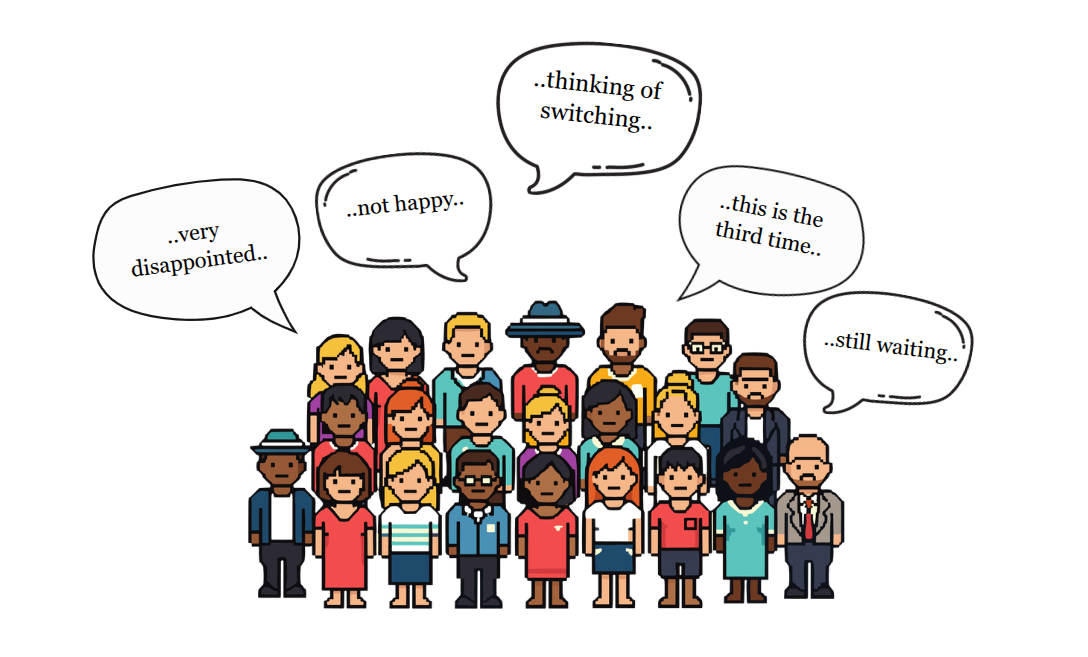
These signals pop up long before customers churn.
Here’s a quick video walkthrough showing how real-world teams use AI and sentiment analysis to spot churn signals early and take action before customers leave.
2. Tracking Sentiment Over Time
The power lies not just in one message, but in the trend.
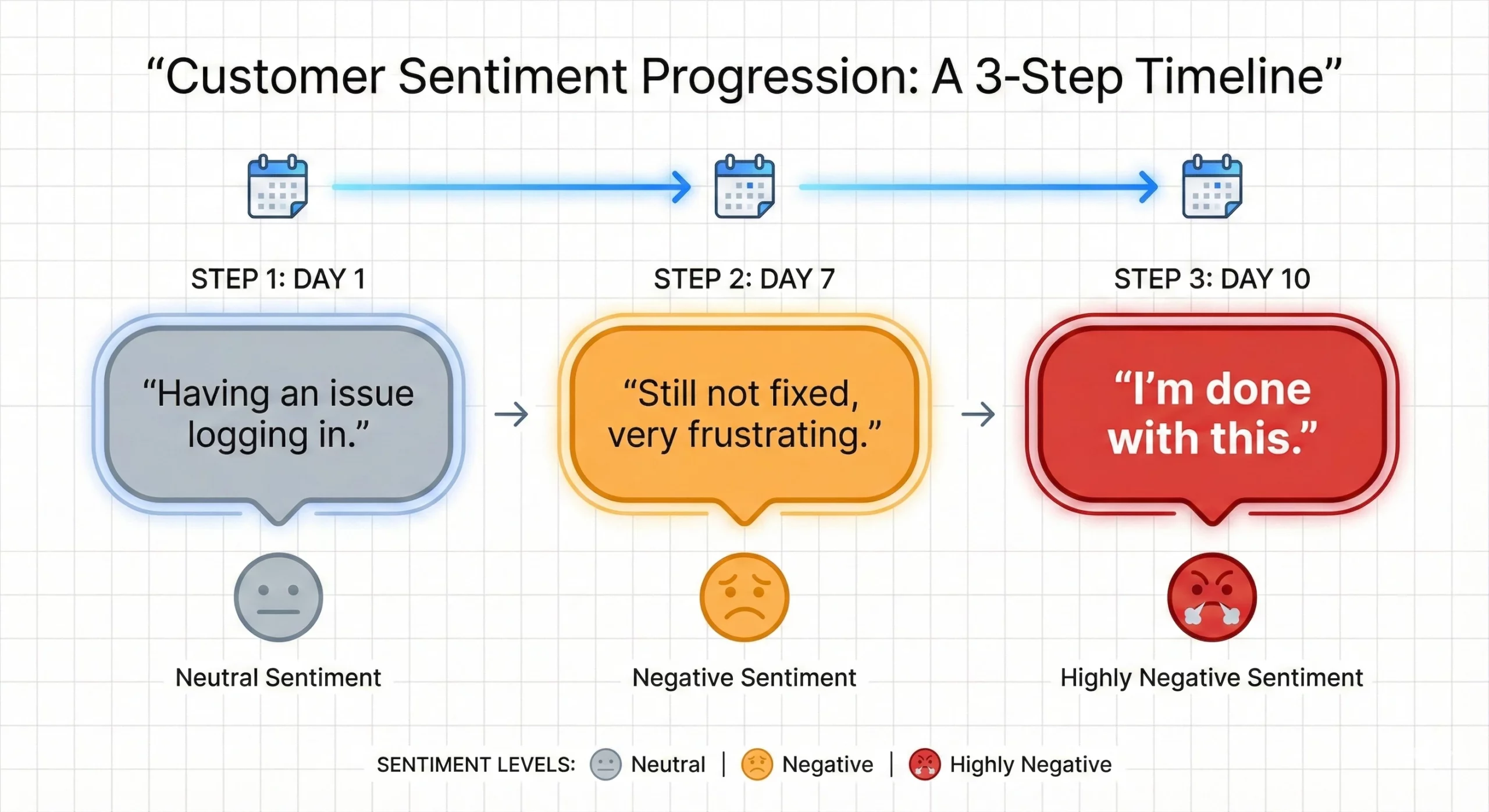
This emotional drop-off predicts churn far earlier than usage decline.
3. Flagging High-Risk Conversations
When sentiment turns sharply negative, the system can:
- Alert managers
- Escalate the ticket
- Assign a senior agent
- Trigger a proactive retention call
This moves your team from reactive to proactive retention. Businesses looking to scale support operations can explore our guide on AI for Customer Service Automation, which explains how technologies like sentiment analysis help streamline customer interactions and improve response quality.
4. Identifying Root Causes of Dissatisfaction
Sentiment analysis combined with topic modeling reveals why customers churn.
This insight helps teams focus on what truly matters and solve recurring problems faster.
Turning Sentiment Insights Into Retention Actions
Detecting negative sentiment is only the first step. Businesses also need to act on these signals before dissatisfaction turns into churn.
Once a customer is flagged, businesses can escalate conversations showing repeated frustration, consider the customer’s previous interactions and concerns, or group negative feedback to identify common issues. They can also check whether sentiment improves after resolving the issue.
It is a good idea to measure which retention actions lead to better customer responses.
This turns sentiment analysis from a detection tool into a practical way to identify problems, respond to customers, and improve retention.
Where Does the Sentiment Data Come From?
Sentiment models work best when fed natural customer communication, including:
- Support tickets
- Live chat logs
- Email threads
- Phone call transcripts
- Review platforms
- Community/forum discussions
- In-app feedback
Key Components of a Churn Sentiment Detection System
A fully effective churn sentiment system brings together several moving parts that work seamlessly behind the scenes:
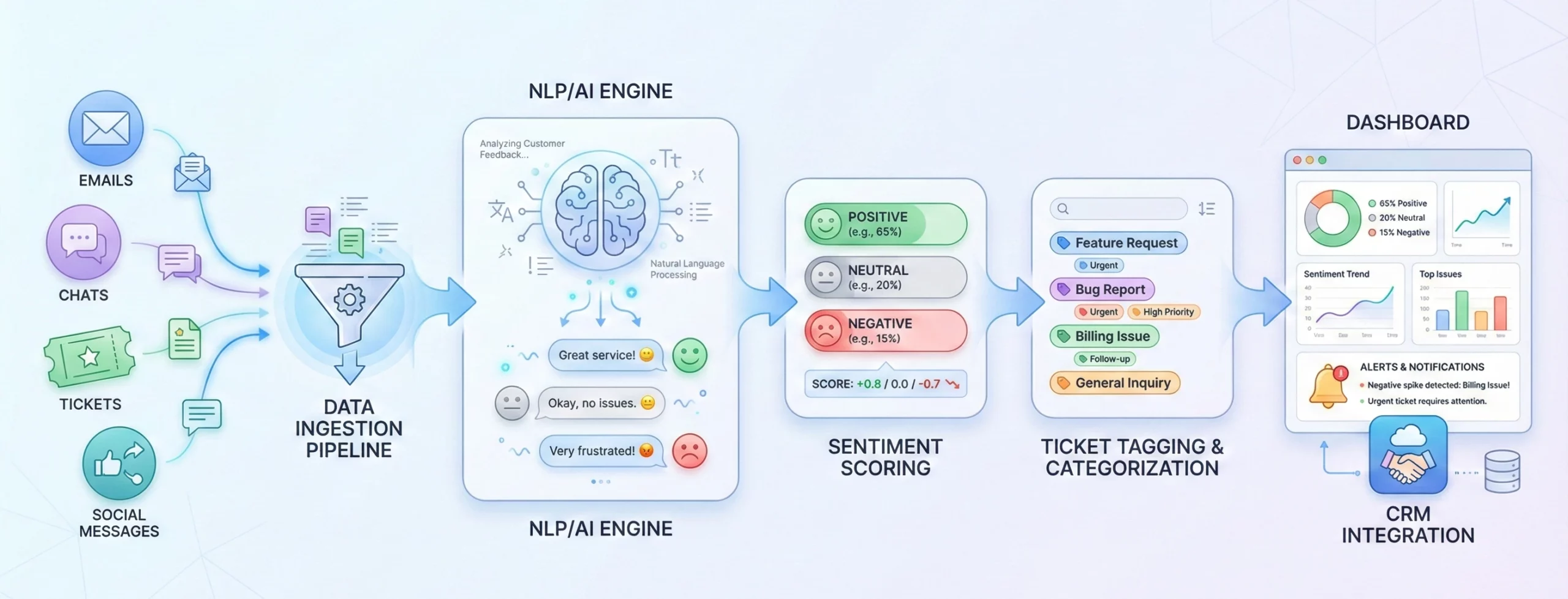
- Data Ingestion Pipeline
Collects customer messages from every channel, like emails, chats, support tickets, social media, and more.
- NLP/AI Model
Analyzes each message to understand emotional tone, intent, and context.
- Sentiment Scoring Engine
Assigns emotional ratings such as Positive, Neutral, Negative, etc.
- Ticket Tagging & Categorization
Label conversations by sentiment and topic so teams can quickly identify high-risk interactions.
- Alerts & Dashboards
Provides real-time visibility into customer risk levels, ensuring that critical issues never go unnoticed.
- CRM or Helpdesk Integration
Delivers insights directly into customer management tools so retention teams can take action instantly.
Conclusion
Most customers don’t churn because of one big problem. They churn because minor frustrations quietly build up over time. Sentiment analysis uncovers these emotional signals early, giving businesses the chance to step in before it’s too late.
Sentiment analysis isn’t just an analytics tool. It’s a competitive advantage.

