


Our legacy application modernization services help reduce integration delays, improve flexibility, and support modern business needs.
A legacy system is stable if, after many years, payments are processed, records are not breached, and daily operations continue. This leads many to believe that a legacy system is a ‘success’.
However, stability is the least of your concerns when building a system. Older systems are rarely able to connect with newer applications. With each project, time and cost increase while a system’s ability to launch new products and services diminishes.
Why Legacy Systems Become a Problem
The majority of legacy systems were developed when systems existed primarily in-house. Today, systems also have to connect to payment gateways, CRM systems, analytics systems, cloud systems, partner APIs, and mobile systems.
When legacy systems are unable to connect to the systems described here, every project becomes difficult.
Some common challenges include:
- Longer development time for new integrations
- Heavy reliance on custom middleware
- Higher maintenance costs
- Slower product launches
- Growing technical debt
Over time, these issues affect business growth as much as technology.
Modernize your legacy systems today.

A Real Business Example
A mid sized insurance company has been using the same policy management system since 2009. The system still handles policies, claims, and billing without major issues.
Even so, every major business initiative has been delayed because of integration challenges.
For example:
| Project | Result |
|---|---|
| Customer portal | Took 14 months instead of 4 because modern APIs had to be built separately. |
| Telematics partnership | Delayed by 2 years because the existing system could not support real time data. |
There are six layers of middleware that bridge the legacy system to newer applications that the engineering teams has to maintain with each connection.
The system may have remained stable, but innovation has been stuck. The system has limited the business’ ability to launch major products in the last three years.
How to Modernize Without Disrupting Operations
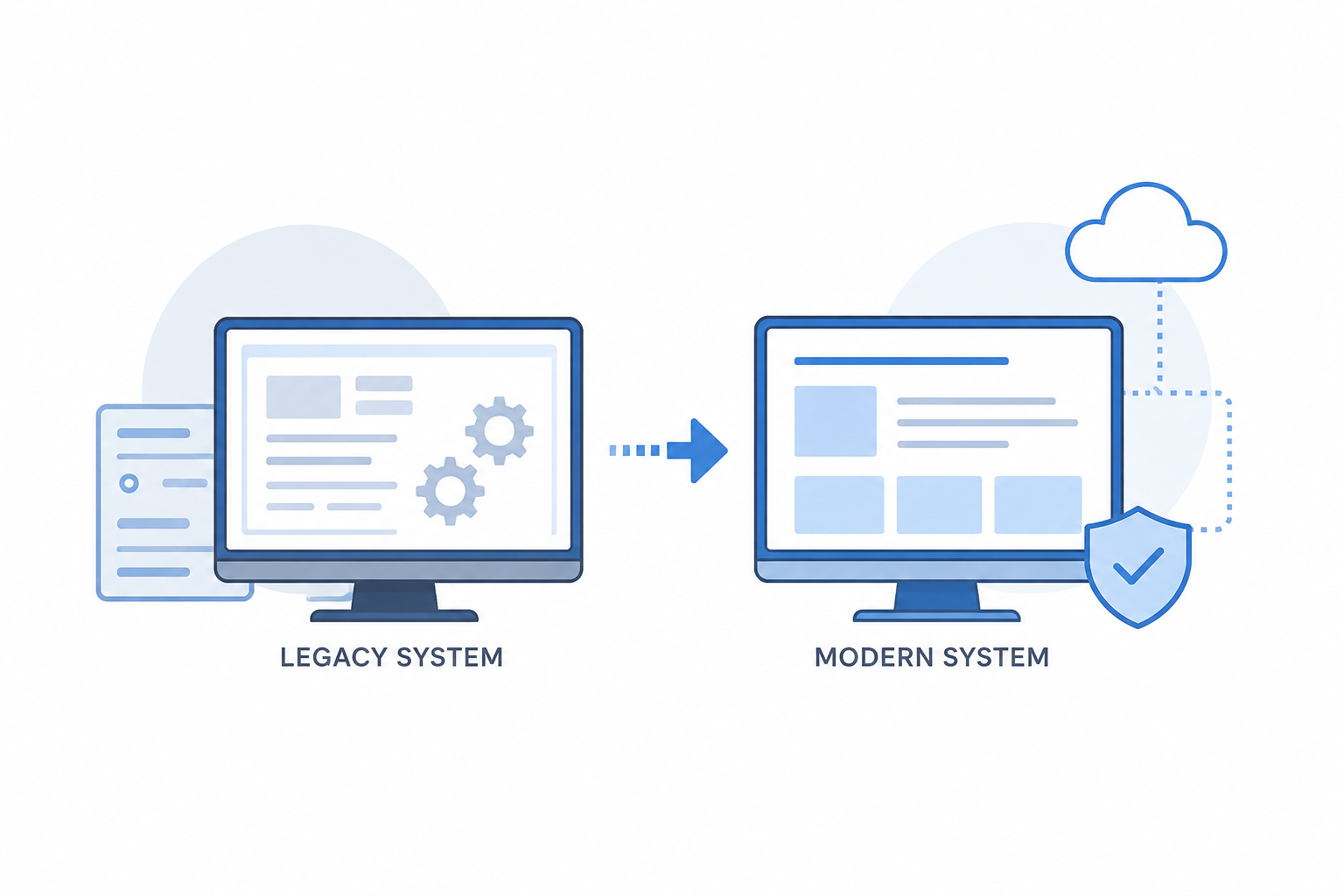
Replacing an entire legacy system at once is risky. Instead, businesses should modernize in smaller stages.
A practical approach includes:
- Create an API layer before changing the core system.
- Identify the biggest integration bottlenecks first.
- Modernize one business area at a time.
- Use event driven communication where appropriate.
- Document important business rules during modernization.
This technique minimizes risk as the business can continue operating.
What Businesses Gain
Legacy system modernization removes growth barriers.
The advantages include:
- Accelerated product delivery
- Ease of integration with business partners
- Less time spent on maintenance of obsolete integrations
- Better support for future business imperatives
- More time for the engineering team to write new code
Conclusion
With a system that tempers innovation, the only way to stimulate growth is to replace the system completely. When the system is modernized gradually, integration issues become less disruptive.
Most of the time, legacy systems are stable. However, that doesn’t mean that they are ‘successful’.

