


In software projects, technical debt is a frequent problem that can affect a system’s long-term stability, maintainability, and scalability. In many modern development environments that follow technical debt agile practices, teams must balance quick feature delivery with maintaining long-term code quality. This article explains the concept of technical debt, its various forms within a project, and its progressive growth throughout the software release cycle.
It also discusses the causes of technical debt, how development teams identify it, and typical mechanisms for tracking it. Along with some real-world examples, the article also covers useful strategies for controlling and reducing technical debt and improving approaches to managing technical debt in long-running projects. To learn more about the subject, read this article.
An Overview
-
- What Is Technical Debt
- Key Types of Technical Debt
- How Technical Debt Builds Up Over the Release Cycle
- Why Technical Debt Happens
- How to Find out Technical Debt
- Tools Used by Teams to Monitor Technical Debt
- Methods Employed by Teams to Handle Technical Debt
- Best Practices for Long-Term Technical Debt Prevention
- Real World Software Failures Caused by Technical Debt
- FAQs
What Is Technical Debt
Technical debt occurs when developers choose a quick fix while building software instead of designing a better, stronger solution. This helps them get features out, but it means they will have more work to do later on. The term technical debt was introduced by Ward Cunningham to explain why teams often have to go and improve the code they already wrote.
As the project expands, these quick fixes make it harder to update things, fix problems, and add features. In development environments that follow technical debt agile workflows, teams sometimes accept these shortcuts temporarily to release features faster.
Technical debt is caused by common things, including
- Using hard-coded values that are not flexible
- Not having any documentation, which confuses new developers who are working on the project.
- Not having enough automated testing or not having any at all
- Using old libraries or tools that are not good anymore
Because of these problems, developers have to spend time later on making the code better, so the system stays stable and is easier to take care of. In many organizations, managing technical debt becomes an important part of keeping the system reliable over time. Technical debt is like this because it is debt that developers have to pay back by fixing the code, which is why it is called technical debt.
Key Types of Technical Debt
Debt shows up in different parts of a software project. When teams rush or skip some steps, small problems add up over time. The table below explains the types so you know where these issues usually pop up.
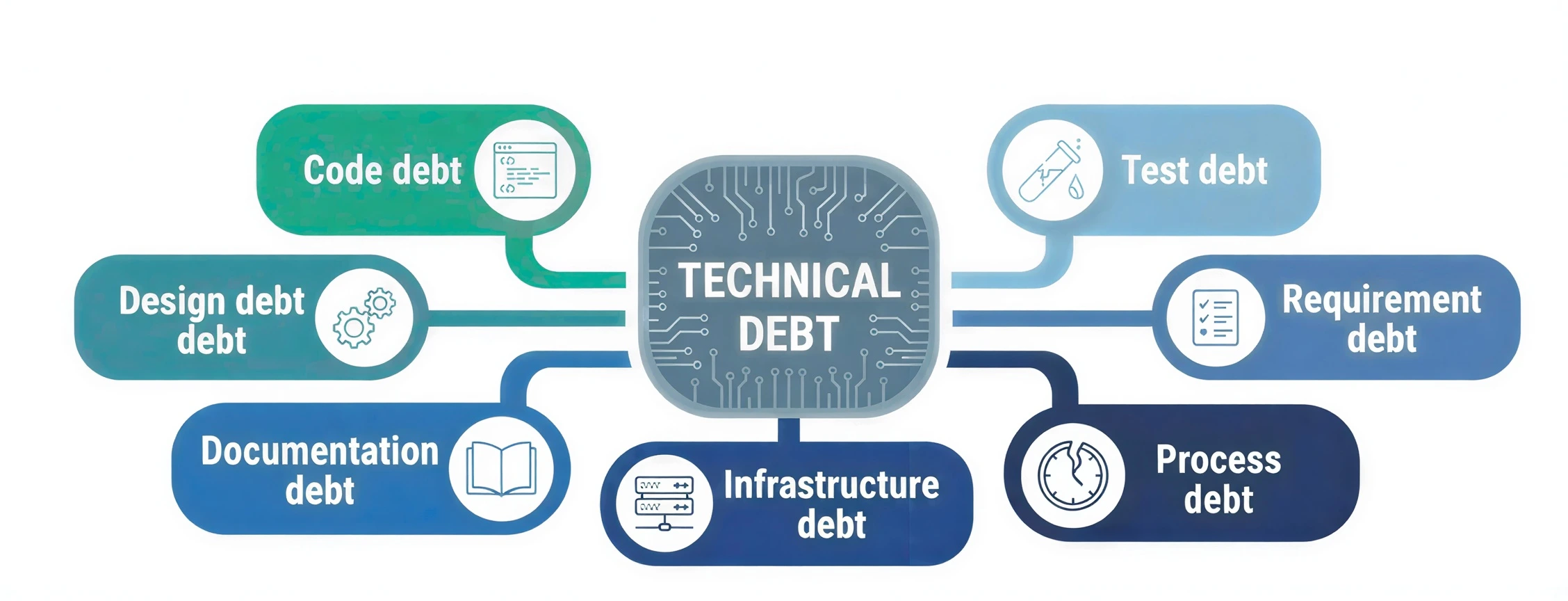
| Type | What it means | Example |
|---|---|---|
| Code debt | Developers write messy code that becomes difficult to maintain or modify later. | Repeated code or confusing logic. |
| Design debt | The system architecture does not support easy changes, scalability, or flexibility. | Different parts of the system rely heavily on each other. |
| Test debt | Projects lack proper testing, or existing tests become outdated. | Bugs appear because tests do not cover new features. |
| Documentation debt | Important project documentation is missing or not updated. | New developers struggle to understand how the system works. |
| Infrastructure debt | Systems run on outdated servers or poorly configured environments. | Old hardware or missing security updates. |
| Process debt | Teams rely on inefficient manual processes instead of automation. | Manual deployments instead of automated pipelines. |
| Requirement debt | Project requirements are unclear or frequently change. | Teams redo features because expectations change. |
When teams catch these issues early, they can fix them bit by bit and make development easier in the run, which also helps teams practice better managing technical debt.
How Technical Debt Builds Up Over the Release Cycle
Software development often follows a phase-based release cycle. Teams build features first and then move through several testing stages before the final release. During these stages, unresolved bugs and rushed fixes slowly increase technical debt.
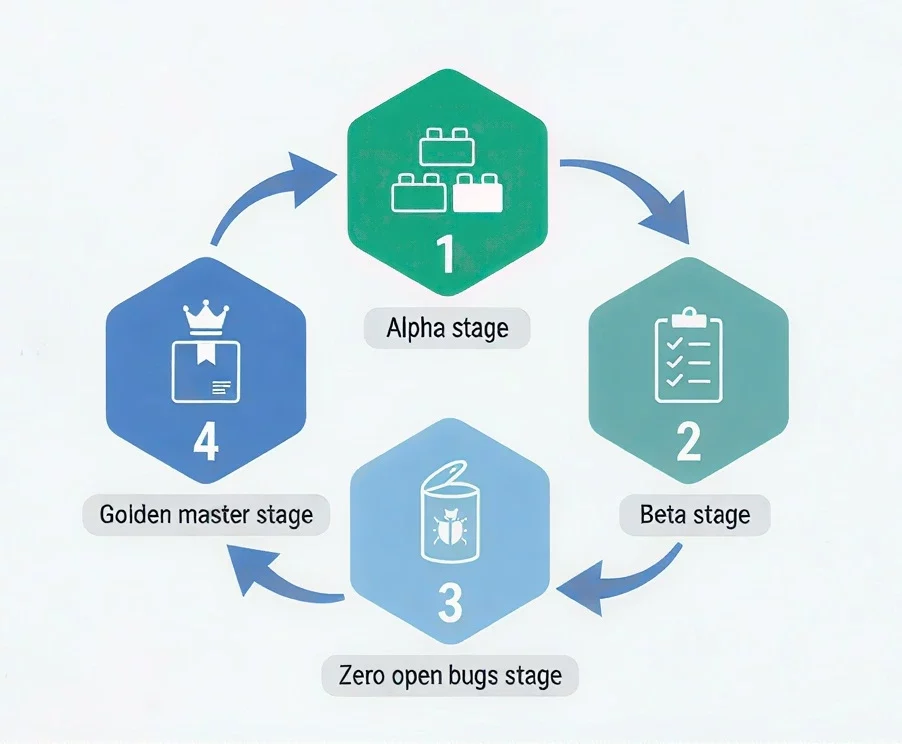
| Stage | What Happens | How Technical Debt Builds |
|---|---|---|
| Feature development | Developers build new features and address leftover issues from the previous release. | Quick fixes and incomplete improvements can introduce weak or poorly structured code. |
| Alpha stage | Features become ready for internal testing. | Early defects start to appear, while some problems remain unnoticed. |
| Beta stage | Teams fix bugs so testers or users can try the product. | Fixing existing bugs may unintentionally introduce new ones. |
| Zero open bugs stage | Teams attempt to close most known defects before release. | Some unresolved issues are postponed to the next release cycle. |
| Golden master stage | The final stable build is prepared for release. | Deferred fixes and rushed patches increase system complexity. |
When teams keep putting off fixes, the unresolved bugs get moved to the release cycle. This means the list of bugs that need to be fixed just keeps growing. The development process becomes slower. It takes more work to keep everything running smoothly. The bugs are still there, so the maintenance effort to address them increases.
This situation often appears in projects that follow technical debt agile delivery cycles, where rapid releases sometimes leave less time for deeper code improvements.
Why Technical Debt Happens
Technical debt usually builds up when teams focus on delivering features quickly rather than on maintaining clean, sustainable code. Over time, shortcuts, unclear planning, and communication gaps make the software harder to maintain and improve.
A well-defined product engineering strategy helps teams avoid many of these issues by encouraging better architectural planning and long-term code quality practices.
Some common reasons include:
- Tight deadlines: Developers may rush work in order to deploy features more quickly and fix them quickly.
- Unclear requirements: When project objectives change frequently, the code deployed earlier may no longer be appropriate for the new direction.
- Poor code quality: It becomes challenging to maintain code that is messy or poorly structured.
- Lack of testing: Skipping tests allows bugs to remain hidden until later stages.
- Limited documentation: Without proper documentation, it becomes harder for teams to understand or modify the code.
- Skill gaps: Developers unfamiliar with certain tools or practices may create inefficient solutions.
- Outdated technology: Old frameworks or legacy systems can cause compatibility and security problems.
- Weak communication: Misalignment between teams can lead to duplicated work or inconsistent coding practices.
When these issues accumulate over time, they create technical debt that slows development and increases maintenance effort.
How to Find out Technical Debt
Sometimes, technical debt is not immediately apparent. When development slows down or the same issues keep coming up in the code, it typically becomes apparent. It usually indicates technical debt in the codebase when developers find it more difficult to make modifications or resolve problems.
Teams typically identify it by focusing on a few typical indicators. Developers who work in technical debt agile environments often rely on regular code reviews and monitoring tools to catch these warning signs early.
- Code reviews: Developers can identify shortcuts, excessively complicated logic, and hard-to-maintain sections when they examine each other’s code.
- Automated tools: SonarQube and ESLint are two examples of tools that can scan code and identify problems like redundant code, security threats, or complicated functions.
- Regular modifications in the same area: If programmers continue to make changes to the same section of the code, it can be a sign of an underlying design issue.
- Recurring bugs: Deeper technological debt may be the underlying cause when similar bugs recur.
- Slow development progress: The current code structure may be creating friction if even minor upgrades take longer than expected.
- Feedback from developers: Those who work with the code on a regular basis are frequently aware of which sections have workarounds or temporary fixes.
Teams can resolve technical debt before it begins to negatively impact the entire development process by identifying these early warning indicators.
Tools Used by Teams to Monitor Technical Debt
To identify and monitor technical debt in their projects, developers frequently employ straightforward techniques. These tools assist teams in identifying potential weaknesses, complexities, and maintenance challenges in the code. Teams can identify problems early and prepare fixes before they become more serious by using these tools to periodically inspect the code.
Organizations that rely on experienced product engineering services often use these tools regularly to monitor code quality and support teams in managing technical debt early.
Some of the frequently used instruments are
-
SonarQube
Identifies problems with the code, including repetitive code, complicated functions, and potential security threats.
-
CodeClimate
Evaluates the quality of the code and highlights places that might be challenging to maintain in the future.
-
ESLint
Assists developers with complying with standard coding procedures and identifying typical coding errors, particularly in JavaScript projects.
-
CodeScene
Examines the frequency of code changes and identifies potential hidden technical debt.
-
GitHub or Jira Issues
During development planning, teams utilize these tools to manage and document technical debt tasks.
Regular use of these tools enables teams to better manage technical debt and understand the state of their codebase.
Methods Employed by Teams to Handle Technical Debt
Before technical debt starts to hold down development, many engineers search for workable solutions. The secret is to develop behaviors that maintain the codebase’s health over time in addition to addressing issues as they arise. Teams can lower long-term risks and sustain consistent development progress when they address the problem in a systematic way.
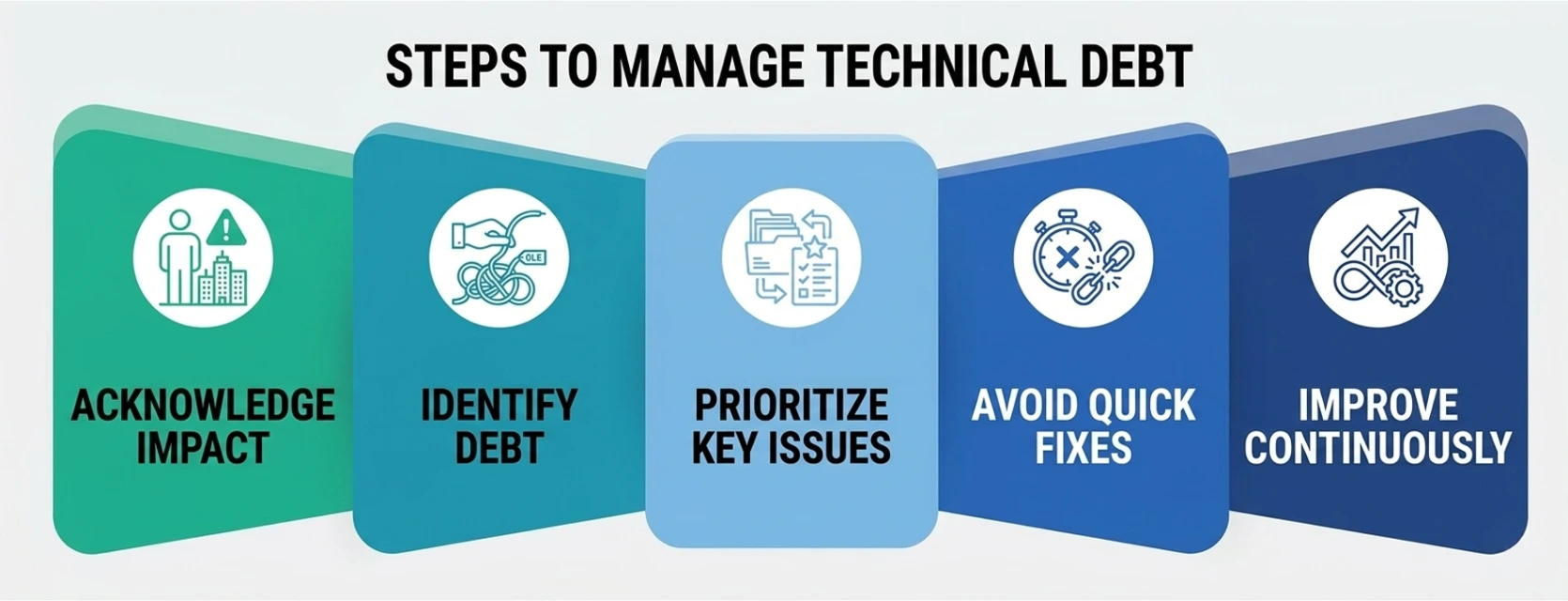
1. Acknowledge the effect on the company
Technical debt is more than just a code issue. It has an impact on maintenance costs, release time, and product stability. It is simpler to give time and resources to addressing this relationship when leaders and development teams are aware of it.
2. Recognize the location of the debt
Teams must first determine which system components cause the most friction. Typically, developers examine the architecture, check complicated modules, analyze trends in code modifications, or issue reports. They can identify areas that require improvement thanks to this.
3. Pay attention to the most significant issues
Not every issue has to be resolved right away. Teams typically concentrate on problems that limit development, result in frequent failures, or create risks for upcoming releases. Teams can quickly address the largest challenges by starting with these areas.
4. Exercise caution while making temporary concessions
In order to release a feature more quickly, developers occasionally make short-term changes. These decisions need to be recorded and subsequently examined. Teams can review these decisions before they become more serious issues if they are kept informed about them.
5. Include improvement in ongoing development
The best way to manage technical debt is to incorporate it into regular development tasks. Teams frequently conduct routine system reviews, enhance complex code segments, and progressively upgrade out-of-date components. This approach is commonly followed in technical debt agile development environments where improvements are made continuously alongside feature development.
Best Practices for Long-Term Technical Debt Prevention
Technical debt is far easier to avoid than to repair later. The code is easier to maintain and enhance when teams adopt solid development practices from the start. Many issues can be prevented from developing in the future by making small efforts during everyday work.
Strong product engineering practices encourage continuous refactoring, consistent testing, and scalable system design, which helps prevent technical debt from growing over time.
Several beneficial techniques include
Write clear, uncomplicated code.
Developers must conform to established coding standards and make their code easy to read. Frequent code reviews also help in the early detection of problems.
-
When developing, use testing.
Automated testing speeds up issue detection and increases the security of upcoming releases.
-
Maintain current documentation
Clear documentation makes it easier for developers to work with the code and understand the system.
-
Regularly update libraries and tools.
Updating frameworks and dependencies helps prevent compatibility issues and security threats.
-
Promote collaboration as well as discussion.
Open communication among developers facilitates the early detection of issues and the sharing of superior solutions.
-
Make plans for technological advancements.
During regular development cycles, teams should monitor and gradually address technical debt tasks.
According to these procedures, teams may maintain a stable codebase and stop the accumulation of technical debt over time.
Real World Software Failures Caused by Technical Debt
Technical debt can grow when companies delay improvements or keep using outdated systems. Over time, these issues can cause serious failures.
Some well-known examples include
-
Y2K problem
Old systems stored the year with two digits. Companies later spent billions fixing this before the year 2000.
-
Knight Capital trading error
A faulty software update triggered incorrect stock trades and caused huge financial losses.
-
Friendster platform failure
Slow performance and poor scalability pushed users to other social networks.
-
Nokia software limitations
An outdated operating system made it difficult for Nokia to compete in the smartphone market.
-
Southwest Airlines outage
An old scheduling system failed and led to thousands of flight cancellations.
FAQs
1. What is technical debt in software development?
Technical debt refers to the extra work that arises when developers choose quick or temporary solutions instead of building a well-structured and long-term design. Over time, these shortcuts make the software harder to maintain, update, and scale.
2. What are the main types of technical debt?
Common types of technical debt include code debt, design debt, test debt, documentation debt, infrastructure debt, process debt, and requirement debt. Each type affects different parts of a software project and can slow development if not addressed.
3. How does technical debt affect software projects?
Technical debt can slow development, increase maintenance effort, and make it harder to introduce new features. It can also lead to more bugs, unstable releases, and higher long-term development costs.
4. How can teams identify technical debt in a project?
Teams often identify technical debt through code reviews, automated code analysis tools, repeated bugs in the same area, slow development progress, and feedback from developers working on the system.
5. How can development teams reduce technical debt?
Teams can reduce technical debt by improving code quality, adding automated testing, updating outdated technologies, maintaining proper documentation, and gradually refactoring complex parts of the system.
Conclusion
Technical debt starts small but can grow into bigger problems if it is ignored. Quick fixes, poor planning, or outdated systems can slowly make software harder to maintain and improve. When teams regularly review their code, update tools, and follow good development practices, they can keep these issues under control.
If your team is facing slow updates, repeated bugs, or complex code, it may be time to review your codebase and start reducing technical debt. Taking small steps now can make future development much easier.

