


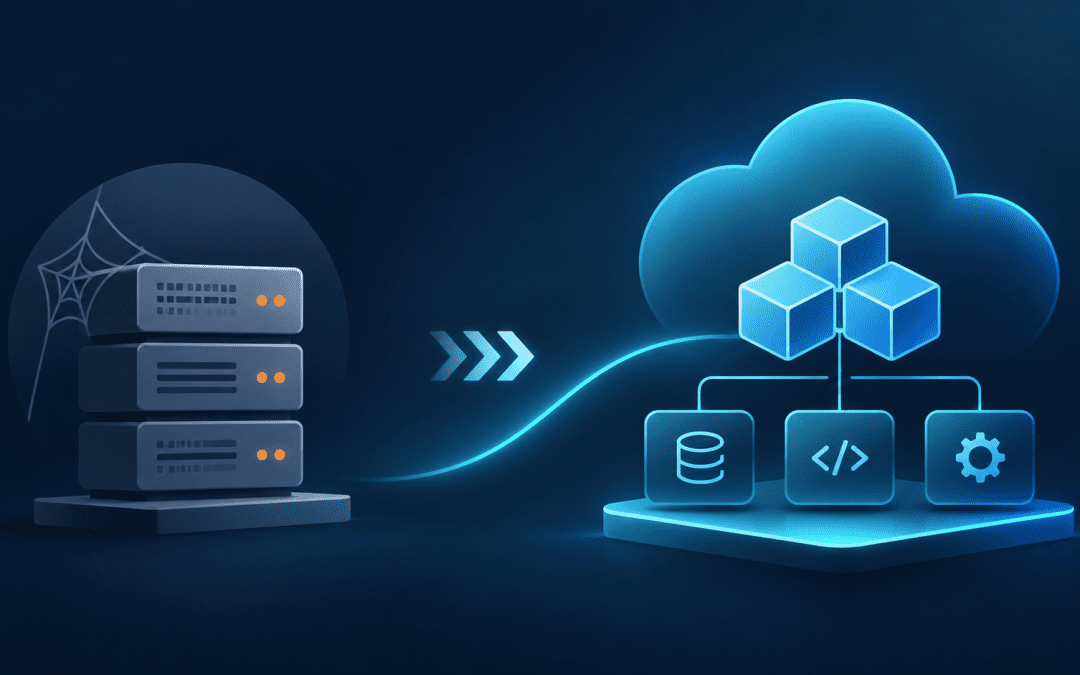
Many long-standing organizations make the mistake of relying on legacy systems or aging monolithic applications to support critical business operations.
These systems may continue to function, but maintaining them can become increasingly expensive and complicated over time. Outdated technologies can require specialized knowledge, complicate integrations, and limit an organization’s ability to adopt newer platforms and technologies.
The cost of maintaining a legacy system can eventually outweigh the resources required to modernize it. Delaying modernization can also make future changes more difficult as technical debt continues to accumulate. Businesses looking to move beyond aging technology can explore our Legacy Application Modernization service to modernize legacy applications and create a more flexible foundation for future growth.
The Technical Debt Trap
Every time an organization postpones upgrading an outdated system, it can add to its technical debt. Older technologies can become increasingly difficult to maintain, particularly when the developers who originally built the system are no longer available.
Legacy applications can also struggle to integrate with modern APIs, cloud platforms, and mobile applications. This can make it harder to introduce new capabilities or connect existing systems with newer services.
As a result, IT resources that could be spent on new products and improvements may instead be consumed by maintaining aging infrastructure and resolving issues in existing applications.
The longer modernization is delayed, the more difficult it can become to understand dependencies, update components, and introduce architectural changes without affecting existing operations.
Approaches to Legacy Modernization
No single approach works for every legacy application. The right strategy depends on the application’s architecture, business requirements, technical constraints, and modernization goals.
Several approaches can be considered when planning a modernization effort.
Re-platform
Re-platforming involves moving a legacy application and its data to a newer infrastructure platform, such as the cloud, without making significant architectural changes.
This approach can help organizations move away from older infrastructure while limiting changes to the application itself. It can also reduce infrastructure-related costs in some environments.
Refactor
Refactoring involves restructuring existing application code to improve its maintainability and performance without changing its external behavior.
This approach allows organizations to improve the underlying codebase while retaining the application’s existing functionality. It can be useful when the application still meets business requirements but its underlying code has become difficult to maintain.
The Strangler Fig Pattern
The Strangler Fig Pattern takes an incremental approach to replacing a monolithic application.
Instead of replacing the entire system at once, organizations gradually replace individual components with modern services. New functionality can be developed separately while existing functionality continues to operate.
Over time, more components can be moved away from the original application until the legacy system is eventually replaced. This gradual approach can help reduce the risks associated with a complete system replacement.
The Real-World Benefits of Legacy Modernization
The value of legacy modernization extends beyond improving application code. Modernizing an aging technology stack can affect how quickly a business introduces new capabilities, responds to changing requirements, and maintains its applications.
Speed to Market and Agility
Modern architectures can make it easier to develop and deploy new functionality. A microservices-based architecture, for example, can allow different application components to be developed and released independently.
This can help organizations respond to changing business requirements without making extensive changes to a large monolithic application.
Enhanced Security
Legacy applications can become more difficult to protect as security requirements and cyber threats evolve.
Modernization provides an opportunity to update outdated components and incorporate current security practices and compliance requirements into the application architecture.
Security should be considered throughout the modernization process rather than treated as a separate task after migration or redevelopment.
Talent Acquisition
The technology stack can also influence an organization’s ability to attract technical talent.
Modern technologies such as React, Node.js, Python, and cloud-native platforms can be more familiar to developers entering the organization. Updating an outdated technology stack can therefore make the environment more attractive to professionals who want to work with current development practices and technologies.
The Cost of Waiting
Legacy modernization requires investment, planning, and careful execution. However, continuing to operate an aging application also has costs.
Maintenance can become more difficult as technology becomes outdated and specialized knowledge becomes harder to find. Integrating new services may require additional work, while limitations in the existing architecture can slow down product development.
These costs may not appear as a single modernization expense, but they can accumulate across maintenance, development, security, and infrastructure activities.
That makes the decision about legacy modernization more than a question of whether to replace old software. It is also a question of how much an organization is willing to invest in maintaining the limitations of its existing technology.
Conclusion
Legacy modernization is more than an IT update. It can be an important part of a broader business strategy for organizations that depend on aging applications and infrastructure.
A carefully planned modernization approach can help reduce technical debt, improve maintainability, support modern integrations, and create a stronger foundation for future development.
Organizations planning to modernize legacy applications can leverage our Legacy Application Modernization service to transform outdated systems, adopt modern technologies, and build a stronger foundation for future growth.


