Bobcares Logo
Search Phone User Profile Emergency Contact
Bobcares Logo
Search Phone User Profile Emergency Contact
Emergency Contact Client Portal
SOLUTIONS
Product Engineering
MVP Build
MVP to Scale
Product Maintenance
Digital Transformation
Process Digitization & Automation
Systems Integration & Workflow Orchestration
Data Enablement & Decision Support
Application & Platform Modernization
Transformation Execution
AI Services
AI Readiness & Use-Case Discovery
AI Integration & Application Enablement
Intelligent Automation & AI Workflows
Infrastructure Management & Optimization
Always-On Infrastructure Management
Proactive Monitoring & Incident Prevention
Cloud Cost Control & Optimization (FinOps)
Outsourced IT & End-User Support
Managed Infrastructure Execution Support
DevOps & Automation Services
CI/CD & Release Automation
Infrastructure as Code & Platform Standardization
Reliability Engineering & Observability
DevSecOps Enablement
Cybersecurity
Security Assessment & Risk Posture
Threat Monitoring & Incident Response
Infrastructure & Cloud Security Hardening
Vulnerability Assessment & Penetration Testing (VAPT)
Backup, Disaster Recovery & BCP

Fix WordPress error 429 Too Many Requests easily

by Arya MA | May 27, 2020 | Latest, Server Management, WordPress | 0 comments

Please Note: This article is part of our historical archive. Because it was published a while ago, some of the information, links, or context may now be outdated.

WordPress error 429 too many requests is a common error faced by website owners.

It makes the websites inaccessible and the users only see the 429 error message on the screen. This makes them wonder what caused it.

When a script, bot, or a user makes too many requests, it triggers this error.

As part of a WordPress Management Services, our experts routinely resolve errors such as this. Today we will go through the top causes we have seen for this error, and how we resolve them.


Causes for WordPress error 429 Too Many Requests

Every server has a limit in the number of requests it can accept. Further, when the number of requests exceeds this limit, the server automatically starts a rate-limiting feature. It results in a 429 Too Many Requests error.

Generally web hosts adopt this method to prevent brute force or DDOS attacks. Conversely, some other reasons can also trigger this error which includes:

  • Plugin conflicts
  • Theme conflicts
  • Restriction on third-party services

The WordPress error 429 too many requests error can appear on screen in the following forms:

  • 429 Error
  • Error 429 (Too Many Requests)
  • 429 Too Many Requests
  • Too Many Requests
  • HTTP 429

Although each of them reads differently, they all mean that there is excessive connection requests to the server.

Let us look at each of the reasons behind this error in detail and how to fix it in each case.


Plugin issues:

The most common reason behind the 429 error in WordPress is a bad plugin. Some poorly programmed plugins often send repetitive connection requests to the server. This triggers the error message.

We need to find the culprit plugin and deactivate it to resolve the error. Sometimes, the error logs may leave some traces of the offensive plugin. But in most of the cases, 429 error may not leave many details in the error log.

The possible solution here is to try deactivating all the plugins and then reactivating them one by one.  The deactivate option in the Bulk Actions drop-down could be used for a bulk deactivation.
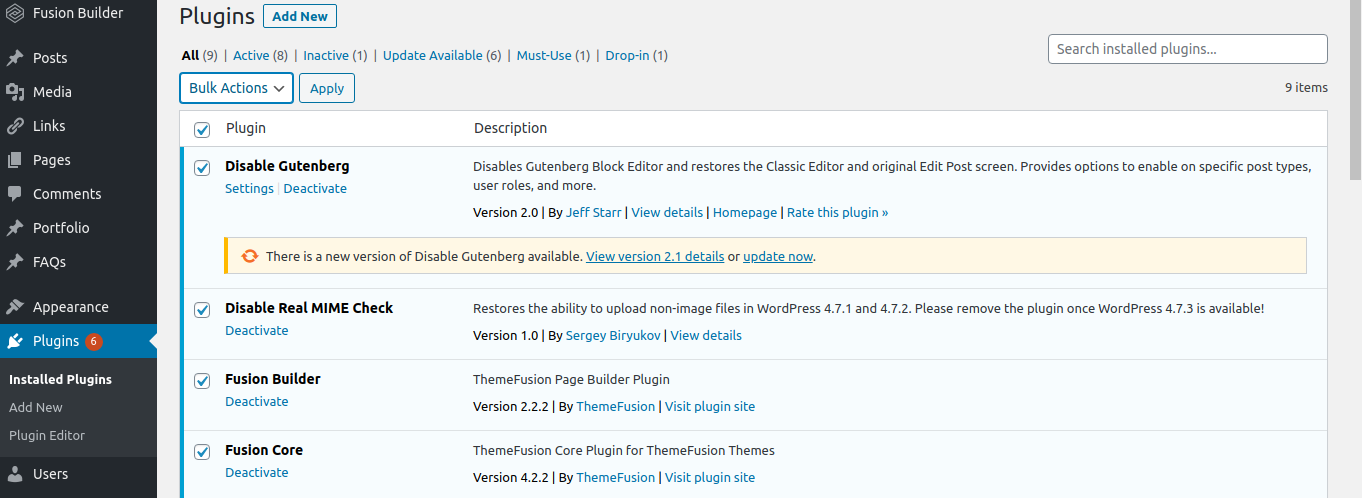
Wordpress error 429 Too Many Requests


Theme issues

Some highly programmed themes are built to perform additional tasks performed by plugins. They send requests to the server simultaneously. As a result, the  429 too many requests error in WordPress may occur.

The 429 error disappears when switched to another theme. Changing the theme to the default WordPress one will help to confirm if this is actually causing issues.  WordPress theme can be changed easily from the appearance option in the WordPress admin panel.


Restrictions on Third-party Services

Sometimes, it won’t be any of the reasons mentioned above rather it would be a server-side setting.

For instance, some web hosts will block requests from specific third-party services or platforms that make a large number of requests. It includes search engines, crawlers, Google Search Console, etc

Generally, these could be an automatic block triggered by web application firewalls like ModSecurity. Identifying the exact rules and whitelisting the IP ranges for the corresponding service provider could help to solve the issue.


How to prevent 429 Too many requests error in WordPress?

As you could see, the most common reason for the error is a bad plugin. Therefore the wise idea to prevent the error is to be cautious while installing plugins.

It is always recommended to go minimalistic with plugins.  Install only those that you really need on your website. Similarly, uninstall the plugins that you don’t use anymore.

It is equally important to keep the plugins and themes updated by performing updates periodically.

Additionally changing the default WordPress admin panel URL can also help in reducing the chances for 429 error. A major part of the brute force attacks in WordPress is aimed at the WordPress login page. Changing it to a random one will reduce the chances of requests from attackers actually reaching the server.

[Need help to solve WordPress error 429 too many requests? We are available 24×7]


Conclusion

In short, the WordPress error 429 too many requests is triggered when the server starts to rate-limit the connection request. Sending excessive connection requests to the server by bots or scripts is the most common reason behind it. Today, we discussed different scenarios that lead to 429 Too many requests error in WordPress and how our Support Engineers fix it easily.

Related posts:

    1. “Installation failed, could not create directory” error in WordPress
    2. 4 easy steps to copy WordPress site from one server to another
    3. Fix wordpress stuck in maintenance mode easily
    4. Fix parse error syntax error unexpected end of file in wordpress

Submit a Comment Cancel reply

Your email address will not be published. Required fields are marked *

Recent Posts

  • Multi-Cloud vs Hybrid Cloud: Key Differences
  • Practical GitOps for Legacy VM Deployments
  • Build Better Digital Products End-to-End
  • AI Engineering Services for Smarter Automation
  • Five Server Security Concerns You Need to Know

Categories

  • Advanced Vulnerability
  • AI Automation
  • AI Services
  • AI Support
  • AIOps
  • Amazon Web Services (AWS)
  • Apache
  • API Integration
  • Application Development
  • Azure
  • Business Process Management
  • Business Process Reengineering
  • Cloud Cost Optimization
  • Cloud Management
  • Cloud-Native Application
  • Cloudflare
  • cPanel
  • cPanel migration
  • Cyberpanel
  • DDoS
  • Development Service
  • DevOps
  • DevOps Consulting
  • DevSecOps
  • Digital Transformation
  • DigitalOcean
  • DirectAdmin
  • Docker
  • Drupal
  • Ecommerce
  • Filezilla
  • FTP
  • Full-Stack Product Development
  • Google cloud platform
  • HAProxy
  • Headless CMS Integration
  • Hosting Support
  • Hybrid Cloud Management
  • IIS
  • Infrastructure Management & Optimization
  • Kubernetes
  • KVM
  • Laravel
  • Latest
  • Legacy Application Modernization
  • Linode
  • Litespeed
  • LXC/LXD
  • Magento
  • Microservices Architecture
  • Mobile App Development
  • MongoDB
  • Moodle
  • MySQL
  • NFS
  • Nginx
  • OnApp
  • Outsourced Support
  • OVH
  • ovirt
  • Performance Optimization & Monitoring
  • pfsense
  • Plesk
  • PostgreSQL
  • PowerDNS
  • Product Engineering
  • Proxmox
  • RedHat
  • Redis
  • SaaS Development
  • Sendmail
  • Server Administration
  • Server Management
  • Software Development
  • Software Testing
  • SQLServer
  • Technical Support
  • UI/UX
  • Virtualizor
  • VMware
  • VPN
  • Vulnerability Scanning
  • Vultr
  • Web Development
  • Windows
  • WordPress
  • WordPress Hosting
  • WordPressHA

Subscribe to our newsletter

Footer newsletter

Email inquiry@bobcares.com | Phone 1-800-383-5193

Solutions

  • Product Engineering
  • Digital Transformation
  • AI Services
  • Infrastructure Management & Optimization
  • DevOps & Automation Services
  • Cybersecurity

Services

  • Managed IT Services
  • Cloud Modernization Services
  • Custom Software Development Services
  • DevOps services
  • Business Process Management Services

Insights

  • Case Studies
  • Blog

Company

  • About Us
  • Our Partners
  • Careers
  • CSR
Product Engineering +
Web Development MVP to Scale Builds Microservices Architecture Agile & Dev Team Augmentation Mobile Apps Ecommerce UI/UX Design QA & Test Automation
Digital Transformation +
Legacy Modernization Workflow Automation Data-Driven Dashboards CRM / ERP Integration Business Process Re-engineering
AI Services +
AI & Machine Learning AIOps Intelligent Automation Business Intelligence & Analytics AI Installation & Compute
Infrastructure Management +
Cloud Setup Cloud Migration Managed Cloud Services Server & Hosting Cost Optimization Performance Optimization Outsourced Support
DevOps & Automation Services +
CI/CD Setup Kubernetes & Docker Infrastructure as Code Cloud-Native Migration DevSecOps
Cybersecurity & Compliance Services +
Security Hardening VAPT Incident Response Backup & DR

© 2026 Bobcares. All Rights Reserved.

  • Cookie Policy
  • |
  • GDPR
  • |
  • Privacy Policy
  • |
  • Terms of Service
  • LinkedIn
  • YouTube
  • Instagram
  • Facebook

Preview of the new Bobcares experience
NEW UPDATE
See What’s New
at Bobcares

Discover a faster, clearer view of our services and expertise.


Explore the New Experience
Arrow Right