IT operations has traditionally relied on monitoring tools to identify problems after they occur. A server crosses a threshold, an alert is generated, and an engineer investigates the issue. This approach can work, but modern IT environments generate large volumes of alerts and operational data.
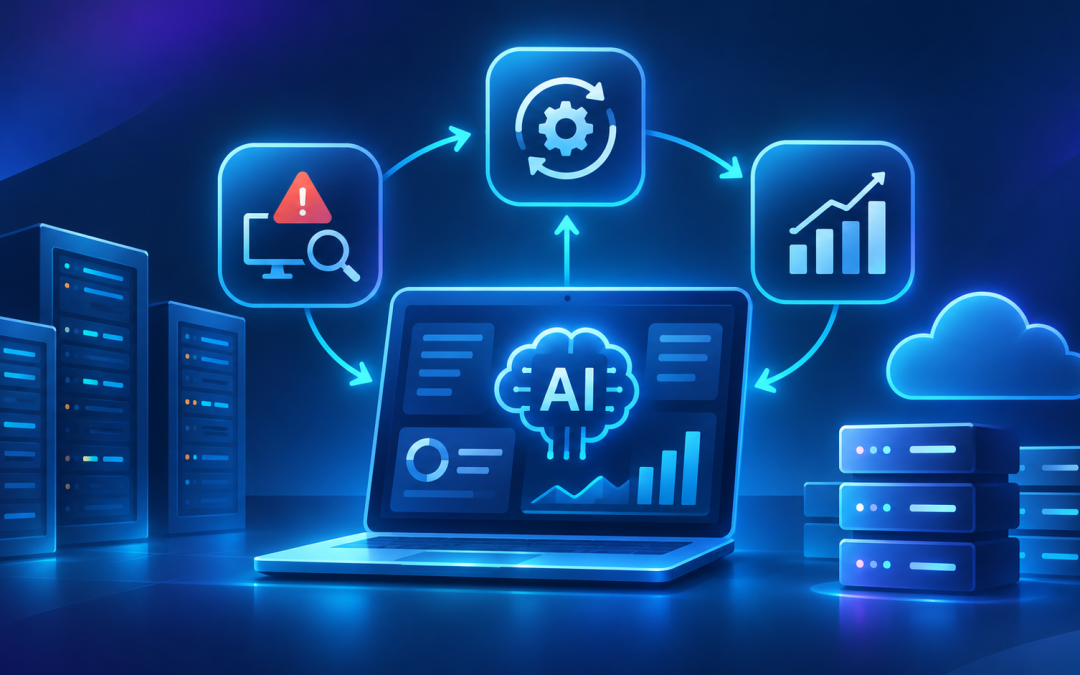
AIOps is changing this approach by using Artificial Intelligence for IT Operations. Instead of simply notifying engineers about problems, AIOps analyzes infrastructure data, identifies unusual behavior, helps determine possible causes, and can automate parts of the response. This shift is moving IT operations from watching and waiting for problems to using data and automation to identify potential issues earlier. As organizations look for ways to reduce manual intervention and respond to IT issues faster, AIOps services can help bring AI-driven analysis and automation into their IT operations.
What makes AIOps different?
AIOps combines machine learning, analytics, and automation to improve IT operations. It can analyze information from infrastructure, applications, and logs to identify patterns or behavior that may indicate a problem.
Consider a situation where several servers begin behaving unusually. An AIOps platform can:
- Detect unusual activity
- Analyze related operational data
- Identify the probable cause
- Recommend a possible solution
- Initiate a corrective action
This approach can reduce the amount of manual investigation required when an issue occurs. It can also help operations personnel respond to incidents more quickly.
AIOps is therefore moving beyond simple monitoring by adding analysis and automation to the process.
Why Traditional IT Monitoring Has Limitations
Traditional monitoring tools are designed to track metrics, logs, and infrastructure health. A common workflow looks like this:
- A server resource exceeds a defined threshold.
- The monitoring tool generates an alert.
- An engineer investigates the issue.
- The cause is identified manually.
This process can work well for straightforward issues. Modern IT environments, however, can generate large amounts of operational data and alerts.
When multiple systems produce alerts at the same time, identifying which alerts are related becomes more difficult. Engineers may need to review information from different sources before determining what is actually causing the problem.
AIOps addresses this challenge by analyzing data across the environment and helping identify relationships between events.
Traditional Monitoring vs AIOps
| Traditional Monitoring | AIOps |
|---|---|
| Alert-based detection | Predictive analysis |
| Manual troubleshooting | Automated correlation |
| Reactive response | Proactive prevention |
| Isolated monitoring tools | Unified visibility |
| Human-driven decisions | AI-assisted insights |
The key difference is how the collected data is used. Traditional monitoring primarily tells you that something has crossed a threshold. AIOps adds analysis that can help explain what is happening and what action may be appropriate.
Real-World AIOps Use Case – Intelligent Incident Management
A single underlying problem can sometimes generate multiple alerts across different systems. Engineers may need to review these alerts individually before identifying that they are connected.
AIOps platforms can correlate related alerts and help determine the probable cause of an incident. This allows operations personnel to focus on the most important issues instead of treating every alert as a separate event.
The potential benefits include:
- Reduced alert fatigue
- Faster incident resolution
- Improved service availability
AIOps can make incident management more manageable by reducing the amount of manual analysis required during an incident.
The Future of AI-Powered IT Operations
IT operations is becoming increasingly automated. AIOps platforms are moving beyond basic monitoring toward systems that can identify potential problems, suggest corrective actions, and automate parts of the response.
This changes the role of monitoring from simply reporting what has already happened to helping operations personnel understand what may happen next.
As IT infrastructure continues to evolve, the amount of operational data that needs to be analyzed will also increase. AIOps can help process this information and provide insights that would otherwise require significant manual effort.
The move toward AI-powered IT operations is therefore not just about adding artificial intelligence to existing monitoring tools. It represents a shift toward more predictive and automated operations.
Organizations adopting AIOps can use these capabilities to identify issues earlier, reduce manual troubleshooting, and improve how they manage their IT environments.
AIOps is already changing IT operations by combining intelligence, data analysis, and automation. Its growing role points toward an IT operations model where systems can identify problems earlier and assist with corrective actions before those problems have a larger impact.
Conclusion
AIOps is changing IT operations by moving organizations from reactive monitoring toward more predictive and automated management. By analyzing operational data, correlating events, identifying potential problems, and supporting corrective actions, AIOps can reduce manual troubleshooting and help operations personnel respond more effectively.
As IT environments become more complex, AIOps can play an increasingly important role in maintaining efficient and dependable operations. Organizations that adopt AIOps can use its capabilities to detect issues earlier, reduce alert fatigue, and make better use of the data generated across their infrastructure. Organizations looking to bring these capabilities into their IT environments can explore AIOps services to support predictive monitoring, intelligent incident management, and automated IT operations.