


Facing cloud migration challenges? This guide highlights the top risks organizations encounter and offers step-by-step strategies to overcome them while protecting data, reducing costs, and maintaining business continuity. Connect with our Cloud Management Team to simplify your migration journey.
Digital transformation has made cloud computing a key part of modern IT infrastructure. Organizations across industries are moving applications, workloads, and data to cloud platforms to achieve faster innovation, cost efficiency, and greater adaptability. Cloud migration involves transferring digital assets like applications, data, and IT resources from on-premises or legacy systems to a cloud environment. This process can also include transferring resources between different cloud providers, often called cloud-to-cloud migration.
Although cloud migration offers several advantages, many organizations run into obstacles during the process. Planning gaps, security risks, downtime, unforeseen costs, and skill shortages often complicate migration projects. Understanding these challenges and adopting structured strategies can ensure a smooth transition and protect business operations.
“In 2025, the global average cost of a data breach is estimated to be USD 4.44 million, a 9 % decline from the previous year.”
Overview
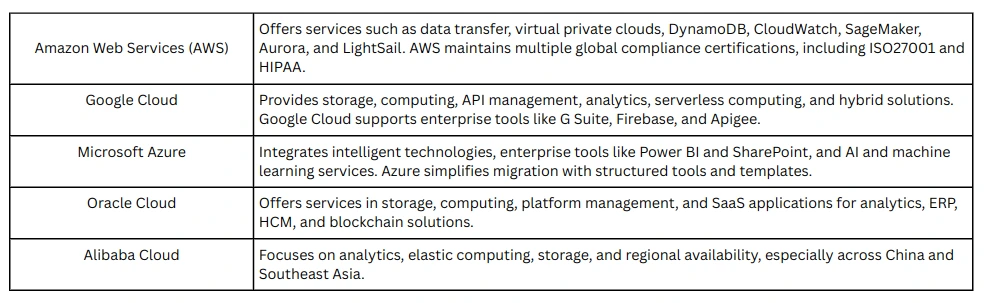
Migrating to a cloud platform allows organizations to move databases, applications, and other digital assets into an environment designed for scalability and efficiency. Leading cloud providers include:
Key Benefits of Cloud Migration
- Cost Optimization:
On-demand computing allows businesses to pay only for the resources they use. This reduces maintenance expenses and delivers financial predictability. Additionally, surveys show many small businesses report lower operational costs after migrating to the cloud. - Flexibility and Scalability:
Cloud platforms enable organizations to adjust resources instantly based on demand, allowing rapid adaptation to market changes without long-term commitments.
- Enhanced Security:
Centralized cloud systems provide advanced security measures and automatic updates. Furthermore, providers often take responsibility for protecting infrastructure from external threats.
- Industry Compliance:
Cloud platforms meet regulatory standards for sensitive sectors like healthcare, finance, and government. Also, built-in auditing features help businesses maintain transparency.
- Backup and Recovery:
Cloud services provide automated data backup and disaster recovery, preventing business disruption and minimizing recovery costs.
Common Cloud Migration Challenges
Here are some of the commonly seen obstacles that can impact a migration project, including:
1. Data Security and Privacy
Transferring sensitive data to the cloud exposes it to potential breaches. Organizations must comply with privacy laws and regulatory standards. For example, healthcare providers must secure patient data under HIPAA guidelines.
2. Data Governance
Managing the integrity, accessibility, and usability of cloud-based data requires structured governance. Companies with globally distributed data must implement policies for storage, access, and processing based on regional requirements.
3. Legacy System Compatibility
Older systems may not integrate smoothly with cloud environments, risking data loss or corruption. Refactoring or middleware solutions may be required to bridge legacy applications with cloud services.
4. Service Disruption
Business operations cannot afford downtime during migration. Careful scheduling, phased migrations, and redundant systems help maintain continuity while moving workloads.
5. Vendor Lock-In
Reliance on a single provider may limit flexibility. Businesses invested in proprietary tools may face challenges switching platforms. Adopting multi-cloud strategies or cloud-agnostic solutions provides alternatives.
6. Cost Management
Unexpected expenses can arise without proper monitoring. Organizations must manage resource allocation and optimize cloud usage to avoid waste and overspending.
Security Considerations During Migration
Besides the challenges mentioned above, security is one of the most critical aspects of cloud migration. Some of the issues include:
- Insecure data transfer or weak configurations can lead to unauthorized access.
- Reduced visibility over infrastructure complicates monitoring and threat detection.
- Errors during migration may lead to loss or corruption of critical information.
- Simple oversights can expose sensitive data to external threats.
- Also, over-permissioned accounts or poor identity controls increase the risk of insider threats.
Our experts recommend adopting strong encryption, robust identity management, and continuous monitoring to reduce security vulnerabilities.
Testing Challenges in Cloud Migration
Testing ensures that migrated systems function correctly, but introduces its own challenges:
- Creating accurate test environments in the cloud can be difficult due to custom configurations and third-party integrations.
- Maintaining data accuracy and consistency during migration requires thorough checks.
- Cloud environments may behave differently from on-premises systems, necessitating performance tuning.
- New network paths and firewalls must be evaluated to maintain security and performance.
- Cloud services must work together seamlessly, as one misbehaving service can affect others.
Dealing with these testing challenges before full deployment prevents operational issues post-migration.
Strategies to Overcome Cloud Migration Challenges
To reduce migration risks, organizations can implement structured frameworks:
- Assessment and Planning
- Define business goals for migration.
- Conduct a thorough inventory of data and applications.
- Evaluate current infrastructure and identify skill gaps.
- Assess security and compliance requirements.
- Selecting a Cloud Provider
Compare providers based on service offerings, support, cost, security, and compliance alignment.
- Designing Cloud Architecture
Map applications and data to cloud resources. Plan security layers, including encryption, firewalls, and identity management.
- Migration Planning
Determine priorities and the sequence of workloads. Choose migration methods such as lift-and-shift, re-platforming, or re-architecting. Schedule migrations to minimize service impact.
- Execution and Monitoring
Perform migration in phases, starting with less critical systems. Monitor performance and data integrity throughout the process. Implement all security measures during and after migration.
[Need assistance with a different issue? Our team is available 24/7.]
Conclusion
Cloud migration delivers significant advantages, including operational efficiency, flexibility, and security. Organizations face challenges around data security, legacy compatibility, service continuity, vendor dependence, and cost control. Careful assessment, structured planning, rigorous testing, and phased execution provide solutions to these issues. Businesses can achieve a successful cloud migration that supports growth and innovation by following these steps.

