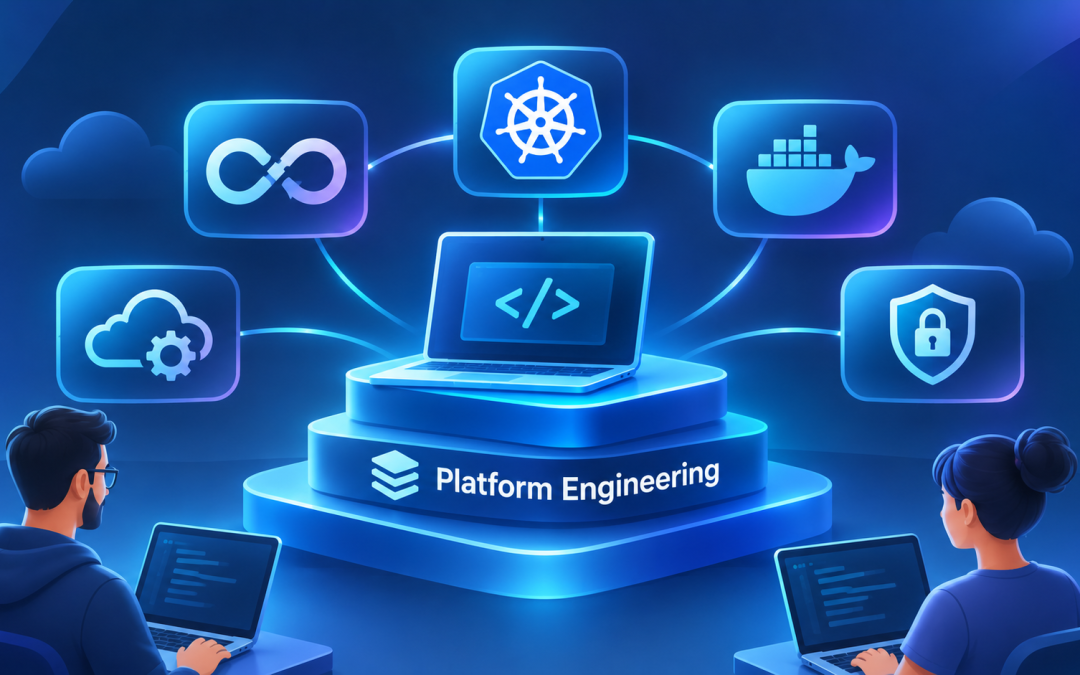
Modern software development moves quickly, but infrastructure can slow delivery. Developers often need to work across infrastructure, CI/CD pipelines, monitoring, security, and application deployments.
This can create additional operational work, increase context switching, and slow application delivery.
Platform engineering addresses these challenges by creating internal developer platforms (IDPs) that bring commonly used tools, workflows, and infrastructure capabilities into a more consistent experience.
A Practical Guide to Platform Engineering for Modern Development
Developers in cloud-native environments are expected to manage more than application code. They may need to configure deployment pipelines, provision infrastructure, monitor applications, and troubleshoot operational issues.
This can lead to:
- Increased cognitive load
- Slower delivery cycles
- Greater operational risk
Platform engineering addresses this by creating internal platforms that provide reusable tools and workflows. Instead of requiring every developer to handle infrastructure processes independently, a dedicated platform function can provide standardized ways to build, deploy, and manage applications.
The goal is to make infrastructure easier to use without removing the capabilities developers need. Organizations looking to build or improve their internal developer platforms can use Cloud DevOps services to implement CI/CD pipelines, infrastructure automation, containerization, and cloud-native deployment workflows.
What Is Platform Engineering?
Platform engineering is the practice of designing and building internal platforms that developers use to deploy, manage, and scale applications.
An internal developer platform can provide reusable workflows and self-service capabilities for common development and infrastructure tasks.
A simple way to think about it is:
“Building a product for developers inside your company.”
Modern platforms can integrate capabilities such as:
- CI/CD pipelines
- Infrastructure automation
- Monitoring and logging
- Security policies
The platform provides a consistent interface while handling much of the underlying infrastructure complexity.
Why Is Platform Engineering Trending?
Cloud environments have become increasingly complex. Organizations may work across multiple cloud services, containerized applications, and distributed infrastructure.
Several factors are contributing to the adoption of platform engineering.
Cloud Complexity
Managing services across cloud platforms such as Google Cloud Platform can involve multiple infrastructure and operational processes. An internal platform can provide a more consistent way to access these capabilities.
Microservices Growth
Modern applications are increasingly distributed across multiple services. Technologies such as Kubernetes help manage these workloads, but they also introduce additional infrastructure concepts that developers need to understand.
Platform engineering can abstract some of this complexity through reusable workflows and self-service interfaces.
Developer Experience
Developer experience has become an important consideration as organizations look for ways to reduce unnecessary operational work and improve productivity.
Internal platforms can give developers a more consistent way to access infrastructure and deployment capabilities.
Faster Release Cycles
Businesses increasingly expect applications and features to reach users quickly. Standardized deployment workflows can help reduce the effort involved in releasing application changes.
The Problem with Traditional DevOps
DevOps was designed to bring development and operations closer together. In practice, developers may still end up handling a wide range of operational responsibilities.
Common challenges include:
- Developers handling too many operational tasks
- Inconsistent tooling across groups
- Lack of standardization
- Increased cognitive load
Platform engineering builds on DevOps practices by providing an abstraction layer around common infrastructure processes.
It can:
- Abstract infrastructure complexity
- Standardize common workflows
- Provide self-service capabilities
The objective is not to replace DevOps. Instead, platform engineering can provide a dedicated layer that makes infrastructure easier for developers to consume.
Key Components of a Modern Platform
Self-Service Infrastructure
Developers can access infrastructure capabilities without requiring manual intervention for every request. Self-service workflows can cover tasks such as application deployment and resource provisioning.
Standardized Environments
Containers such as Docker can provide consistent application environments across development and deployment workflows.
Orchestration Layer
Kubernetes can provide the orchestration layer for managing containerized applications and supporting application scaling.
Observability Stack
Monitoring, logging, metrics, and alerts give developers and infrastructure personnel visibility into application and infrastructure behavior.
Security Built In
Security policies can be integrated directly into platform workflows instead of being handled as a separate process after deployment.
Benefits for Developers and Businesses
For Developers
Platform engineering can help developers:
- Spend less time on infrastructure tasks
- Reduce context switching
- Get started with projects faster
- Focus more on application development
For Businesses
Organizations can benefit from:
- Faster application delivery
- More consistent infrastructure processes
- Reduced operational overhead
- Improved reliability
The actual benefits depend on how well the platform matches the needs of its users and the applications it supports.
Platform Engineering vs Traditional DevOps
| Aspect | Traditional DevOps | Platform Engineering |
|---|---|---|
| Responsibility | Shared across development and operations | Dedicated platform function |
| Complexity | More infrastructure responsibilities exposed to developers | Complexity abstracted through the platform |
| Developer Experience | Can vary across projects | Standardized experience |
| Deployment | Processes can vary between applications | Reusable deployment workflows |
Platform engineering does not eliminate DevOps practices. It introduces a platform layer that can standardize commonly used infrastructure and development workflows.
Real-World Use Cases
SaaS Companies
SaaS companies can use internal platforms to standardize application deployments and provide reusable development workflows.
Enterprises
Large organizations can use platform engineering to provide a consistent infrastructure experience across complex or multi-cloud environments.
Startups
Startups can adopt lightweight internal platforms to provide basic self-service infrastructure without creating unnecessary operational complexity.
The platform should grow with actual development and infrastructure needs rather than introducing complexity before it is needed.
How to Get Started
- Start by identifying the infrastructure and development tasks that create the most friction. Look at recurring requests, manual processes, deployment challenges, and areas where developers need frequent operational assistance.
- Start with a focused scope. Address the most common infrastructure requirements instead of attempting to build a complete internal platform immediately.
- A developer portal can provide a central interface for accessing platform capabilities, application templates, and deployment workflows.
- A platform does not need to replace the tools the organization already uses. Existing technologies such as Docker and Kubernetes can become part of the platform’s underlying infrastructure.
Challenges to Watch Out For
- Building too many features too early can make an internal platform difficult to maintain. Start with the problems developers actually face and expand based on demand.
- A platform only provides value when developers use it. Its workflows should be simple, useful, and aligned with existing development practices.
- Developers need to understand how to use the platform and what each workflow does. Clear documentation is therefore an important part of the platform experience.
- Platform engineering success should be measured through outcomes rather than the number of features available on the platform.
| Role | Success Indicator |
|---|---|
| Developers | Faster application deployments |
| DevOps | Fewer infrastructure-related requests |
| Business Leaders | Faster product delivery |
Other useful indicators can include platform adoption, deployment frequency, time required to onboard developers, and the amount of manual work involved in common infrastructure processes.
Conclusion
Platform engineering is becoming an important approach to managing the growing complexity of cloud-native development. Internal developer platforms can provide self-service infrastructure, standardized workflows, and a more consistent development experience. The goal is not to add another layer of complexity. A well-designed platform should make infrastructure easier to consume while giving developers the capabilities they need to build and deploy applications.
Organizations that start with clear developer pain points and expand their platform based on actual requirements can create an infrastructure foundation that supports faster delivery and continued growth. Businesses planning to adopt platform engineering can also leverage Cloud DevOps services to build standardized deployment workflows, automate infrastructure management, and support cloud-native application delivery.