


Discover how custom Ecommerce development enhances customer experience, boosts conversions, and drives growth for your online store.
Building an online store is no longer just about listing products. It’s about creating a memorable shopping experience that keeps customers coming back. For business leaders, investing in custom ecommerce development can transform an average store into a high-performing, customer-focused platform that drives long-term growth.
At Bobcares, we help businesses design and build ecommerce solutions that improve engagement, boost conversions, and scale effortlessly with customer demand. This article explores how custom development directly impacts customer experience and why it’s a strategic move for any growing brand.
Overview
- A Peek Into Ecommerce Customer Experience
- What Custom Ecommerce Development Means for Businesses
- A Peek Into Ecommerce Customer Experience
- How Custom Ecommerce Development Improves Customer Experience
- The Development Process: How It All Comes Together
- Why Customer Experience is the Core of Ecommerce Success
- Why Custom Development Is a Smart Investment
A Peek Into Ecommerce Customer Experience
Customer experience in ecommerce covers every touchpoint a shopper has with your brand. This starts from browsing products and comparing options to completing a purchase and receiving after-sales support.
“We see our customers as invited guests to a party, and we are the hosts. It’s our job every day to make every important aspect of the customer experience a little bit better.”
– Jeff Bezos
A positive experience makes customers feel valued and confident in their decisions. It also determines how likely they are to recommend your brand or make repeat purchases.
Some of the most important factors that shape a great ecommerce experience include an intuitive website design that allows visitors to find products effortlessly, fast loading speeds that keep users engaged, a secure checkout process that builds confidence during payment, and responsive customer support that strengthens trust and loyalty. For businesses looking to evaluate their online store before a full launch, exploring a comprehensive Ecommerce readiness checklist can provide valuable insights and ensure all critical elements are in place.
Every improvement you make in these areas directly impacts customer satisfaction and, ultimately, your bottom line.
What Custom Ecommerce Development Means for Businesses
Custom ecommerce development involves creating a tailored website or application built specifically to match your business processes, product structure, and customer journey. Unlike standard templates, custom development gives you full control over functionality, scalability, and user experience.
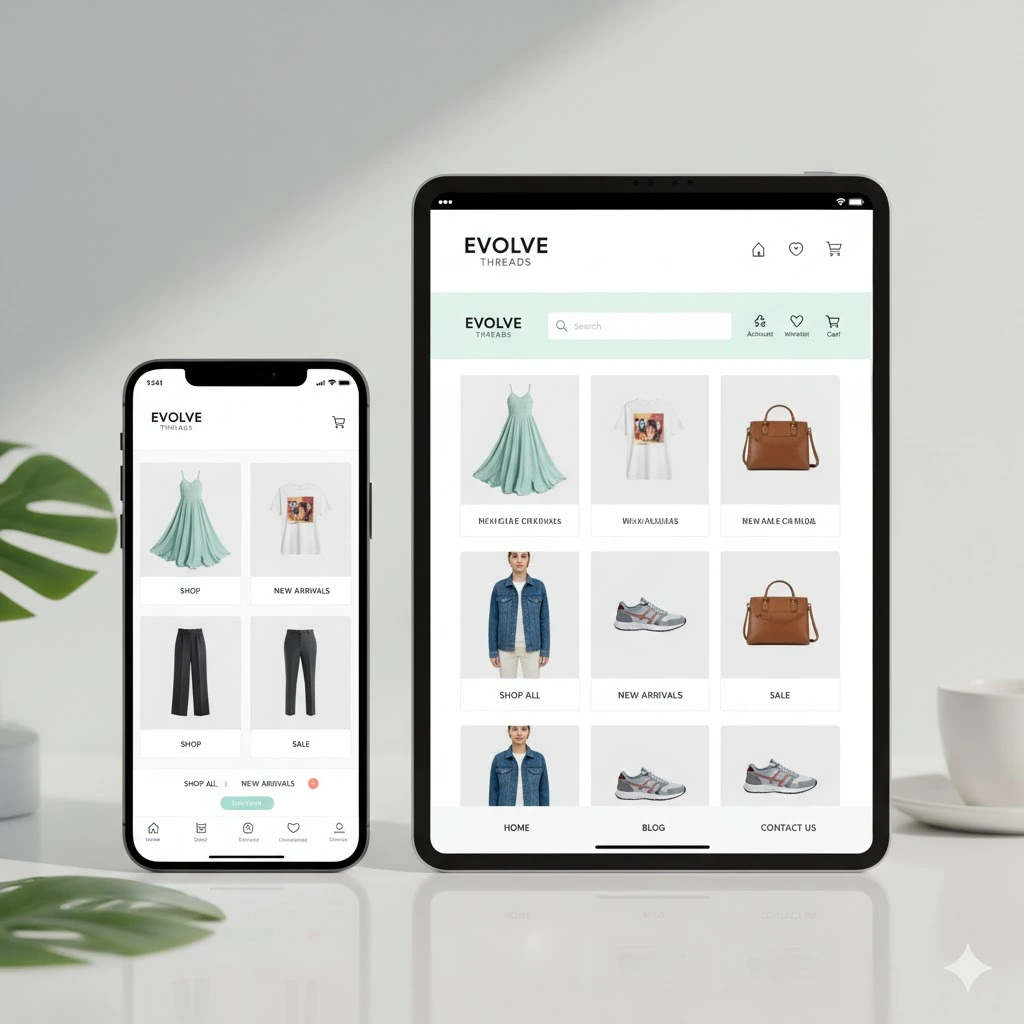
In short, here are some of the advantages of custom development:
- A custom-built site allows you to express your brand personality through design, features, and tone.
- You can connect your ecommerce platform with CRM tools, ERP systems, or custom APIs for smoother workflows.
- Your platform can evolve as traffic and transactions increase, ensuring consistent performance.
- A custom setup lets you control data storage, authentication methods, and compliance standards.
While custom solutions require more planning and investment upfront, they offer long-term stability and adaptability that off-the-shelf platforms rarely provide.
How Custom Ecommerce Development Improves Customer Experience
Custom development can improve customer experience when standard ecommerce functionality does not fit the way a business operates. Instead of forcing customers through generic workflows, businesses can tailor key parts of the shopping journey to their products, processes, and customer needs.
For example, custom development can simplify complex product discovery, connect customer accounts with order and support systems, optimize checkout flows, and provide personalized experiences based on relevant customer data. It can also help businesses address performance or integration requirements that standard features cannot handle effectively.
The Development Process: How It All Comes Together
A well-planned development process ensures that your ecommerce site not only functions efficiently but also aligns with business goals.
1. Business Analysis and Requirement Planning
The first step is to understand the business model, target audience, and long-term growth plans. This helps determine the features, integrations, and scalability requirements for the platform. Detailed analysis at this stage lays the foundation for a solution that supports both operational needs and customer demands.
2. User-Centered Design
A clean and appealing interface encourages customers to explore products and complete purchases easily. Designers use wireframes and prototypes to test layouts, colors, and typography before finalizing the design. Responsive design ensures the store looks and functions well on all devices. Accessibility tools are also added to make the site usable for customers with disabilities.
3. Functionality and Feature Development
The next stage involves implementing the features that define the store’s functionality.
| Feature | Description |
|---|---|
| Customer registration | Include social logins and two-factor authentication to enhance convenience and security. |
| Product catalog | Create detailed descriptions supported by high-quality images and videos. Include customer reviews to increase trust. |
| Live chat | Offer instant assistance to address questions and guide purchases. |
| Checkout and payment | Set up multiple payment methods, including cards, wallets, and alternative gateways. |
| Content management | Build an admin panel to manage products, promotions, and blogs. |
| Analytics dashboard | Enable performance tracking to monitor customer behavior and sales patterns. |
4. Testing and Optimization
Thorough testing ensures that every feature performs as intended. Developers test for usability, mobile responsiveness, and compatibility across browsers. Optimization techniques such as image compression and caching are applied to improve page load times. SEO best practices are followed to increase visibility on search engines.
5. Deployment, Maintenance, and Scaling
After successful testing, the website is launched. Maintenance activities include performance monitoring, security updates, and regular backups. As traffic grows, the system is scaled to maintain speed and reliability.
Why Customer Experience is the Core of Ecommerce Success
Modern customers expect convenience, personalization, and transparency. Businesses that meet these expectations gain a strong competitive advantage. Studies show that more than 80% of customers are willing to pay more for a better shopping experience. This makes customer experience one of the most critical elements of ecommerce success.
1. Strengthen Your Mobile Presence
Mobile commerce continues to dominate online retail. A website that loads quickly and displays properly on smartphones can significantly improve conversion rates. Many customers leave sites that take longer than three seconds to load, so performance optimization is vital.
To improve mobile usability, it is important to compress large images to reduce load times, simplify navigation so customers can find what they need quickly, implement checkout designs optimized for mobile devices, and regularly test the site to ensure fast performance and reliable functionality across different devices.
2. Personalize the Shopping Journey
Personalization makes customers feel understood and valued. Businesses can use browsing data, purchase history, and preferences to offer relevant recommendations and exclusive discounts. Personalized product suggestions, email campaigns, and loyalty programs help strengthen engagement.
Analytics tools and AI-powered recommendation systems can turn user data into insights that drive targeted marketing and higher conversions.
3. Empower Employees to Deliver Better Service
A positive customer experience often starts with empowered employees. Teams equipped with the right tools and data can respond faster to customer inquiries and resolve issues more efficiently.
Developing internal dashboards that display customer profiles, order history, and ongoing support tickets helps staff make informed decisions. Regular training sessions and feedback programs can further improve service quality.
4. Build Trust Through Transparency and Data Security
Trust is one of the strongest foundations of ecommerce success. Customers want to know their data is safe and that brands are transparent about how information is used.
Maintaining customer trust requires collecting only the information that is necessary, protecting sensitive data through encryption, enforcing strong passwords, and offering two-factor authentication.
Keeping systems updated with the latest security patches, implementing SSL certificates, and using secure payment gateways further safeguard customer data. Clear communication about privacy policies, along with prompt responses to any security issues, reinforces confidence and strengthens the relationship between the business and its customers.
5. Use Analytics to Continuously Improve
Data analytics helps businesses understand what works and what needs improvement. Tracking metrics such as cart abandonment rates, time spent on pages, and repeat purchase rates provides valuable insights.
Custom dashboards allow decision-makers to view trends in real time, identify problem areas, and refine marketing or design strategies. Continuous analysis ensures that the ecommerce platform remains aligned with changing customer behavior.
Why Custom Development Is a Smart Investment
Custom ecommerce development is more than a technical upgrade. It’s a strategic investment that supports sustainable business growth. A tailored platform helps companies differentiate their brand, improve operational efficiency, and deliver experiences that customers appreciate.
Selecting the right ecommerce platform is a critical decision. Here is a list of the top ecommerce platforms for every business in 2025 to help you get started.
Businesses that choose custom development often see measurable improvements in conversion rates, customer retention, and overall profitability.
[Explore custom Ecommerce solutions designed to boost customer satisfaction and drive growth.]
Conclusion
Success in ecommerce depends on understanding customer expectations and aligning technology to meet them. Custom ecommerce development provides the flexibility, security, and personalization required to achieve this balance.
A tailored platform not only improves user satisfaction but also strengthens brand credibility and prepares the business for future growth. For decision-makers aiming to expand their online presence, investing in a customized ecommerce solution can be the key to long-term success.

