


Digital transformation services help streamline processes, connect systems, modernize applications, and use data to support business growth.
Digital transformation is an essential aspect of running a flexible and efficient business that is prepared for growth. It is a lot more involved than just incorporating new technologies. A business needs to improve and digitize its processes, organize systems, use data appropriately, and modernize software.
Clarity around where the business is in its digital transformation journey helps to articulate the next steps. This guide will overview key areas of digital transformation, where in the journey a business should be considering digital transformation, and how to begin that journey.
An Overview
What Is Digital Transformation?
Digital transformation is the integration of technology to improve customer experiences and business efficiency. Adding tools is only a small part of the process; businesses have to rethink their entire process and connect their systems with data.
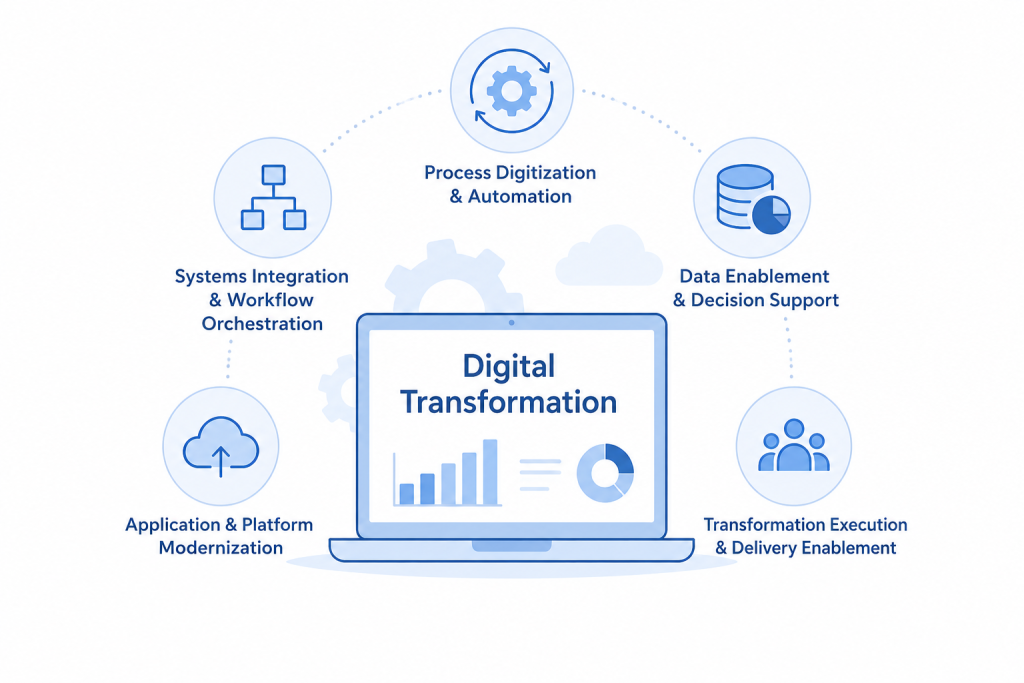
Transforming a business effectively requires the following five tools to be present:
- Process automation and digitization.
- With systems and workflows integrated, information can flow seamlessly.
- Decision support is provided through data.
- Modernization of business applications and platforms is achieved.
- Planning and change management across the business is sustained.
Why Is Digital Transformation Important?
Digital transformation helps build a flexible business that can adapt to fluctuations and improve customer experiences. Below are some positive effects a business can expect.
- Productivity: Being able to use digital tools to work in the digital space improves productivity.
- Customer Service: Improved customer service, as there are systems in place that ensure rapid and consistent responses to customers’ needs.
- Decisions: Gives the ability for businesses to be data-informed by providing timely analytics.
- Markets: Helps businesses rapidly respond to changes in the market.
- Cost: Development and maintenance of systems become more cost-effective due to automation.
- Scope: As a business has virtually no operational boundaries, scaling a business becomes easier.
There are also challenges that come with digital transformation. Transforming a business is no small task, and it costs resources, time, and commitment from employees. Integration of older systems is difficult, and employees are often resistant to change. Data quality is also an issue, as poor-quality data slows positive outcomes.
Transform Your Business Digitally.

When Should a Business Invest in Digital Transformation?
A business should consider a digital transformation if one or more of these apply:
- Growth is inhibited by manual work.
- Old or legacy systems create barriers.
- Decision-makers do not have real-time or accurate data.
- Expectations of rapid, personalized service from customers.
- Increased work capacity is needed without injecting more manual work.
- A concern of security or compliance is present due to outdated applications.
How to Approach Digital Transformation
A clear plan can make the transformation easier to manage. Businesses can follow these steps.
- Understand the Current Situation
Existing processes, systems, data streams, and existing pain points across the organization should be analyzed. This helps find the most valuable opportunities for change.
- Form a Strategy
A trip should have a beginning and end defined ahead of time. Each segment of the trip should be a phase of the transformation. Each team should have a clear goal and a roadmap to track their progress.
- Eliminate Repetitive Tasks and Processes
Often there are repetitive tasks and processes in a business that lead to inefficiencies. RPA, BPM, and AI-driven workflow tools can reduce the number of errors and speed up certain processes.
- Explore the Integration of Different Structured Data Systems and Workflows
There are different middleware, integration platforms, and API tools that can help connect different workflow systems. This helps reduce the amount of unnecessary work by different business units due to information silos.
- Provide Decision Support and Strong Data Foundations
The foundation for strong decision-making should be data. Data warehouses, data lakes, reporting, analytics dashboards, and other tools can help a business make better decisions with the data provided.
- Update Applications and Platforms
Legacy applications should be reassessed as either build systems or obsolete systems. Microservices and cloud-native application models align with business demand for increased development velocity.
- Deliver Change with Effective Governance
Change management and regular performance reviews should be used in unison with governance. Teams should be empowered to take initiative and adapt the plan should the demands of the business shift.
Digital Transformation Examples
Different industries can use digital transformation to solve different business problems:
| Industry | Example |
|---|---|
| Manufacturing | Automating procurement and inventory processes can reduce processing time. |
| Financial Services | Connecting CRM, ERP, and core banking systems can improve customer visibility and speed up loan processing. |
| Retail | Modernizing an e-commerce platform and using real-time analytics can improve personalization and sales. |
| Logistics | Data-driven decision support can improve routes and reduce fuel costs. |
Tips for Successful Digital Transformation
In order to be more successful, businesses should:
- Focus on improving low-hanging processes
- Set a high precedent of data quality before beginning larger projects surrounding automation or analytics.
- Purchase technologies that can sustain growth
- Offer instruction and resources to help employees adapt.
- Become more used to making rapid changes.
- Set clear rules and standards across transformation endeavors.
- Measure the metrics that evaluate results above and beyond the metrics that evaluate technology.
Conclusion
Digital transformation is the combination of improved processes, connected systems, useful data, modern applications, and delivery excellence. Together, these can make improvements in efficiency, customer satisfaction, and the overall health and positive impact of your business.
Businesses must understand that an ongoing, iterative approach is the best way to think about digital transformation. Organizations need to be flexible and be prepared to change their systems and structures to meet customers’ new needs to build a solid foundation for future growth.

