


See how AI is redefining digital transformation, helping leaders unlock new growth, reimagine customer value, and build future-ready enterprises.
Artificial intelligence has quickly moved from being an experimental technology to a foundation of digital progress across industries. Today, companies are turning to AI to reshape their operations, refine consumer experiences, and make faster decisions with greater accuracy. What was once seen as futuristic is now woven into the way organizations work and interact with customers.
AI is giving businesses new ways to adapt and thrive by enabling automation, uncovering patterns in massive data sets, and producing actionable predictions. Today, we will explore the role of AI in digital transformation, examine its impact across industries, and highlight the opportunities and challenges that come with embracing this change.
Overview
- AI’s Role in Digital Transformation
- Key AI Capabilities Driving Digital Transformation
- How AI is Transforming Different Industries
- Benefits of AI in Digital Transformation
- Data-Driven Decision Making with AI
- Overcoming Challenges in AI Adoption
- Ethical AI and Responsible Innovation
- AI and Workforce Transformation
- Strategies for Harnessing AI in Digital Transformation
- AI for Small and Medium Enterprises (SMEs)
- The Future of AI in Digital Transformation
AI’s Role in Digital Transformation
Digital transformation is about more than adopting digital tools. It represents a shift in how a company functions and delivers value. It involves rethinking processes, strategies, and customer engagement by integrating advanced technologies. At the center of this shift stands AI.

AI in digital transformation refers to the use of intelligent systems that can learn, adapt, and assist in making decisions. It includes machine learning, natural language processing, computer vision, and generative models that can produce new content such as text, images, or code. The power of AI lies in its ability to process vast volumes of data quickly, reveal hidden insights, and carry out repetitive tasks with precision.
For modern enterprises, this means:
- Reduced manual effort through automation.
- Smarter decisions based on predictive analytics.
- Personalized experiences that deepen customer relationships.
- Greater innovation by unlocking new possibilities for products and services.
When businesses integrate AI into their strategies, they move closer to becoming adaptive, data-driven organizations that can respond quickly to changes in the market.
Key AI Capabilities Driving Digital Transformation
Some of the most impactful AI capabilities include:
1. Unlocking Data Potential
Data is one of the most valuable assets for businesses today. AI can process, categorize, and interpret enormous amounts of information that humans could never handle in real time. By identifying patterns, companies gain deeper insights that guide decision-making and provide an edge in competitive markets.
2. Computer Vision
Computer vision allows machines to interpret visual content such as images and video. In industries such as healthcare, it helps doctors detect illnesses in scans. In manufacturing, it assists with quality checks by detecting defects instantly. For retailers, it can power cashierless stores and personalized advertising.
3. Generative AI Solutions
Generative AI is gaining traction due to its ability to create new content, like product designs, marketing copy, or even software code. In manufacturing, it can accelerate product development cycles. In customer service, it powers virtual assistants that understand and respond with context.
4. Natural Language Processing (NLP)
NLP enables machines to understand and respond to human language. It powers chatbots, translation tools, and sentiment analysis platforms. Businesses use it to better understand customer feedback, improve communication, and provide instant support without long wait times.
5. Machine Learning Algorithms
Machine learning models adapt over time by learning from data. They can predict future trends, automate decisions, and personalize services. Banks use ML to detect fraudulent activity, retailers use it to recommend products, and logistics companies use it to forecast demand and plan deliveries.
How AI is Transforming Different Industries
AI’s impact can be seen across every sector. Here are some of the most notable examples of how industries are adopting AI to drive transformation.
1. Healthcare
Healthcare is one of the fields most profoundly changed by AI. Doctors use AI-powered diagnostic tools to analyze X-rays and MRIs more quickly and accurately. Predictive analytics helps forecast patient outcomes, allowing for earlier interventions.

Hospitals use AI to streamline administrative tasks such as managing patient records or scheduling, which reduces staff workload and frees up time for patient care. AI chatbots guide patients through booking appointments and answering common health questions, improving engagement.
Most importantly, AI helps make healthcare more affordable and accessible by reducing inefficiencies and supporting preventive care.
2. Retail and E-commerce
Retailers are harnessing AI to personalize shopping experiences at scale. Recommendation engines suggest products based on customer browsing history and preferences, making interactions more engaging and increasing sales.
Supply chains also benefit. AI forecasts demand more accurately, allowing retailers to manage inventory with fewer shortages and overstocks. Chatbots offer immediate customer support, ensuring buyers receive quick answers. Behind the scenes, AI-driven logistics platforms help plan efficient deliveries, cutting costs while keeping customers satisfied.
3. Financial Services
Banks and financial institutions rely heavily on AI for fraud detection. By analyzing transaction patterns in real time, AI systems can spot irregular activity and block suspicious actions before losses occur.
In addition to security, AI assists with wealth management. Robo-advisors provide personalized investment advice to individuals who may not have access to traditional financial planners. Machine learning models analyze global market data, offering insights into potential risks and opportunities. This democratizes access to financial guidance while helping institutions deliver tailored services. AI-driven operations also improve observability and reliability. Our comparison of AIOps vs traditional IT monitoring highlights how intelligent systems accelerate issue detection and resolution.
4. Manufacturing and Supply Chain
In factories, AI plays a critical role in predictive maintenance. AI systems can anticipate breakdowns before they happen, saving money and reducing downtime by monitoring equipment.
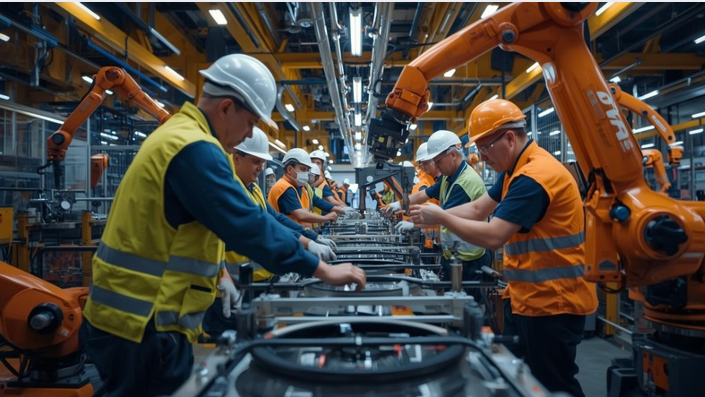
Production lines are becoming more intelligent as AI adjusts operations based on real-time data. Supply chain platforms supported by AI help companies forecast demand, plan routes, and ensure timely deliveries. These advances contribute to more resilient supply networks that can respond quickly to disruptions.
5. Automotive
The automotive industry is rapidly integrating AI into both vehicles and production processes. Autonomous vehicles rely on computer vision and sensor fusion to navigate safely. Driver-assist technologies such as lane detection and collision prevention are already saving lives on the road.
AI also personalizes in-car experiences, suggesting routes, adjusting entertainment options, and monitoring vehicle health. Car manufacturers are using AI in design and production, increasing precision and reducing errors. Predictive analytics ensures cars receive maintenance before small issues turn into costly repairs.
Benefits of AI in Digital Transformation
The adoption of AI brings wide-ranging advantages.
- AI processes information far faster than humans, producing insights that guide leaders toward smarter actions.
- Automation frees employees from repetitive work, allowing them to focus on creative and strategic activities.
- Personalized recommendations and quick support build stronger customer loyalty.
- AI sparks new ideas for products, services, and business models that were previously unimaginable.
Data-Driven Decision Making with AI
One of the strongest contributions of AI is its ability to turn data into actionable intelligence. In other words, leaders can use AI-driven insights to guide choices.
For example:
- In retail, customer behavior data predicts future demand and informs stocking strategies.
- In finance, AI identifies risks in loan applications and investment portfolios.
- Also, in healthcare, it helps pinpoint treatments most likely to succeed for individual patients.
This data-driven approach reduces uncertainty, minimizes risk, and improves long-term outcomes.
Overcoming Challenges in AI Adoption
While AI offers immense potential, implementing it is not without difficulties. Common challenges include:
- Integration Complexity
Adding AI systems to existing infrastructure can be resource-intensive.
- Data Privacy Concerns
Protecting sensitive information is critical, particularly in healthcare and finance.
- Skill Gaps
Many organizations struggle to find professionals skilled in AI and data science.
- Ethical Considerations
Issues such as bias, transparency, and accountability must be addressed to build trust.
Overcoming these barriers requires careful planning, investment in training, and partnerships with trusted technology providers like Bobcares.
Ethical AI and Responsible Innovation
As AI adoption accelerates, businesses are realizing that success depends on more than technical capability. Responsible innovation is becoming just as important. Ethical considerations around fairness, transparency, and privacy must be at the core of AI strategies.

One challenge is algorithmic bias. If an AI system is trained on incomplete or skewed data, its predictions may reinforce existing inequalities. For example, hiring algorithms have faced criticism for favoring candidates based on biased historical data. To counter this, organizations need diverse data sets, regular audits, and transparent reporting.
Another concern is data privacy. AI systems rely on massive amounts of personal and organizational data. Clear rules around consent, storage, and sharing are essential to maintaining trust. Companies that demonstrate accountability and ethical responsibility will have an advantage, as customers increasingly favor brands that safeguard their information.
Responsible AI is not just about risk reduction. It builds trust, strengthens brand reputation, and ensures long-term sustainability in digital transformation efforts.
AI and Workforce Transformation
AI is transforming the workplace in significant ways. While automation may reduce some repetitive roles, it is also creating new opportunities that require creativity, problem-solving, and collaboration. Instead of viewing AI as a replacement for human talent, businesses are beginning to see it as a partner that extends human capability.
For instance, in healthcare, AI tools support doctors with faster diagnostics but do not replace the physician’s judgment. In retail, AI-driven insights help sales teams understand customer preferences and engage more effectively. In finance, analysts rely on AI for rapid number crunching, allowing them to focus on strategy and client relationships.
This transformation highlights the need for reskilling. Employees must develop new skills such as data literacy, critical thinking, and the ability to work alongside intelligent systems. Companies that invest in training programs and promote a culture of continuous learning will be better prepared to adapt.
In short, AI-driven digital transformation is less about replacing people and more about creating stronger human-AI collaboration.
Strategies for Harnessing AI in Digital Transformation
To maximize the benefits of AI, businesses need to focus on the following strategies:
- Set Clear Goals
AI initiatives should align with business objectives, whether improving customer experience, reducing costs, or driving innovation.
- Strengthen Data Foundations
High-quality data is essential for AI success. Companies need reliable systems for collecting, cleaning, and securing data.
- Start Small, Scale Gradually
Pilot projects allow organizations to test AI solutions before rolling them out across the enterprise.
- Adopt Agile Practices
Flexibility is vital, as AI projects often require iterative development and continuous improvement.
- Develop Talent
Building in-house expertise or partnering with experts ensures long-term success.
- Choose the Right Partners
Selecting the right AI platforms and vendors is crucial for effective implementation.
- Prioritize Ethics
Transparency, fairness, and accountability should be central to every AI initiative.
AI for Small and Medium Enterprises (SMEs)
A lot of the conversation around AI centers on large corporations, but small and medium-sized businesses are also finding value in AI-powered tools. In fact, accessible cloud-based platforms and affordable AI applications have opened new possibilities for organizations that do not have large budgets or teams of data scientists.
For SMEs, AI can:
- Automate back-office tasks such as invoicing and payroll.
- Provide customer insights through affordable analytics platforms.
- Improve marketing campaigns by analyzing engagement data.
- Support customer service with chatbots that operate 24/7.
A local retailer, for example, can use AI-driven recommendation engines to personalize online shopping. A small logistics provider can adopt AI route optimization tools to reduce delivery costs. Even small healthcare practices can use AI for scheduling and patient engagement.
The key for SMEs is to start small, test AI in targeted areas, and then expand as results become clear. This approach allows them to benefit from digital transformation without overwhelming budgets or resources.
The Future of AI in Digital Transformation
At this point in time, AI adoption shows no signs of slowing down. According to market research, the global AI sector is projected to reach trillions of dollars in value by 2030. This rapid expansion signals how deeply embedded AI will become in everyday operations across industries.
Future advancements may include:
- Smarter cities powered by AI-driven infrastructure.
- Greater use of AI in sustainability, such as energy efficiency and climate monitoring.
- Hyper-personalized services across sectors.
- Broader adoption of generative AI in design, content, and innovation.
Organizations that adapt these advancements will be better prepared to compete and grow in the years ahead.
[Need assistance with a different issue? Our team is available 24/7.]
Conclusion
AI is enabling companies to provide better experiences, streamline operations, and innovate at a scale never seen before.
The road to adoption comes with challenges, but with clear strategies, a focus on ethics, and a commitment to building strong data foundations, businesses can unlock the true potential of AI. Talk to our team today!

