


Learn why cloud modernization is shaping the future of cloud computing and explore its key pillars, business benefits, common mistakes, and roadmap.
Cloud migration marked the beginning of digital transformation, but it is no longer enough to stay competitive. Moving workloads to the cloud does not automatically modernize applications, infrastructure, or operations. Continuous modernization helps businesses keep pace with changing requirements while improving how applications are built, deployed, managed, and secured. Bobcares offers Cloud Modernization services to help organizations modernize cloud environments and support evolving business needs.
An Overview
Moving applications to the cloud is only the first step. Lift-and-shift migration relocates workloads but does not address existing architectural or operational challenges.
Organizations often continue to experience increasing cloud costs, aging application architecture, manual operations, inconsistent security practices, performance issues, and growing technical debt. Modernization focuses on improving how applications are built, deployed, managed, and continuously updated instead of simply changing where they run.
How Business Expectations Have Changed
Business requirements continue to evolve rapidly. Customers expect applications to scale reliably, product teams require faster feature delivery, security threats continue to emerge, and AI has become part of many business strategies.
Traditional operating models were not designed for this pace. Modernization enables continuous improvements instead of periodic large-scale rebuilds. As a result, organizations can adapt more effectively as business needs change.
Five Pillars of Cloud Modernization
1. Cloud-Native Application Architecture
Modern application development has shifted from monolithic applications to microservices, containers, Kubernetes, serverless functions, and API-first design.
This approach allows individual components to scale independently, continue operating during failures, and support faster application updates.
2. Infrastructure as Code and Automation
Infrastructure as Code (IaC) stores infrastructure configurations in version control alongside application code.
This approach supports consistent environment creation, faster provisioning, easier disaster recovery, reduced configuration drift, improved compliance, and more predictable scaling.
3. Intelligent Operations Through Observability
Modern systems generate large amounts of operational data. Observability tools provide visibility into system behavior and help identify issues before they become incidents.
Additionally, AI-assisted monitoring supports faster detection of anomalies while reducing time spent resolving operational issues.
4. Modern Data Platforms
Data often exists across multiple disconnected systems. This fragmentation creates challenges for analytics and AI initiatives.
Modernizing data platforms brings data together through improved governance, stronger security, and analytics that operate closer to real time.
5. Security Integrated Into Every Layer
Security is no longer limited to a separate review stage after development. Modern DevSecOps practices integrate security throughout development, operations, and infrastructure.
Continuous vulnerability scanning, automated compliance checks, identity and access controls, Zero Trust, runtime threat detection, and automated policy enforcement become part of everyday operations.
Artificial Intelligence Is Accelerating Modernization
AI adoption continues to expand across customer experience, operations, software development, and decision-making.
However, deploying AI successfully requires infrastructure that supports scaling, data pipelines, governance, access controls, and appropriate computing resources. Without this foundation, AI projects often struggle to move beyond initial pilots. Therefore, modernization becomes an important requirement for long-term AI adoption.
Modernization Is About Business Outcomes
Cloud modernization extends beyond technology implementation. Organizations that continue modernizing can deliver products faster, improve customer experiences, strengthen security, reduce operational effort, improve infrastructure resilience, and respond more effectively to changing business conditions.
These outcomes demonstrate the business value of ongoing modernization efforts.
Common Modernization Mistakes
Several challenges commonly affect modernization efforts:
- Treating cloud migration as modernization
- Allowing technical debt to continue growing
- Underinvesting in automation
- Skipping observability
- Adopting technology without clear business objectives
Meanwhile, avoiding these mistakes helps organizations focus on long-term improvements instead of short-term changes.
Building a Practical Modernization Roadmap
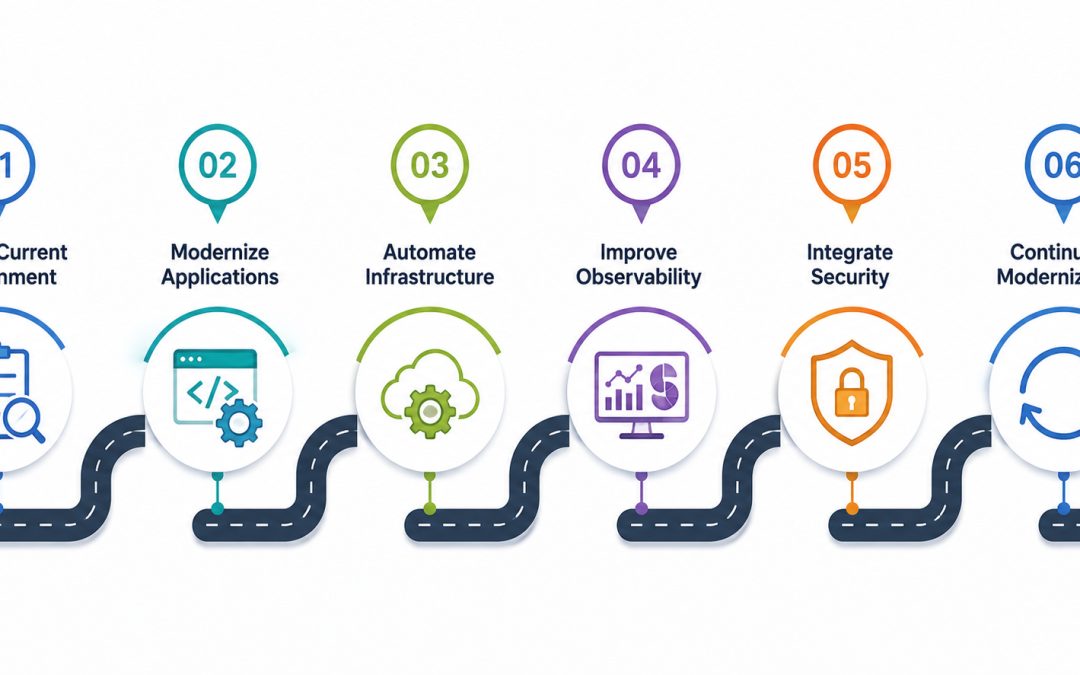
Developing a modernization roadmap begins with understanding the current environment.
Important questions include:
- Are applications truly cloud-native?
- How much infrastructure relies on automation?
- Can deployments occur safely and predictably?
- Is there sufficient operational visibility?
- Is data secure and suitable for AI initiatives?
- Is security integrated into deployment pipelines?
These answers help organizations identify modernization priorities that provide lasting business value.
Conclusion
Cloud migration introduced organizations to cloud computing, but modernization determines how effectively they continue to benefit from it. Improving applications, infrastructure, operations, data, and security helps businesses respond to changing requirements while supporting future technologies such as AI. Continuous modernization enables organizations to strengthen their cloud environments over time. Bobcares supports businesses through its Cloud Modernization services, helping organizations modernize cloud infrastructure to meet evolving business needs.

