


Compare Managed Cloud vs Hosted Cloud to understand their differences in management, security, support, and cost, and choose the right cloud solution.
As more businesses move their websites, applications, and data to the cloud, selecting the right hosting model becomes an important decision. Managed Cloud and Hosted Cloud both provide cloud-based infrastructure, but they differ in management responsibilities, support, and the level of involvement required from the customer. Understanding these differences helps businesses choose the option that best fits their technical expertise, budget, and operational requirements. Bobcares offers Managed Cloud Services to help businesses manage cloud environments while reducing administrative effort.
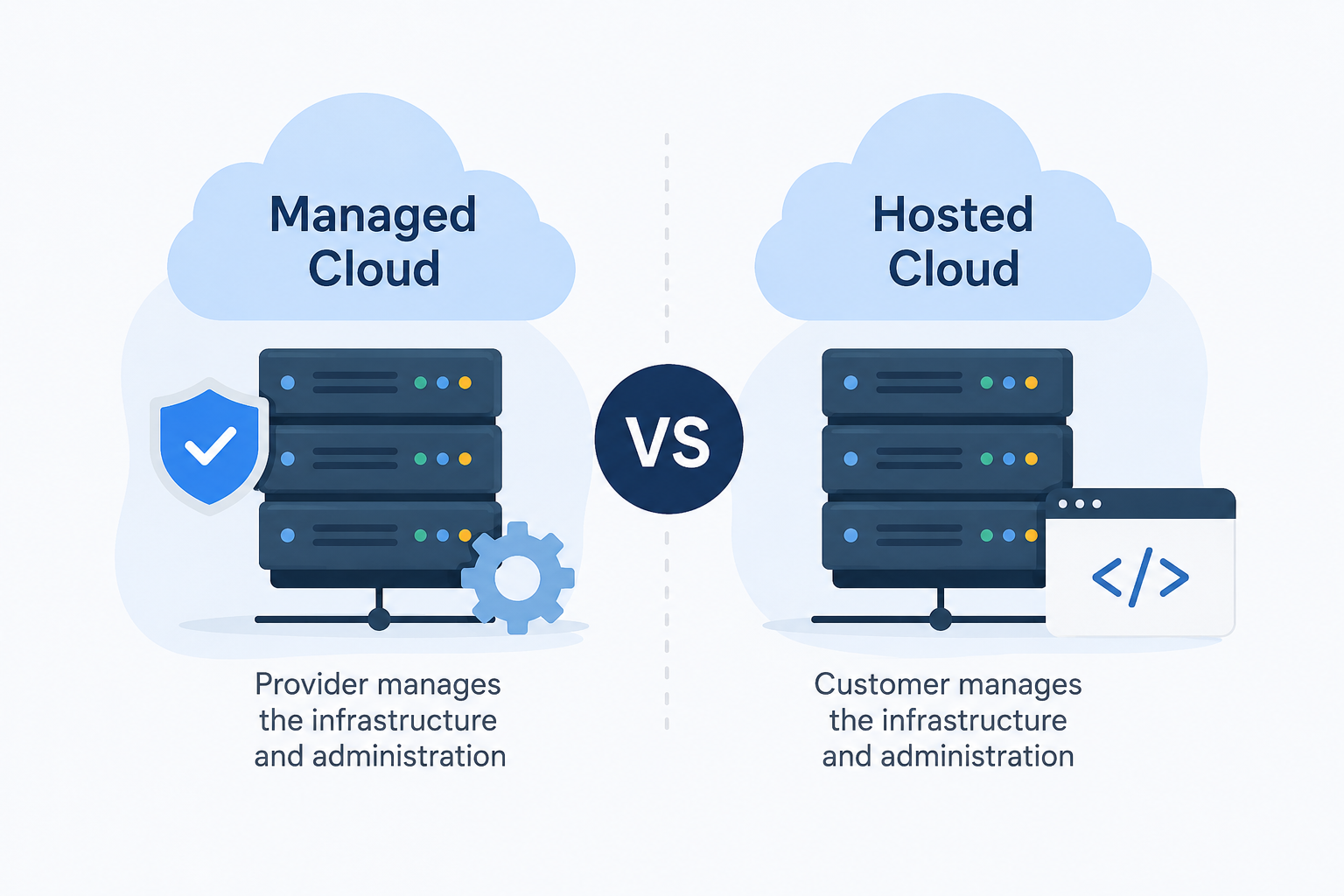
Overview
What Is a Hosted Cloud?
A Hosted Cloud is a cloud environment where the hosting provider supplies the infrastructure, including servers, storage, networking, and virtualization resources. The provider maintains the physical hardware and ensures the cloud platform remains operational.
The customer is responsible for managing most aspects of the server environment, including:
- Operating system installation and updates
- Software and application management
- Security configurations
- Performance monitoring
- Troubleshooting and maintenance
- Backup management
This option provides greater control but requires technical expertise and ongoing administration.
Benefits of Hosted Cloud
Greater Control
Customers can configure servers and install software based on their specific requirements.
Cost-Effective
Hosted Cloud solutions generally cost less because management services are limited.
Flexibility
Businesses can customize their infrastructure to meet application and performance requirements.
Need Help Choosing between Managed Cloud vs Hosted Cloud?

Challenges of Hosted Cloud
- Requires experienced IT personnel.
- Security updates must be managed internally.
- Troubleshooting and maintenance require additional time and resources.
What Is a Managed Cloud?
A Managed Cloud combines cloud infrastructure with professional management services. In addition to providing servers and networking resources, the hosting provider handles many day-to-day administrative tasks.
Managed Cloud services commonly include:
- Server setup and configuration
- Operating system updates
- Security patch management
- Performance monitoring
- Backup and recovery
- Technical support
- Proactive issue detection and resolution
This approach allows businesses to focus on their core operations instead of server administration.
Benefits of Managed Cloud
Reduced Administrative Work
Routine maintenance is handled by the hosting provider, reducing the workload for internal teams.
Improved Security
Regular updates, security patches, and monitoring help protect systems from threats and vulnerabilities.
Expert Support
Experienced technical teams help resolve issues quickly and reduce downtime.
Better Reliability
Continuous monitoring helps identify and address potential issues before they affect business operations.
Challenges of Managed Cloud
- Higher monthly costs than Hosted Cloud solutions.
- Some businesses may prefer direct control over server administration.
Key Differences Between Managed Cloud and Hosted Cloud
Which Option Is Right for Your Business?
Choose Hosted Cloud If:
- You have an experienced IT team.
- You require full control over your server environment.
- You want to reduce hosting costs.
- You are comfortable managing updates, security, and maintenance.
Choose Managed Cloud If:
- You want to focus on business growth instead of server administration.
- You do not have dedicated IT staff.
- Security and uptime are important priorities.
- You prefer expert support and proactive management.
Meanwhile, evaluating your technical capabilities and operational requirements helps determine the most suitable option.
Conclusion
Managed Cloud and Hosted Cloud both provide scalable cloud infrastructure, but they differ in who manages the environment. Hosted Cloud gives customers greater control while placing responsibility for server administration on internal teams. Managed Cloud transfers many administrative tasks to the hosting provider, allowing businesses to focus on daily operations. Therefore, selecting the right solution depends on technical expertise, budget, and business requirements. Bobcares supports organizations with Managed Cloud Services, helping businesses manage cloud environments with professional support and ongoing maintenance.

