Bobcares Logo
Search Phone User Profile Emergency Contact
Bobcares Logo
Search Phone User Profile Emergency Contact
Emergency Contact Client Portal
SOLUTIONS
Product Engineering
MVP Build
MVP to Scale
Product Maintenance
Digital Transformation
Process Digitization & Automation
Systems Integration & Workflow Orchestration
Data Enablement & Decision Support
Application & Platform Modernization
Transformation Execution
AI Services
AI Readiness & Use-Case Discovery
AI Integration & Application Enablement
Intelligent Automation & AI Workflows
Infrastructure Management & Optimization
Always-On Infrastructure Management
Proactive Monitoring & Incident Prevention
Cloud Cost Control & Optimization (FinOps)
Outsourced IT & End-User Support
Managed Infrastructure Execution Support
DevOps & Automation Services
CI/CD & Release Automation
Infrastructure as Code & Platform Standardization
Reliability Engineering & Observability
DevSecOps Enablement
Cybersecurity
Security Assessment & Risk Posture
Threat Monitoring & Incident Response
Infrastructure & Cloud Security Hardening
Vulnerability Assessment & Penetration Testing (VAPT)
Backup, Disaster Recovery & BCP

DigitalOcean SSO | Beginners Guide

by Shahalamol R | Dec 6, 2022 | DigitalOcean, Latest | 0 comments

Please Note: This article is part of our historical archive. Because it was published a while ago, some of the information, links, or context may now be outdated.

Without worrying about time for initial set up or future upgrades, DigitalOcean SSO immediately boosts the security of data and resources for the DigitalOcean app. As part of our DigitalOcean Managed Service, Bobcares answers all your related questions.

DigitalOcean SSO

While creating a DigitalOcean account, we can sign up with an email address or with Google or by using single sign-on (SSO). By using this method, we can log in to the Digital Ocean app with a single click. Using SSO as the login option also brings lots of other benefits to the account, namely:

  1. The payment is according to the customer’s use.
  2. A flexible Identity Provider(IdP) allows migrating users from their existing user store.
  3. Reduce the inconvenience of password management which boosts productivity.
  4. SSO facilitates regulatory compliance in order to satisfy data access and security risk protection needs.
  5. SSO provides efficient management of individual dashboards and self-reset passwords, thus eliminating the need for external IT support.
  6. It allows only authorized users to get access to sensitive data.

DigitalOcean SSO Working Principle

With the SSO solution, once we enter login credentials, we will land up to one single dashboard to access all apps within the cloud. Let’s see the working of SSO.
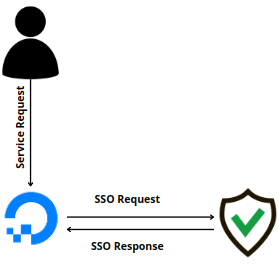
 

digitalocean sso


  • Firstly, the user tries to access the program or website they want to use. The Service Provider is the source of these apps and websites. Here the service provider is DigitalOcean.
  • In order to authenticate users, the app/website redirects the SSO request to Identity Provider.
  • Then the user tries to log in using the credentials provided by his Identity Provider.
  • IdP sends the Single Sign-On response to the site after IdP authentication is successful.
  • The user is then allowed to log in and use the resource or app after receiving the SSO response.
  • Finally, the user can now use all other apps and websites from the cloud that are already set up for SSO.

[Need assistance with another query? We are just a click away.]

Conclusion

We can create a DigitalOcean account and select the sign-up method as SSO. In this article, we have included the major benefits of using SSO in DigitalOcean, along with the working of SSO in general.

PREVENT YOUR SERVER FROM CRASHING!

Never again lose customers to poor server speed! Let us help you.

Our server experts will monitor & maintain your server 24/7 so that it remains lightning fast and secure.

GET STARTED

Related posts:

    1. DigitalOcean Export droplet
    2. DigitalOcean Kubernetes backup | Guide
    3. Digitalocean ASN VPN: Setup Guide
    4. Digitalocean Ingress Load Balancer: A Complete Guide

Submit a Comment Cancel reply

Your email address will not be published. Required fields are marked *

Recent Posts

  • How to Achieve ISO Compliance in Cloud Hosting
  • Managed IT Services Cost and Pricing Guide for 2026
  • AWS CloudWatch: Monitoring, Alerts, and Best Practices
  • How to Reduce Cloud Bills: 11 Practical Ways
  • Hybrid Cloud Management: Best Practices and Tools

Categories

  • Advanced Vulnerability
  • AI Automation
  • AI Services
  • AI Support
  • AIOps
  • Amazon Web Services (AWS)
  • Apache
  • API Integration
  • Application Development
  • Azure
  • Business Process Management
  • Business Process Reengineering
  • Cloud Cost Optimization
  • Cloud Management
  • Cloud-Native Application
  • Cloudflare
  • cPanel
  • cPanel migration
  • Cyberpanel
  • DDoS
  • Development Service
  • DevOps
  • DevOps Consulting
  • DevSecOps
  • Digital Transformation
  • DigitalOcean
  • DirectAdmin
  • Docker
  • Drupal
  • Ecommerce
  • Feedback Management Systems
  • Filezilla
  • FTP
  • Full-Stack Product Development
  • Google cloud platform
  • HAProxy
  • Headless CMS Integration
  • Hosting Support
  • Hybrid Cloud Management
  • IIS
  • Infrastructure Management & Optimization
  • Kubernetes
  • KVM
  • Laravel
  • Latest
  • Legacy Application Modernization
  • Linode
  • Litespeed
  • LXC/LXD
  • Magento
  • Managed cloud services
  • Managed IT Services
  • Microservices Architecture
  • Mobile App Development
  • MongoDB
  • Moodle
  • MySQL
  • NFS
  • Nginx
  • OnApp
  • Outsourced Support
  • OVH
  • ovirt
  • Performance Optimization & Monitoring
  • pfsense
  • Plesk
  • PostgreSQL
  • PowerDNS
  • Product Engineering
  • Proxmox
  • RedHat
  • Redis
  • SaaS Development
  • Sendmail
  • Server Administration
  • Server Management
  • Software Development
  • Software Testing
  • SQLServer
  • Technical Support
  • UI/UX
  • Virtualizor
  • VMware
  • VPN
  • Vulnerability Scanning
  • Vultr
  • Web Development
  • Windows
  • WordPress
  • WordPress Hosting
  • WordPressHA

Subscribe to our newsletter

Footer newsletter

Email inquiry@bobcares.com | Phone 1-800-383-5193

Solutions

  • Product Engineering
  • Digital Transformation
  • AI Services
  • Infrastructure Management & Optimization
  • DevOps & Automation Services
  • Cybersecurity

Services

  • Managed IT Services
  • Cloud Modernization Services
  • Custom Software Development Services
  • DevOps services
  • Business Process Management Services

Insights

  • Case Studies
  • Blog

Company

  • About Us
  • Our Partners
  • Careers
  • CSR
Product Engineering +
Web Development MVP to Scale Builds Microservices Architecture Agile & Dev Team Augmentation Mobile Apps Ecommerce UI/UX Design QA & Test Automation
Digital Transformation +
Legacy Modernization Workflow Automation Data-Driven Dashboards CRM / ERP Integration Business Process Re-engineering
AI Services +
AI & Machine Learning AIOps Intelligent Automation Business Intelligence & Analytics AI Installation & Compute
Infrastructure Management +
Cloud Setup Cloud Migration Managed Cloud Services Server & Hosting Cost Optimization Performance Optimization Outsourced Support
DevOps & Automation Services +
CI/CD Setup Kubernetes & Docker Infrastructure as Code Cloud-Native Migration DevSecOps
Cybersecurity & Compliance Services +
Security Hardening VAPT Incident Response Backup & DR

© 2026 Bobcares. All Rights Reserved.

  • Cookie Policy
  • |
  • GDPR
  • |
  • Privacy Policy
  • |
  • Terms of Service
  • LinkedIn
  • YouTube
  • Instagram
  • Facebook

Preview of the new Bobcares experience
NEW UPDATE
See What’s New
at Bobcares

Discover a faster, clearer view of our services and expertise.


Explore the New Experience
Arrow Right