


What is Window Server Management? Windows Server Management keeps the infrastructure secure and available. Bobcares, as a part of our 24/7 Server Management Services, offers solutions to every query that comes our way.
What is Window Server Management
Windows Server management is the process of administering, monitoring, securing, and maintaining Windows Server environments. It helps keep servers running smoothly, protects business data, and reduces downtime. Whether you manage a single server or a large IT infrastructure, effective server administration practices are essential for maintaining performance and reliability.
Common Windows Server Management Tasks
Day-to-day server administration includes several important tasks that keep systems healthy and secure. Administrators create and manage user accounts, configure server roles, monitor system performance, and perform regular backups. They also apply Windows Server patch management to address security vulnerabilities and improve system stability.
Routine maintenance also involves reviewing event logs, checking storage usage, managing network settings, and verifying that critical services are running properly. Completing these tasks on a regular schedule helps prevent unexpected issues and improves overall server performance.
Server Management Tools
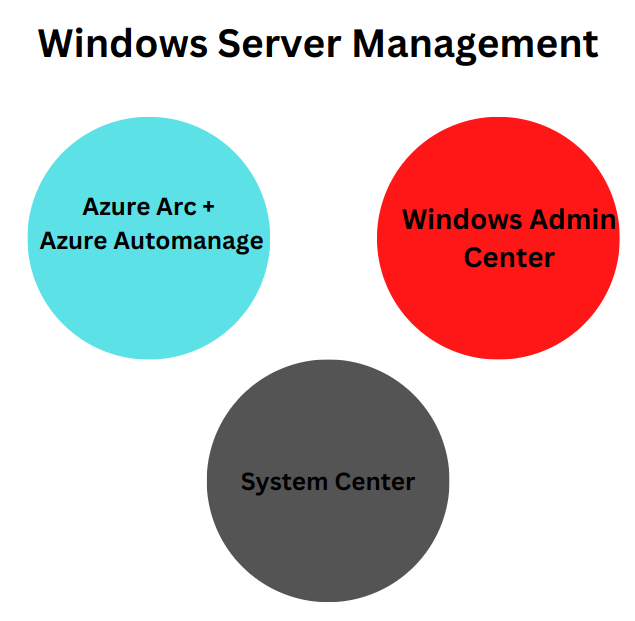
Microsoft offers several tools to simplify server administration across on-premises, cloud, and hybrid environments. Windows Server Manager is commonly used for everyday administration, while tools such as Windows Admin Center, Azure Arc, Azure Automanage, and System Center help manage, monitor, and automate server operations. Together, they make Windows server environments more efficient and easier to maintain.
Azure Arc + Azure Automanage For Cloud Management
We can manage Windows and Linux physical servers and virtual machines that are outside of Azure, on our company network, or with another cloud provider, using an Azure Arc-enabled server. The management process for native Azure virtual machines is intended to be consistent with this one. With services like Azure Policy, Microsoft Defender for Cloud, Azure Monitor, Azure Update Management, and more, we can manage, regulate, and secure Windows servers. We can also do away with the necessity of service discovery, enrollment, configuration, and monitoring for Azure services that adhere to server management best practices by using Azure Automanage.
Windows Admin Center For Deep Windows Server And Cluster Management
We can manage the Windows Servers using the browser-based server administration tool set known as Windows Admin Center. It can be used directly integrated within the Azure portal or locally deployed without relying on Azure or the cloud. Windows Admin Center is especially helpful for managing servers on private networks that are not connected to the Internet because it gives us complete control over every aspect of the server infrastructure.
In addition to other management solutions, Windows Admin Center is the contemporary evolution of “in-box” management tools like Server Manager and MMC.
System Center For Datacenter-Scale Management
We can maintain efficient control over the IT infrastructure across environments and platforms with the help of the System Center. It enables us to improve agility and performance while simplifying the deployment, configuration, management, and monitoring of the infrastructure and virtualized software-defined data center.
Some other local management tools are present within the Windows Server. E.g., We can use
SconfigBest Practices for Windows Server Management
Following a few best practices can improve server reliability and reduce operational risks.
- Install security updates and perform regular Windows Server patch management.
- Monitor CPU, memory, disk usage, and system logs to detect issues early.
- Schedule frequent backups and test recovery procedures.
- Restrict administrative access using role-based permissions.
- Automate repetitive administrative tasks whenever possible.
- Review server health regularly using Windows Server Manager and other monitoring tools.
These practices help maintain secure, stable, and high-performing Windows Server environments.
[Need help with another issue? We’re available 24/7.]
Conclusion
Effective server administration involves more than configuring servers. It includes monitoring performance, applying updates, securing systems, and using the right management tools. Whether you rely on Server Manager Windows, Windows Admin Center, or cloud-based solutions, a structured management approach helps improve reliability, simplify administration, and support long-term business operations.
The article provides a brief note from our Support team on the overview of Windows server management.
PREVENT YOUR SERVER FROM CRASHING!
Never again lose customers to poor server speed! Let us help you.
Our server experts will monitor & maintain your server 24/7 so that it remains lightning fast and secure.

